





Backwoods Home Magazine

Remembering
Sept. 11, 2001

Subscribe to Backwoods Home Magazine
Or call us at
1-800-835-2418


Meet Dave Duffy at the Dallas, Texas Self Reliance Expo.

Find Backwoods Home Magazine on Facebook

Features
 Home Page
 Current Issue
 Article Index
 Author Index
 Previous Issues
 Newsletter
 Letters
 Humor
 Free Stuff
 Feedback
 Recipes
 Tell-A-Friend
 Print Classifieds
 Radio Show

General Store
 Ordering Info
 Subscriptions
 Anthologies
 T-Shirts
 Books
 Back Issues
 Help Yourself
 All Specials
 Classified Ad

Advertise
 Web Site Ads
 Magazine Ads

BHM Blogs
 Behind The Scenes
 Massad Ayoob
 Ask Jackie Clay
 Claire Wolfe
 Oliver Del Signore
 Bramblestitches
Retired Blogs
 David Lee
 Energy Questions

Quick Links
 Home Energy Info
 Jackie Clay
 Ask Jackie Online
 Dave Duffy
 Massad Ayoob
 John Silveira
 Claire Wolfe

Forum / Chat
 Forum/Chat Info
 Enter Forum
 Lost Password

More Features
 Links
 Country Moments
 Meet The Staff
 Contact Us/
 Address Change
 Write For BHM
 Privacy Policy

News/Politics
 Dave Duffy
 John Silveira
 Columnists


Ask Jackie headline


Want to Comment on a blog post? Look for and click on the blue No Comments or # Comments at the end of each post. Please note that Jackie does not respond to questions posted as Comments. Click Below to ask Jackie a question.

Click here to ask Jackie a question!
Jackie Clay answers questions for BHM Subscribers & Customers
on any aspect of low-tech, self-reliant living.

Read the old Ask Jackie Online columns
Read Ask Jackie print columns

Archive for the ‘Uncategorized’ Category

Jackie Clay

Time to transplant those little seedlings

Monday, April 13th, 2009

transplanting1

It’s hard to believe that those little seedlings are already big enough to transplant! But that’s the way they grow. Just like kids. I’m beginning to transplant from the flats they grew in to 4″ pots and deep, oversized six and nine packs. Today, besides doing Easter dinner, I transplanted tomatoes and peppers. But because I’ve planted over 14 different tomato varieties and 12 different peppers this year, this job has only just begun. We made our own potting soil this year. We haven’t been happy with Miracle Grow, so we made potting soil the old-fashioned way, mixing 1/3 rotted compost, 1/3 black soil, and 1/3 sand-clay mixture. To avoid weed seeds and bacterial contamination, we cooked a roasting pan full of each one in the oven, then turned them into a wash tub to mix. The result was a fine, loose mixture that should grow tremendous plants.

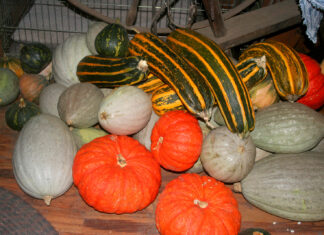
I’ll be doing this every day for about a week, as we not only have tomatoes and peppers, but celery, petunias, dahlias, blanket flowers, lupines, and other flowers, as well. Then it’ll be time to start the squash, pumpkins, and melons! What a garden we hope to have this year. I can hardly wait.

Readers’ Questions:

A day in the life of Jackie

What does a day in the life of Jackie Clay look like? When do you arise and lay your head down at night? How do you fit everything into 24 hours? Do you see your life changing as you age or have you been able to keep to the pace you set ten years ago?

Deborah Motylinski
Brecksville, Ohio

Wow, that’s a tough one, as every day is different. But I’ll try an honest answer here. I get up about 7 AM or so, get David up so he can get off to school. Start the wood cookstove, feed the house critters–goldfish, cat, and our dog, Spencer. Check the greenhouse plants, watering as needed. Visit with Will for a few minutes while his coffee perks. We plan our day’s must-dos, want-to-dos and future plans for awhile while watching the geese come flying down the creek and the eagles flying out of the big woods for their morning hunting.

I go out and feed the baby goats, turn the chickens out, feed the goats, donkeys, and horses, then it’s back to the house to get Mom up, get her breakfast, meds, etc.

Today I got David up and off to church, transplanted tomatoes and peppers into 4″ pots, fed the bottle baby goats lunch, swept the dried mud from our floors (you can’t help tracking in this time of year!), gathered eggs, cooked Easter dinner, washed a few loads of clothes, helped Will load our 8N tractor on the trailer, checked on the rhubarb, which is poking up through the mulch, planted some wildflower roots in our woods by the beaver pond, then it was chore time again and I fed, watered, and played with the donkeys, goats, and horses. Fed and watered our huskies (and played with them too). Transplanted a few more peppers, got Mom ready for bed, did her meds, and now, at 9:37 PM the blog. I’ll probably get to bed about 10:30 and oh how nice that’ll feel. But it was a good day!

No, my life’s not changing much, over 10 years ago. I’m taking a few more breaks during my work and maybe not doing it as fast as I did, but about the only thing that is different is that I appreciate everything more than I did back then. — Jackie

Cottage cheese from sour milk

After searching all over the BHM website anthologies and back issues, hard as I have tried I cannot find a recipe for making cottage cheese from sour milk. I’m pretty sure this is the way it was done before cultured cottage cheese came onto the scene. Do you have a recipe or can you direct me where to look for a recipe to make cottage cheese using sour milk?

Cheryl Ochenkowski
Eastpointe, Michigan

Yes, you can make cottage cheese from sour milk. The only trouble is that sometimes the results are not dependable; some is more acid than others because of the degree of souring of the milk and whether it is store milk or raw milk. The process is very easy. Just heat half a gallon (or so) of sour milk in a double boiler gently until a soft curd forms. Then pour it out into a colander lined with a doubled cheesecloth or clean piece of white sheet and drain it for an hour. Add salt, pepper, or herbs as you wish and refrigerate, covered. — Jackie

Spoiled pickles

Looking forward to the garden again, and to restarting my apple and cherry trees. We lost several to the rabbits; they totally stripped bark and cambium up to 3 feet from the ground. Looking forward to canning some rabbit.

Question: I bought 10 pounds of real nice Kirby cukes and tried pickling them. Have done this several times (brine method) and have had varying success with them. The last two times they just sat there and spoiled — no fermentation, as far as I can tell. No scum or bubbles to skim off, just flat-out spoiled. I use a clear plastic (food-grade) tub for this, not a stoneware crock. Everything is sterilized beforehand, and I keep it in an unheated room, with a cheesecloth cover over it. Any thoughts on what might be wrong?

Howard Tuckey
Lisle, New York

Just a few thoughts as I can’t oversee your pickling process to tell for sure what is going wrong; is the brine too weak (could you be putting the salt on top of the cukes where it doesn’t mix with the old brine when adding more?), could a part of one or more cukes be poking up out of the brine? Even one little piece sticking out of the brine will cause spoilage. Be sure to have a sterile weighted plate or food grade plastic bag full of the same brine on top of the cukes and brine to completely submerge them. Are you washing them well before pickling? Clinging field dirt can cause spoilage, and it doesn’t have to be much. Are you holding your brining pickles in a cool, dark place, such as a corner of your unheated basement or root cellar? Too much heat will sometimes cause fermentation of pickles to stop.

I hope this helps because I sure want you to have great success with your pickling! And darned those rabbits! They ate a few of my black raspberry canes, too. But fortunately I still have a whole bunch. — Jackie

Jackie Clay

I’ve been canning…and shooting photos for the new book

Monday, March 30th, 2009

apples
While all the major writing has been done on the new Backwoods Home book on growing and canning your own food, I still had two photo shoots to do, showing the steps of both canning using the boiling water bath method and a pressure canner. So yesterday I canned up a batch of Pink Lady apples that Will bought me and today it was a nice big ham. And we got to eat a pie made from those great apples afterward, along with a ham dinner tonight. Gee how we suffer!!

The book was fun to write, but I’m honestly glad I’m done with my part. Sort of like being on deadline! Whew! Now I can get back to doing what I was writing about and helping Will on the addition.

canning-ham

Readers’ Questions:

Making soap

I made soap recently and used Backwoods Home Magazine issue #84 the article by Grace Brockway titled “The joys of making soap” and used her basic lard soap recipe. This was my first time making soap and it didn’t set up. I let it set about 3 days and it was really runny and felt a little oily to the touch. I then went to the first anthology (the first two years) and found an article about soap making. It said to pour the soap back into my bath canner with water and heated it up until it gets real creamy looking. Then to poured it out into the mold again. And that is what I did. That time it did set up. But it is really soft even after two weeks or so. I can still cut it with a knife and on the inside it is real sticky. After it has been exposed to air it will form a soft shell so it is not sticky, but it is still soft. Is there something that I did wrong or could do differently?

Jarad Brinkerhoff
Glendale, Utah

Often when we are learning a new skill, we don’t get it right the first time. It takes practice. Soap is no exception. The trick is knowing when to pour the soap out into the mold. If you pour too soon, it will stay soft, like yours did; too long and it gets hard and brittle. You might reclaim the soap by once again heating it with minimal water, even if you have to chop or grate it. Then whip the tar out of it with a wooden spoon, while it heats. Pour it our into fresh molds and put them in a warmish place to set. (Not in a cold basement; cold sometimes prevents soap from setting up.)

I’m sure your next attempt will be less frustrating. — Jackie

Good laying chickens

Could you please tell me what type of chicken is a really good layer and setter I have Dominique and Buff Orpingtons. But they are to fat, sassy and busy to set, they are pets to me I love and enjoy them so much, but would like to have some that are good setters. Any suggestions?

Penney Schmitzerle
Leitchfield, Kentucky

Your chickens should be good setters, as the breeds are known for that. I’ve had Buff Orpington hens that would hatch a golf ball. How old are your hens? Young hens often don’t get the hang of sitting on eggs; it takes a little age. You can also try any of the Cochins; they are really good mamas. Good hatching! — Jackie

Rinsing grain and woodstove baking

You said not to buy wheat (or corn) from the feed store for food purposes because it is not cleaned well. Well, would it work to wash the grain, dry it well, and then use it?

I have a wood stove but not a wood cook stove–so no oven (darn). I am trying to figure out how to bake (like bread or cakes) on it. I have tried heating the pressure canner (dry) on it and putting the bread pans inside but that did not work very well. I have tried putting the bread pans on a rack on the stove covered by an inverted roasting pan but that did not work very well. Got any more ideas I could try?

Gail Erman
Palisade, Colorado

I’m sure you could rinse your grain to rid it of bug parts, dust, etc. Just be sure it is very dry, inside and out (don’t soak it!) before storage, as it will mold if it is not.

Pick up a camping oven. They are basically a tin or aluminum box that you sit on top of your stove, with a rack in it to elevate your baking off the stove top’s heat. They work pretty well, but don’t bake a large loaf of bread. Usually you do rolls, biscuits, or small loaves in them. — Jackie

Floor insulation

We are in the process of adding an addition onto our house for our handicap daughter and our master bedroom. What do you consider to be the best way to insulate the floor for the addition will be on concrete pillars and have a crawl space of about 10 inches. The builder wants to use regular insulation (the pink stuff) but I am concerned about moisture and little critters looking for a place to
live.

Michelle Chapin
Fresno, Ohio

What we did when we built our addition with a crawl space was to tack strips of 1″x2″ along the bottom sides of the floor joists and laying OSB down on them, sealing off the access to the fiberglass insulation to the “critters” who love it for nests. Because your crawl space is so low, you might consider using treated plywood in place of OSB because of the possible moisture issue. The fiberglass is added above the panels. — Jackie

Storing honey

I’ve been given a plastic jar of honey — perhaps 3/4 of a gallon — that my father harvested 40 years ago. I know honey lasts forever, but I’ve also heard that botulism grows on honey. I hate to process it by boiling it, but would prefer that to creating a health risk. How can I make sure my family is safe in eating it?

Roman and Kelly Balaban
Wilmington, California

I have no information regarding ADULTS or older children getting botulism from eating honey. The risk is for infants under the age of 12 months of age. If you have no infants in your family, I, personally, wouldn’t worry. I have some of my own honey that is over 15 years old and I am still using it. It tastes fine and we are all alive. — Jackie

Canning lemon juice

I was hoping you might be able to help me. I just received three big bags of lemons and was hoping you might have some ideas on how to preserve them. I read in your archives how to dry them (which I will try), but would also like to make and can them as lemonade? Is this
possible?

Tami Wagner
Manning, Oregon

Glad to hear you scored on the lemons. You can juice them and can the lemon juice but I’m not so sure about the lemonade as you’re adding a lot of water which dilutes the acid in the lemonade. Why not juice the lemons, then can up the juice; it only takes a minute to make your fresh lemonade by adding the juice to water and then adding sugar to taste. To can the juice, heat the strained juice to 165 degrees; do not boil. Then ladle it into hot jars, leaving 1/4″ of headspace. Process the pints or quarts for 15 minutes in a boiling water bath canner. (If you live at an altitude over 1,000′, consult your canning manual for directions on changing your processing time to suit your altitude, if necessary.) Enjoy your bounty! — Jackie

Jackie Clay

Disturbing National Animal Identification talk now spreading to vegetables in your garden

Monday, March 23rd, 2009

Because of lots of public outcry, the NAIS, a government “wonderchild,” sponsored largely by large agribusiness type animal/poultry growers, apparently shriveled and came to a standstill last year. The NAIS is basically an animal/poultry identification system, wherein each and every homestead and individual that houses even one or two animals or chickens, will be required to register and identify each and every animal on their place. It gets even worse. What if you sell, show or give an animal away? You have to document each movement (at your expense, of course). And what if the animal dies (they do, you know!). It’s looking like they are wanting an autopsy at your expense to prove what the animal died from.

This Franken-bill is, in my opinion, only the start. The government has learned not to cause public outcry by taking giant steps. So it nibbles away at our freedoms in tiny bits that are “for our safety and own good.” They say things like “mad cow,” “bird flu” and people agree to anything.

Now they’re talking about tracking the vegetables farmers grow and sell (or give away) because of “bacterial contamination,” etc. For crying out loud!

For more information on this, check out: http://www.govtrack.us/congress/bill.xpd?bill=h111-875

and on the NAIS:
http://www.rules.house.gov/111/LegText/omni/jes/divajes_111_hromni2009_jes.pdf and
www.nicfa.org

Most of you readers know me pretty well and know I’m not highly political or radical. This stuff scares the crap out of me. First it’s your animals and vegetables and pretty soon it’ll be your children. We need to keep informed and active on this one or we’ll lose yet another freedom that will about kill self-reliant living! Gee…could that be what this is really all about?

Oh, by the way, we have our radiator fixed and a new, used fan on the way. Wow, it was hard to find parts!

Readers’ Questions:

New book

I was wondering when you are going to publish your own cookbook? I know one person asked and you said sometime next year, just wondering when next year was. I can’t wait to get one of them!

Teresa Ro
New Freedom, Pennsylvania

I have just finished the new book and we’re working to put in photos, etc., along with all the finishing editing, etc. But it’s a book on growing and canning your own food, not a cookbook (although it does have a lot of recipes on how to use your home canned foods). It won’t be too long before it is available. — Jackie

Buying wheat from the feed store

Can a person buy their wheat that they are going to bake with and eat from the local feed store?

Bonnie Plasse
Rolla, Missouri

In a survival situation, that wheat would sure be okay. But it isn’t cleaned like wheat is that is destined for your table. It has more dust, small bits of chaff, bug parts, etc. If you want cleaner wheat, buy it from a bulk foods store or bread wheat outlet. — Jackie

Autobiography

After reading “Jackie’s Childhood” in the March/April 2009 “Ask Jackie” column, my mom and I wish you would write your autobiography pre-”Starting Over”. You are an interesting person and we enjoy your writing.

Pam Ayala
Arlington, Washington

Me interesting? You should just ask my kids. They agree I’m pretty boring. I will mention this to Dave and see what he thinks. — Jackie

Canning pasta, shredded zucchini, and pickled squirrel

I recently received a free issue of BHM and was so impressed I ordered a 4 year subscription and all available back issues. I love the straight forwardness and the canning issues, I am learning a lot. Now my questions are: May a person can spaghetti, made with burger, noodles, and ingredients? And how would you can fresh shredded zucchini? And have you ever heard of a recipe for pickled squirrel? Myself and my wife love to can and when I come up with something useful I will send it in.

Conel Rogers
Makanda, Illinois

While you can home can pasta and rice recipes, such as chicken rice or chicken noodle soup, spaghetti, when canned, is a quite dense product, as you have much more pasta in it. So I wouldn’t recommend canning it. Can your seasoned sauce, complete with favorites, such as mushrooms, meat balls, sweet red peppers, or roasted tomatoes. Then just boil up your spaghetti pasta and you’re in business.

Shredded zucchini doesn’t can up very well; it gets mushy. It’s better frozen or dehydrated. Or best used fresh from the garden, of course.

I’ve never heard of pickled squirrel, but I’m sure someone, somewhere has done it. Any recipes out there? — Jackie

Growing grass for chickens

We would like to know what type of grasses chickens prefer to eat. We know chickens will eat anything, but we wanted to know if there was a type of grass or ground cover that chickens like better. We were thinking of clover, maybe vetch, or alfalfa. Also which would be the most nutritious?

Robert & Gloria Leustek
Gladstone, New Jersey

You’re right, thinking that legumes like clover, vetch, or alfalfa are both highly nutritious and loved by chickens. We are planning on turning our chickens out into our new orchard where it was planted in clover, along with the wheat and oats we harvested last fall. They will be “free ranging,” and also fenced in at the same time, being able to scratch, eat clover, bugs, and weeds at will. And they’ll stay out of my other gardens! — Jackie

Canning meatloaf

I found where you told how to can meatloaf in Aug 14, ’07 blog. Can it be roasted or baked in a wide mouth glass jar or does it have to be cut up and put in a glass jar after it is baked?

Nancy Foster
Dallas City, Illinois

I used to just pack the meatloaf mixture into wide mouth quart jars, raw and process it that way. But now canning experts don’t recommend raw packing a dense product like meatloaf. So, instead, I make mini-loaves, just a little larger than my jars to allow for shrinkage during baking, then put them in a roasting pan, side by side and bake them just long enough to thoroughly heat them inside and shrink them down. I pack them hot, into hot jars and make a broth from the pan drippings and tomato sauce and pour over the meatloaf, leaving 1″ of headspace. These are processed (qts) at 10 pounds pressure for 90 minutes. If you live at an altitude over 1,000 feet, consult a canning book for directions on increasing your pressure to suit your altitude, if necessary. — Jackie

Canning cream soups

I was wondering if you could tell me the recipe AND how to pressure can cream of chicken (or mushroom, or whatever) soup? I’m convinced that what I can make at home will be much healthier than what I buy in the store. And I use it a lot as a base for recipes.

Sarah Axsom
Natchitoches, Louisiana

Unfortunately, this doesn’t work at home. If you make a condensed version like store bought soup, it’s too dense to home can (the center of the jar doesn’t always heat enough to kill bad bacteria), and if you use a homemade cream of whatever soup, with milk, it tends to curdle and look yucky. What I do is to can up small jars of chicken bits in broth or diced mushrooms in water, then when I want cream of… soup, I make a simple white sauce (2 Tbsp margarine, 2 Tbsp flour heated together, milk added to make a thicker soup and add the chicken or mushrooms.) It takes only a couple minutes and is much better, and more healthy than store soup. — Jackie

Growing enough to can

My question is concerning how to figure out how much of each vegetable to can and to eat fresh. Our garden was too small last year to do what I wanted. I know you wrote about this but can’t remember where to find it. I have your first CD and have been subscribing for 2 or 3 years.

Also, I feel like such a dork! I made a comment to you on line that you should write a book on dairy goats. I’d ordered the little book Starting With Dairy Goats and WOW you wrote it. I feel fairly confident with our upcoming kidding the first week of April. Now if I can just get the girls comfortable on the milk stand all is well.

Good luck with that radiator problem. My husband has a portable mill. When big equipment goes down it can be an economical killer to get it up and running smooth again.

Dinah Jo Brosius
Battle Ground, Washington

What we do is to eat all we want fresh and can the extra. Very soon you discover what you really need to grow more of in your garden so you have enough to do both. I used to alternate some foods so I had more room. Herbs, especially, I grew on alternate years, saving the room for more carrots or beans that we ALWAYS ran out of by the next summer. Of course, I expanded the garden every year until I had enough room for everything I needed and even a little room to try “exotics” we weren’t used to having in the garden.

We finally found a local radiator guy to fix the radiator; we couldn’t find a used or even after market NEW one anywhere in the country; I spent 3 days on the internet and phone. And just yesterday, we found a fan for it. (When the fan bites a chunk out of the bottom tank of the radiator, it really, really damages it!) So in a few days, Will should have the dozer back working again. Thank GOD! — Jackie

Turning jars upside down after processing

Are you suppose to turn processed jars upside down for 15 minutes or so after removing from the canner to insure them sealing?

I’ve been canning for years and have never heard much less done this. I’ve not had a problem with jars not sealing either. My friend tells me that it must be done that way.

Nancy Hanson
Washburn, Wisconsin

No, don’t turn your jars upside down to seal them. In fact, this can cause jars NOT to seal. Check all your canning books and manuals. None say to turn them upside down. Old recipes for jams, jellies and preserves that weren’t water bath processed used to say that and I suppose it did help them seal because the whole contents of the jar remained hot that way. But it’s much better to be sure your jars seal by water bathing them instead of inverting them. — Jackie

Canning butter

I tried canning butter for the first time. I noticed on the bottom of the jars the butter is liquid, the body of the jar is solid looking and the lid is sealed tight. Is it normal for the butter to be liquid on the bottom and the rest solid? Is it safe?

Colleen Lebo
Jonestown, Pennsylvania

Yes, that is normal. Mine has it in the pantry, right now. To prevent this, you can heat your butter while melting it, stirring as you do, to drive off the excess moisture in the butter. Some folks shake it as it cools to mix in the liquid so it doesn’t settle. I don’t. As canning butter is “experimental”, I can’t tell you that it is safe. I can tell you that I’ve used it for years with no problems, as have many, many other people. — Jackie

Jackie Clay

I’m cleaning the old wood stove

Tuesday, December 30th, 2008

Jackie Clay

Preparedness hit home today

Monday, December 15th, 2008

Two days ago, the weather radio that I turn on first thing each and every morning started warning us that a major winter storm was heading our way. It was kind of hard to believe, because we had only about 4″ of snow on the ground and the weather was pretty typical of this time of the year. A bit cold, cloudy, spitting snow on and off; nothing too bad. But I know enough to ignore the warning. So yesterday, we got ready. David took off first thing in the morning to haul our last two loads of square hay bales from the farm we bought them from. I got two more “extra” big round bales of hay to see our horses and donkeys happily through the storm, then set to work to tighten up the place. I filled the water tanks in the basement, stuffed extra insulation in the cracks of the chicken coop, gave the goats extra bedding to snuggle down in, watered all the stock extra well, hauled in a wheelbarrow load of kindling, then a big load of large chunks from our storage pile of 9 truckloads, under the porch. We still have about half a cord on the enclosed porch, but these pieces are all hardwood and are bigger. That way they last longer. By evening, it was still. STILL, like just before a huge thunderstorm. It seemed warm, being only 20 degrees with no wind. I made sure the snow shovel was handy on the porch, then waited. This morning it hit! We got over an inch an hour with a 30 mph wind. And it’s going to go on all night. Then the temperature’s going to drop out of sight. They’re talking about a low of -38 tomorrow night, with wind chills of -45 to -50. Brrrrrrr. Yep. I’ve learned to NEVER, never, ignore the warnings. We’ve got plenty of wood, propane, just in case, too. There’s 600 gallons of water in the house tanks, tons of hay, grain for the livestock, a full pantry, a pretty snug little cabin, the snowplow’s on the truck and we’re cozy inside watching the snow blow by. We feel blessed, indeed.

Readers Questions:

Researching his own questions

I saw what Dave Duffy wrote on his blog, so I decided to research my own answers to the questions I asked you a couple weeks ago. I always think I don’t have time to do that, or don’t know how, but I surprised myself and found out it wasn’t as hard as I thought. And I discovered all kinds of things about using my computer, plus I found the index of questions to you over the last couple years. Wow! I’m glad you’re there when we really need you, but I’m glad to know where to look for answers for myself, most of which I found had already been asked and were in your past blogs!

Steven Gregersen
Fortine, Montana

I’m just learning the capabilities of my computer, too. It’s amazing! — Jackie

Storing garlic in olive oil

We just moved here to New Mexico from Vermont and brought with us a lot of home grown garlic. We have a lot and would like to store them in Olive oil. Can this be done,and for how long? Some people say it cannot be done because of botulism. I already have peeled the garlic and put them in live oil.

Frank Barber
Deming, New Mexico

Your garlic and oil, when kept refrigerated, will stay good for a long, long time. Just be sure you don’t leave the jar out on the counter.

There’s not really a reliable way to safely can garlic in oil. What a lot of folks do is to FREEZE small amounts of garlic w/oil, in individual containers, like ice cube trays, then dump the cubes out into a freezer bag. Then when you want your olive oil w/garlic, just thaw out a cube or two. You can also pickle garlic, but since you’ve already put yours in oil, that won’t work. I dehydrate a lot of mine, and that works just great! — Jackie

Growing potatoes in tires

Potato tire stack–I tried it this past summer. Did everything like the article said, and come harvest time, I had shoots out the top, they dried off, and when I went to find my treasure, I only got a handful of little new potatoes…the rest of the dirt in the stack was just that–DIRT! Any ideas on what could have gone wrong? I added each tire when the stalks were high enough and only buried them 8″ per time, using very loamy, loose dirt/compost…very puzzled how it could look so good above ground but do NOTHING under the ground! Sure don’t want to do that work again without having any idea why it failed! How do you make sure in a stack that high that there is enough water at the bottom…that’s my only thought!

John Wendling
Berea, Ohio

It sounds like maybe your potatoes didn’t get enough water. One way to cure that problem is to cut a 4′ piece of PVC pipe and drill 1/4″ holes down the length, every 6 inches. Put a bottom cap on it, and when you’ve got all tires in place, gently pound the stake in on one side. Leave the top sticking out of your top layer of tires. When you water, stick your hose in the pipe and just leave running slowly for awhile. The water will ooze out of the pipe and soak the whole depth of the tire bed.

Now, before you try this watering trick, think back. Did you water your potatoes TOO much? That will also result in low production. Or did you fertilize a lot? Was your compost high in manure? High fertility, especially high amounts of nitrogen will result in huge potato vines and few actual potatoes. (Just a couple of ideas for you…)

I’m hoping you’ll have better luck next year. Many of my friends use this method and love it. — Jackie

Jackie Clay

Harvest continues and we attack new projects

Thursday, October 2nd, 2008

We’ve dug our second row of five rows of potatoes, yielding 50 pounds of big fat russet potatoes. Watching those nice clean potatoes roll away from the shovel was just like Christmas morning for Will and I. I had been afraid they might be scabby because of all the rotted manure I’d dumped on that area last fall. But not a trace! And the potatoes are just great.

We got 100 pounds of red potatoes, leaving us with our Yukon Gold, assorted fingerlings and David’s All Blue potatoes yet to dig. David loves his blue potatoes (that really are more purple than blue….even when made into mashed potatoes. Yes, they’re weird, but he likes to grow them every year and this year they are even bigger than before. Yea! We love the manure, don’t we?

While we’re still harvesting (I picked thirty pounds of big fat red tomatoes today.), we are starting to work on developing new trails in our big woods so we can access firewood and make fences around it for some more horse pasture in the clearings. When David’s home, he and Will grab the chainsaw, chains and the good old dozer and head for the woods. They’re having lots of guy fun out there and it’s amazing how much firewood they’ve already hauled in! We had a lot of blow-down trees that are still good, but won’t be much longer if they aren’t cut up. And we sure hate to waste anything around here. Especially when it keeps us warm in the winter.

Readers’ Questions:

Old pressure canner

I have a pressure canner with the weight type pressure regulator. It is old, from the 70′s, but has new sealing ring and rubber on the automatic air vent. I think I have been cooking at too high heat (gas stove), as my corn from last year tasted scorched. I use 15 lbs for our altitude. My instruction book says to start timing when the pressure regulator begins to rock gently, and then to adjust the heat to maintain a slow steady rocking motion. I have always been in a hurry to adjust the heat when the regulator slowed down to barely a wobble. I decided to experiment and leave the flame alone. I was canning stuffed peppers (inspired by you). The regulator slowed down, and movement was barely noticeable, but I could see SOME movement, sometimes the regulator just turned and barely moved back & forth. However, there were small bursts of steam that continued, which I could hear. Then it picked back up a little, and rocked a little more noticeably. The time when it was turning and barely noticeably moving wasn’t for long, maybe 20 seconds. It makes me nervous that it may have been too slow. Can you explain to me what they mean by “gentle rocking”? I was always told you have to start re-timing if it stops. I know you cook with a dial gauge, but am hoping you can reassure me, or tell me to throw out the food! I will keep trying anyhow. Thanks for your help!

Robin Huber
Coudersport, Pennsylvania

The weight doesn’t need to jiggle constantly, but it does rock to release steam to maintain an equal pressure in the canner. If the heat is too high, it will rock noisily and faster. If it is too low, it won’t rock much at all, nor will steam be released. Most instructions call for the weight to rock about 3-4 times a minute, at least. With more experience, you’ll learn to “read” your canner’s noises. — Jackie

Threshing buckwheat

I recently read your article in the Sept/Oct issue on growing your own grains, and then I shared it with my dad. He just started experimenting with grains in his gardens (yes plural) in the last few years, and has done pretty well. But he has hit a snag and asked me to pass his question on to you.

Last year he grew wheat and buckwheat. His wheat threshed out nicely and cleaned easily, but his buckwheat did not. Do you have any tips on “de-hulling” or threshing buckwheat to prepare for grinding to flour? He was wondering if he could just coarsely grind it to break up the hulls and then winnow it from there. What do you think?

Janelle Martinez
North Highlands, California

This is a problem with homesteaders. I simply grind up hull and all, figuring it’s fiber. But the only way you can remove the hulls is with expensive machinery. If SOMEONE knows a way, please let us all know, okay? Thanks! — Jackie

Canning bacon

In Issue 93 a reader asked if bacon can be canned. You wrote that you have canned it, but you did not explain how to do it. Could you please tell me how it’s done? With the world disintegrating, I’m very worried about using my freezer as much as I do. I can’t afford to discard meat since it’s so costly. Can you help me? I have used a pressure canner for years, so I know how to do it.

Beverly Robbins
Tallmadge, Ohio

You can home can bacon, just like you can any other meat. I’ve had the best luck, by far, by canning my own home raised bacon. Number one, it’s leaner, and number two, it’s in a dryer form, being in an uncut side of bacon, than store bacon, which is greasy and sliced thinly. To can a side of bacon, simply cut it into chunks that will fit into a wide mouth canning jar, within an inch of the top. You can slice it, thickly, keeping it in the shape it was in. Canning store bought bacon is a little more difficult, in that it doesn’t keep a pretty appearance as well. But you can do it.

To can bacon, pack it into your wide mouth jars (pints work best), then place the open jars into a roasting pan, filled to about 2″ of the top of the jars, with boiling water. Place this on your stove and simmer until a thermometer inserted into the center of one of your center jars reads 170 degrees. Then adjust your lids and process without liquid added for 75 minutes for pints or 90 minutes for quarts. Be especially careful to wipe your jar rims with a damp clean cloth as bacon can be greasy and the grease on the rims can prevent the lids from sealing. — Jackie

Jackie Clay

Lots and lots going on on the homestead

Tuesday, September 2nd, 2008

First and foremost, fall is upon us. I first noticed a maple tree with a red leafed branch a week ago. Then we had that nasty surprise freeze that about did us in. Now, in the night sky, I notice the winter constellations slipping up on us. And, of course, harvest and canning season is under full force.

Two days ago, I picked and canned up a big basket of dragon’s tongue beans. These are my very favorite yellow bean. They aren’t your regular wax bean, either. They are huge, twisted and curved like a serpent, thick and flat. And they are yellow with purple stripes. Awww. The purple stripes quickly fade away when they are cooked or canned. But the taste is sweet and very good.

Then yesterday and today, I canned up the wild blackberry puree that my sweetie, Will, sent from Spokane. He’s been picking nearly every day, down along the river and bringing them home to cook down and puree, removing the plentiful seeds. Then he poured the puree into 2 liter plastic pop bottles, froze it hard and sent it on to me, Priority Mail. It arrived in pristine condition, and I have it all canned up, as jam. Wow! It’s so good. I made five separate batches, yielding about 3 pints and 3 half pints per batch. Pretty nice, huh?

And, best yet, Will’s still picking!

Meanwhile, I’ve been helping Tom with our newest addition. We decided to do the living room part of the addition as an enclosed gazebo type structure, so it would fit with our multiple roof line and not trap snow and water. To do this, we raised the walls to 9′, with an octagonal floor plan and roof. It’s been a headache for Tom, with all the multiple angles and cuts, but WOW does it look terrific. Now when we get the wood stove in there…

Today I canned up the last of the blackberry jam, re-canned a #10 can of cheese sauce into pints and half pints, then put up salsa. I still have the juice part of the salsa left after straining much of it off the salsa. I’ll let it sit overnight, then skim off the watery part and can up the rest to use in stews and soups. The chickens get the watery part. I’m sure they’ll appreciate it on their mash!

In the mornings, before chores, I take a few minutes to walk the gardens. For me. Our flowers are blooming very nicely. (If I could just get the weeds out, it’d be nicer!) Some of my favorites are the clematis and oriental lilies right now. What a show! I’ve never had larger flowers. The white clematis has flowers seven inches across and the lilies are nearly ten inches wide. How pretty they are. After Will left this spring, I scattered wildflower seeds on the barren gravel in our side and backyards, in hopes of something growing. It seemed a folly, as I could only spot a few baby plants afterward. But now, they’re coming on in full force, with more and more blooming every day. I have California poppies, bachelor’s buttons, toad flax, California bluebells, sunflowers, cosmos and more making the gravel disappear under sparkles of color. I sure hope they’re still blooming when Will comes back for another visit in three weeks.

Readers’ Questions:

Canning boiled peanuts

I have a question that I have never seen addressed. I’m sure this can be done but I’m not sure how and wondered if you could help me. I would like to can boiled peanuts. When I cook them to eat, I cook in my pressure cooker for 15 minutes. I don’t mean to be insulting, but some people that are not in the South and are not familiar with boiled peanuts don’t know this so I’m going to say it–they are still in the shell. Do you think I should cook them done then pressure can them the same amount of time as peas or should I leave them a little under-done before canning? It is right to use a pressure canner and not a water bath canner isn’t it–even though they are done?

Melanie Staggs
Statesboro, Georgia

I don’t know squat about boiled peas; hey, I’m a northerner! BUT I did go online for you and found information on canning your boiled peanuts. Here it is: Make up your salt water brine and bring it to a boil. Boil one minute, then pack your peanuts in the jar and cover with the boiling brine to within 1/2 inch of the top of the jar. Put on lid and ring, screwed down firmly tight. Then partially submerge the jars in boiling water and boil for ten minutes. Take out and pressure can at 10 pounds pressure for 45 minutes. Good eatin’! — Jackie

Canning potatoes

I have a weighted mirro pressure cooker/canner. I canned up white potatoes in pints and put them under 15lbs of pressure (I’m above 1000 ft) for 35 min. I did not vent my pressure for 10 minutes, the steam was coming out full force with no sputters…do I need to redo my potatoes?

Darnell Rogers
Arden, North Carolina

Your potatoes will probably be fine; just keep checking to make sure the seals remain good. And, I’m sure next time, you’ll vent your pressure canner for the full 10 minutes. — Jackie

Mixing jar sizes

Thank you so much for sharing your wisdom with us! With your encouragement I purchased a pressure canner and have canned two batches of meatballs. Now that I have actually used the canner, I have a couple of questions. 1. Is it OK to mix the sizes of jars being processed at one time? Quarts and Pints and Half-pints being processed at the same time? I am assuming that if you do, you would need to process for the longer time required by the quarts? 2. If it is OK to mix the jar sizes, can you stack the smaller jars on top of the quarts? Or is that a No No?

Brenda Palmer
Bakersfield, California

Yes, you can certainly mix jar sizes in your batch of canning to save time and energy. Yes, you do process the batch for the longest time required for jars in your batch; usually the quarts. And, yes, you can stack the jars. But you do need to place a wire rack over the first layer to evenly distribute the load on top. You can make your own; I’ve used a wire frame from an old dart board and then a heavy wire grill cover from the dollar store, cut to fit the canner with wire cutters. It’s simple and the rack will be useful for years. I’m really glad to hear you’re starting canning! — Jackie

Elderberries

We live in Pennsylvania and were wondering how we can tell elderberries from other berries that look like them but may be poisonous. Any help you can give would be appreciated.

Sherri Davis
DuBois, Pennsylvania

Your best bet is to have an experienced person show you. Elderberries are quite easy to identify, though. The shrubby tree is medium sized, and the stems of it are usually hollow with a pith inside. The leaves are along a stem and are pointed and oval shaped. The berries grow in large clusters and are very dark when ripe, like blueberries but smaller. They have large seeds. Go to the library and get a book or two on tree/shrub identification and look up elderberries. These books usually have good photos for you to study. — Jackie

Canning goat milk

I pressure canned goats milk according to your directions. I’ve done store-bought cows milk before, and had no trouble at all. The goats milk was strained twice, non-pasteurized, non-homogenized, non-separated, and fresh from the goat. When I took the jars out of the canner, the milk had all separated into horrible-looking light brown globs with light brown liquid underneath. To say it’s truly disgusting looking is an understatement. I will save it and run it through the blender and use it in bread if you think it’s okay food-wise, but I wonder what in the world happened? The milk was from 3 different goats of 2 varieties. Any ideas as to what went wrong? Would it be better to water bath it for an hour rather than the pressure canning instructions?

Pat Crowder
Holyoke, Colorado

This carmel color is fairly common in canned milk. But it usually doesn’t get as nasty as what you’re describing. My guess is that the milk got overheated a bit. Did your pressure go up a bit too high for a few minutes? Or was the time a little too long? Why don’t you try another batch and see if that doesn’t go better for you. I’m sure it’s nothing wrong with your goats’ milk, but in the processing. The ugly milk should be fine for cooking (gravies, baking, puddings, etc.) provided that it is sealed and it smells okay when you open a jar. Stuff happens. Better luck next time! We all have days like that on occasion. You might like the result of water bathing your milk better; the milk doesn’t seem to get as dark colored. — Jackie

Dehydrating vegetables

I have a few questions about dehydrating vegetables using my gas oven. How would I go about drying tomatoes in the oven using only the heat from the pilot light? Can I only dry paste style tomatoes or can I dry cherry/grape varieties too? Do I lay the vegetables directly onto my cookie sheets or should I put something onto the pans? Thanks for taking the time to answer your readers questions. You inspire so many people, me being one, to try to be more self reliant.

Patrice Lindsey
Lockport, Illinois

While you can dehydrate any type of tomato, the paste tomatoes dry nicest. To dehydrate cherry tomatoes, you can simply halve them and lay them in a single layer on your cookie sheets. No, you don’t have to put anything on the cookie sheets, but you need to kind of move the slices/halves a little while they’re drying with a spatula so they don’t bond to the cookie sheet when they dry. Just a hint: it is easier to dry tomatoes in a dehydrator rather than your oven, as the heat and air movement are more even and dependable. But you can certainly do it with great success. And the end result is SO good! — Jackie

Jackie Clay

A visit to the apple man, Beryl Novak

Thursday, July 24th, 2008


Because we’re starting a new homestead and planting lots of fruit trees, I was tickled to meet a self-taught fruit tree expert while shopping last year. Since then, I’ve been to his homestead up north of us twice. My second visit was yesterday for a photo shoot for an article I just finished on grafting fruit trees. (I had taken a bunch of pictures when he was here this spring, teaching me an easy method of grafting. But when I went to attach the photos to my article, I discovered that they’d been accidentally deleted!)

What started out as a cussing and gnashing of teeth and a sleepless night turned out to be a thoroughly enjoyable afternoon visiting Beryl and his huge orchard. I’ve never seen so many grafts on a tree in my life. And they are from around the world, too. How exciting!


We spent a couple of hours talking fruit tree varieties, hardiness, grafting, economics and just plain visiting. Because of caring for Mom, I seldom “get away”, so this was a real huge treat for me. And I learned a lot, too. Just goes to show you that out of the awfullest accident can come something wonderful.

Oh. I got new photos, too.

Readers’ questions:

Written any books?

Was wondering if you have written any books? Not, that you have extra time :) Just thought I could find all the answers in the books.
Julie Jaco
Senatobia, Mississippi

I have written a couple of books, including the rewrite of A VETERINARY GUIDE FOR ANIMAL OWNERS. But I haven’t done one on canning or
self reliant living. Yet. I’m trying to figure out something now. I’ll keep you posted. — Jackie

Canning goats milk

I hope it’s OK that I subscribe though our village library. We showed BHM to our local library so they could get a subscription that all the country folk in our little bit of wilderness could enjoy it. I hope you will still consider answering my question, because I think it is a really important one.

I would really like to can my excess goat milk, however since it is a low acid, high protein food I have put it in the “high risk” category for botulism. However, I noticed in your column you have given a recipe to can it at a time/temp that is far less than what is normally done for high risk foods.

Am I missing something? Is there a reason why you have not treated milk as a potential source of botulism? Clearly it can be done safely, as demonstrated by all the cans of “evaporated milk” at the grocery store.
Diane Thompson c/o Nazko Library
Quesnel, BC Canada

Milk is high in lactic acid. This is why your milk sours, not rots and your cheese molds instead of rotting. Remember all those cheeses that are aged in caves in Europe for months and months? Meat would rot. Cheese only ages. Remember, you make yogurt from milk at room or slightly warmer temperatures and you eat it. If you left a chicken or hamburger out like that, it’d probably kill you. Meat is not acid, therefore is a higher risk food. Does this make sense to you? Hope so. I know some “experts” frown on canning milk and other dairy products, but they conveniently forget the lactic acid factor. — Jackie

Canning Kimchi and sauerkraut

We sell big generators to farmers and this year I had a greatful farmer give me cases of cabbage. I am making sauerkraut out of most of it and kimchee out of the rest. Question #1: I can’t find directions for canning kimchee. Most recipes say refrigerate until it starts to stink. Question #2: I was also wondering since this is my first try at sauerkraut if you had any canning or krauting advice. I’m about two weeks into my krauting and have a 25 lb crock going.
Laura Battin
Milwaukie, Oregon

I have no information on canning kimchi. Three of my adopted children were Korean and they loved kimchi because they had eaten it for years in their birth country. So I learned to make it. Because it keeps for months in the fridge or any other cool place, I never had any reason to can it. I tried to find a recipe for you, but couldn’t. I’ll keep looking. As for the sauerkraut, you can certainly can that. When it has fermented, dip it out and pack it into sterilized jars to within 1/2″ of the top. Fill with juice or a brine made of 2 Tbsp salt to one quart of water to cover the kraut. Process quarts for 30 minutes in a boiling water bath. — Jackie

Moldy pickles

I accidentally deleted a question from a man who had tried my sour pickle recipe and it developed mold on it after 6 days. He asked what he should do. Here’s my answer:

If there was just a little mold, dip it out and re-submerge the pickles. If there was lots, you’ll have to toss the batch. Mold usually happens when the pickles were not completely submerged in the brine. Only a little bit sticking out will cause this. Better luck in the future! — Jackie

Have questions regarding this Blog? Please email us. Comments may appear online in "Feedback" or in the "Letters" section of Backwoods Home Magazine. We read every email you send us, but due to the sheer volume of mail we receive, we can't respond to each one.


If you do business with one of our advertisers, please tell them you saw their ad on the Backwoods Home Magazine website.
Click Here for the Display advertisers who brought you the current issue of Backwoods Home Magazine
(PDF 3.33 MB)
Click Here for the Classified advertisers who brought you the current issue of Backwoods Home Magazine
(PDF 213 KB)


www.backwoodshome.com designed and maintained by Oliver Del Signore
© Copyright 1998 - Present by Backwoods Home Magazine