


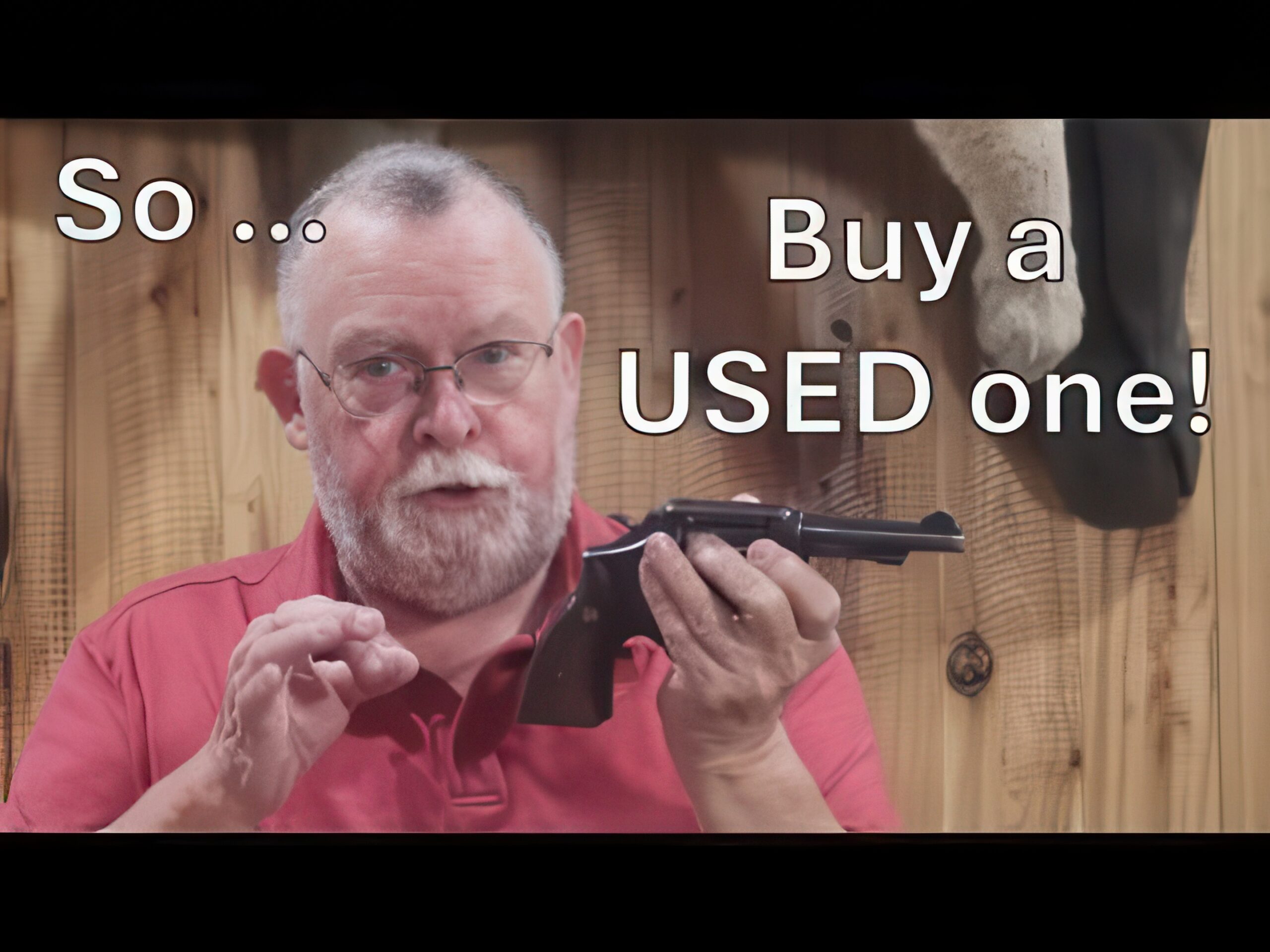
While some think the double action revolver is obsolete, there are many who still find effective use for it. Of late we’ve heard a lot of complaints about quality control on currently manufactured handguns of this type. One answer is to simply buy a good used one that was built earlier. But how do you “kick the tires” and make sure it’s working right…or for that matter, check the one(s) you already own?
Enter Dick Fairburn. I’ve known this guy for decades. He’s had a long and distinguished career in law enforcement, specializing in weapon use. When I chaired the annual Panel of Experts on Firearms/Deadly Force Training issues for the International Law Enforcement Educators and Trainers Association (www.ileeta.org) I always tried to get Dick on the panel if he was available.
In this video, he takes thirty-some minutes to meticulously show you how to function check a double action revolver. It’s the best tutorial of its type that I’ve seen. In fact, I think so highly of it that I’ve made it pre-class viewing for students taking our popular two-day revolver class. Ulterior motive: it gives my students an extra half hour of trigger time on the range. Many thanks to Brother Fairburn, who has many other very useful presentations on his YouTube channel.
or watch video here.
Another great resource is The Gunsmith Inc channel with Nelson Ford for all things DA revolver & 1911s.
Agreed.
Overall, very good presentation. From the terminology he uses, Mr. Fairburn apparently has a lot of experience with Colts as S&W uses other labels. (bolt=cylinder stop, crane=yoke, “timing”=carry up, etc). FWIW, older action Colts don’t lock the cylinder up/align it with the barrel until the hammer’s on the way down.
All that said, your ability to carefully examine any firearm depends upon the shop. During the covid period I ran across an example of a S&W K frame I wanted, but it was obviously ah, well worn and probably suffered the attentions of someone who thought they were a gunsmith. BEWARE OF THIS SITUATION! However, they’d obviously bought a lot of used guns and needed to get rid of them. So, they were most cooperative when I came back with my tools and gages and did a tear down. In fact, they were fascinated. The foundation was fine, I did manage to beat the price down given the wear and butchery.
Do beware of wear on the left edge of the hole in the breech the center pin goes into. It’s a sign of poor fitting of what S&W calls the bolt that pushes the center pin forward and allows the cylinder to open. The bolt face should be at least level with the breech face when pushed forward, slightly proud is a good thing. Easy, but PITA to fix.
Great offering Mass. I have an older Dan Wesson 357. This gave me several places to check on it.
Kudos to Mr. Fairburn for a rock solid presentation. Additional congrats are in order because Dick recently escaped The People’s Republic of Illinois for fairer accommodations to the South, Texas if I remember correctly.
Interesting how “improvements” are not always improvements, even when it comes to safety. We are in the “Golden Age of Technology,” so revolvers ought to be very close to perfect, just like some cars are. The weak link is . . . . . . . . . . . . humans. : (
I may have missed it, but one thing I didn’t hear discussed was checking for “end shake” in the cylinders.