

| Issue #98 • March/April, 2006 |
I briefly brush past my favorite lavender bush and my skirt is fragranced for the entire day. Every time the fabric rustles, the aroma wafts up to remind me of purple rows of lavender under a cloudless Provencal sky, chunky handmade bars of lavender soap, lavender sachets wrapped in colorful fabric scraps, and earthenware pots of herbs blended with lavender flowers for sale at a French open-air market.
After finding lavender at an herb farm in Paso Robles, California, I quickly made a place of honor for it in my garden. But it grew so stout, always searching out a better view of the sun, crowding out every tender plant in its path. It supplied me with lavender bundles as thick as my arm, and friends carried home clippings on each visit. It seemed the more I cut it, the happier my lavender was, as if grateful for a haircut. The lavender lured bees, butterflies, and hummingbirds to my garden, boosting my fruit tree’s harvest, thanks to the extra pollinators in my garden.

Lavender is finding popularity on this side of the globe, even though it has its roots in Europe. It is cultivated extensively in England, France, and Italy. English lavender (lavandula vera) is considered the most aromatic variety. The name is derived from the Latin, meaning ‘to wash’, since Lavender was a favorite additive in Greek and Roman’s baths. It has been used throughout history for countless purposes, from love potions to anti-flatulence aid.
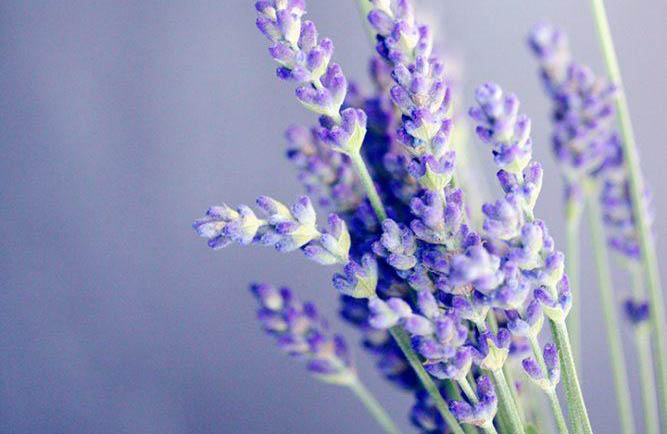
Lavender is a perennial that grows into a branching shrub. Selection of a sunny, well-drained spot with ample room for growth is essential. The stems become woody in nature and the foliage is silvery. The small purple flowers grow in a whorl pattern. The entire plant is aromatic, which may be observed when it is cut, but the primary source of aromatic oil is in the flowers. The plant has a tendency to get leggy, and should be trimmed in early spring.
Lavender flowers may be collected before the last flower opens on the stalk. These may be hung upside down in bundles in a shady, airy location until completely dry, then stored in airtight containers for later use in sachets, potpourri, or teas.
Lavender has such a variety of functions, that it’s difficult to get enough of this aromatic plant. Not only is it exquisite in home décor or fragrance, but it has health benefits as well. A few drops of lavender oil in the bath go a long way to fighting stress and fatigue. Some even swear that rubbing Lavender water or oil on the temples helps ease the pain of headaches. It’s fragrance has even been used to fend off unwanted insects. Many have found lavender tea a soother for nerves, pain, exhaustion, and depression. And for the icing on the gateau, the French have been cooking with lavender for years. It adds a fragrant, herbal quality to many dishes.
Some precaution must be taken in the use of lavender. No more than 3 cups of lavender tea per day is recommended, and concentrated lavender oil should not be taken internally. Rarely skin irritations have developed due to allergic reaction after topical application of lavender oil. As with any herbal preparation, it is suggested that you consult your physician to ensure that it does not interfere with other medications or treatments for existing health conditions.
Lavender recipes
Lavender tea
This soothing tea may cut the stress of a long day, or calm a pounding headache.
1 tsp. dried lavender flowers
1 cup boiling water
Place dried lavender flowers in tea strainer. Steep in hot water for 10 minutes. May be flavored with honey or lemon as desired.
Herbes de Provence
Throughout France, little corked pots of herbs may be found jauntily scribbled with, ‘Herbes de Provence’. This herbal mixture may be used with salads, vegetables, fish, poultry, pasta, and sauce. It has become a multi-purpose seasoning in my cabinet.
2 Tbsp. dried basil leaves, crushed
1 Tbsp. dried fennel seeds
1 Tbsp. dried lavender flowers, crumbled
2 Tbsp. dried marjoram, crushed
2 Tbsp. dried rosemary, crushed
1 Tbsp. dried sage, crushed
1 Tbsp. dried savory, crushed
2 Tbsp. dried thyme, crushed
Toss together lightly to mix. Place in airtight jar. May last for several months.
Yield: ¾ cup
Tuna Steak a la Provencale
In the fall and winter, tuna is caught off the coast of Southern France and the French thoroughly enjoy incorporating it into their cuisine.

4 – 6 oz. tuna steaks
1 lemon, squeezed for fresh lemon juice
4 Tbsp. olive oil
½ tsp. salt
½ tsp. pepper
1 Tbsp. Herbes de Provence
1 Tbsp. parsley, freshly minced
2 Tbsp. capers
1 onion, peeled and chopped
1 garlic clove, minced
4 Tbsp. olive oil
Whisk together olive oil, lemon juice, salt, pepper and Herbes de Provence. Place tuna steaks in dish and pour over olive oil mixture as marinade. Chill for at least 2 hours. Drain the steaks. The tuna steaks may be grilled over a barbeque or sautéed with additional olive oil over medium heat until tender. In another pan, sauté parsley, capers, onion, and garlic in additional olive oil until tender. To serve, place cooked tuna steaks on serving dish and top with onion, caper sauce. Garnish with additional fresh parsley.
Yield: 4 servings
Provencal garlic bread
This easy recipe may soon replace the standard garlic bread in your household.
1 loaf, fresh French bread, sliced thickly
½ cup butter, at room temperature
1 Tbsp. Herbes de Provence
1 garlic clove, minced
Fold Herbes and garlic into softened butter. Generously coat each slice of French bread with the Provencal butter. Place the slices on a large baking sheet and place under broiler in oven for 10 minutes until golden brown. Serve immediately. Yield: 12 slices
Almond, Lemon and Lavender Biscotti
This is an interesting accompaniment with your next cup of cappuccino.
2 eggs
¾ cup sugar
½ cup vegetable oil
1 Tbsp. grated lemon peel
1 tsp. dried lavender flowers, crushed
1-¼ tsp. baking powder
1 tsp. vanilla extract
¼ tsp. salt
2 cups flour
1 cup almonds, coarsely chopped
additional sugar
Preheat oven to 350 F. In a large bowl, combine eggs, ¾ c sugar, oil, lemon peel, lavender, baking powder, vanilla, and salt. Blend. Add the flour, and chopped almonds and stir to make a dough. Knead dough on a floured surface about 10 times. Divide the dough in half. Make each half into a log about 2 inches in diameter. Place the logs on an ungreased baking sheet. Sprinkle them with additional sugar. Bake until firm, about 30 minutes. Cool for 10 minutes, but leave the oven on. Carefully transfer the logs to a cutting board. Cut crosswise with a serrated knife into 1/2-inch thick slices. Place with cut side down on baking sheet. Return to the oven and bake until lightly browned, approximately 20 minutes. Yield: Approximately 3 dozen.








A growing number of cases have been reported to coincide with topical exposure to lavender and tea tree oil, and the condition went away after the males stopped using the oil-containing products, Ramsey said. Researchers at the NIEHS, including Kenneth Korach, Ph.D., a co-investigator for the new study, previously found laboratory evidence that lavender and tea tree oil have estrogenic (estrogen-like) properties and anti-androgenic (testosterone inhibiting-like) activities, meaning they compete or hinder the hormones that control male characteristics, which could affect puberty and growth. You may find your manhood changing uncomfortably.