

 |
|
| Issue #66 • November/December, 2000 |
When the holidays roll around, a lot of folks get bored with the “same-old meal.” You know, turkey, mashed potatoesthe whole traditional meal. But some adventurous families might like to try something a bit differentsomething more in tune to their self-reliance.
As a family of mixed Indian heritage (as well as hard-core, traditional hunter/gatherers), we often turn to a feast day of a different setting.
Remember, though, that Native Americans did not celebrate “Thanksgiving,” but feasted with joy the fall hunts and stored crops, and moved to safe, snug winter camps, or saw their permanent home fortified against winter winds. This was, indeed, a cause for thanksgiving.
Each region had its own foods for feasting, and the recipes differed from tribe to tribe. Where Northwestern tribes feasted on salmon and whale, Southwestern Indians gathered around a bounty of tamales and chiles. (Chile is the correct spelling of the chile pepper in the southwest, as opposed to the “chili” of elsewhere. Chili is a dish, often composed of chilies, meat, and sometimes beans.)
For our Native American feast, however, let’s try one of our favorites, which is widely adaptable to any household or personal taste. This meal can be prepared in the traditional way, by a fireside, using clean hot rocks and dropped into a clay pot (or even older, a cleaned paunch bag, propped up by several sticks driven into the ground), more modern camp cooking, or the way I most often make our feast, in a Dutch oven on our wood stove. The main course can even be done in a large crock pot, ensuring tender meat and very little work.
You can use any wild game meatdeer, elk, moose, caribou, or substitute a loin of pork or even a piece of tender beef loinwhatever you have available.
Likewise, any mushroom will do, but we prefer wild mushrooms we have gathered during the spring and summer months. (If using wild mushrooms, be absolutely sure you know what you are gathering and feeding to your family. Some are deadly.)
I like dried morels or white meadow mushrooms. Dried, rehydrated mushrooms are traditional and give a richer flavor. You can use mushrooms from your produce counter.
In place of the wild onions and garlic, you could use domestic varieties, but you will be lacking flavor.
Once you taste this unusual holiday meal, you’ll quickly see what the word “feast” really means. And, as you read the ingredients, you can easily see how well they fit into the lifestyle of self-reliant people.
|
||
1 venison boneless loin (backstrap), about 3 pounds 1 handful of wild onions ½ handful of wild garlic |
2 quarts water 1½ cups dried mushrooms 2 tsp. salt 1½ cups cleaned wild rice |
|
Sear boneless loin, with fat trimmed, in just enough shortening to get the job done, allowing about ½ pound per person. If the loin is too long to place flat in roaster or Dutch oven, cut in two. (Sear all sides.)Add ½ cup cleaned, peeled wild onions (bulb end only), and ¼ cup cleaned, peeled wild garlic. Sauté lightly. Add water, mushrooms, and salt. Simmer uncovered for three hours. Add wild rice, cover, and simmer for 20 minutes. Uncover and simmer for 20 minutes more or until rice is tender.
|
||
|
||
2 cups dried wild blueberries (if using fresh or canned berries, use 4 cups)½ cup sugar or honey
|
Topping: 1½ cups flour 1 tsp. salt ¼ cup sugar or honey 2 Tbsp. butter ½ cup milk |
|
Place rehydrated blueberries (or fresh or canned blueberries) in baking dish and sprinkle with sugar or honey. For the topping, mix all dry ingredients then cut in butter and add as much milk as is needed to make a thick batter. Spoon this on top of the berries and bake for about 1 hour at 350° F. Serve hot with maple syrup, honey, or whipped cream. |
||
|
||
4 cups flour 1 Tbsp. baking powder 1 tsp. salt |
1½ cups and a little more warm water shortening or lard to deep fry |
|
Mix dry ingredients in a bowl. Add water and mix thoroughly. Knead, adding more water or flour as needed. Dough should end up elastic and soft but not sticky. Pinch off balls the size of a small peach. Pat back and forth in hands until about ½ inch thick.Melt shortening in heavy frying pan or heavy deep fryer. Heat until hot but not smoking. Carefully fry each bread in hot fat, turning till each side is golden brown. Drain on paper towels and serve hot with warm honey.
|
||
|
||
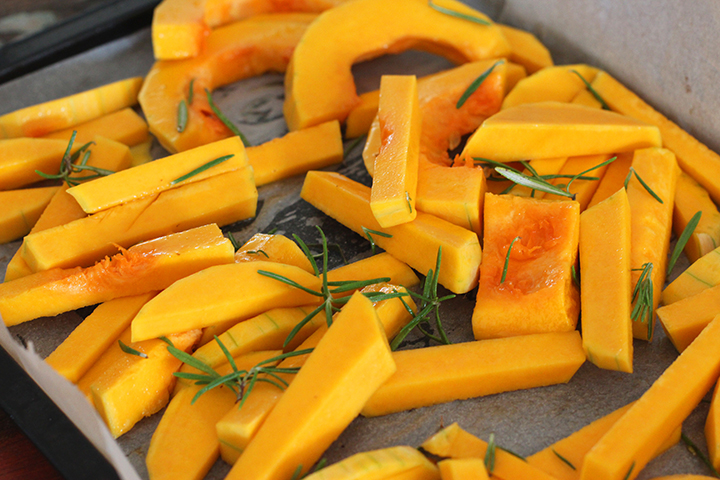
1 large sweet winter squash or 2 smaller squash, such as acorn (I prefer Native American squash such as Mayo Blusher, Hopi Pale Grey, or Española, which are sweeter and fruity tasting) 1 cup fresh raw wild greens, such as lamb’s-quarters |
¼ cup wild hazelnuts 2 cups sweet corn ¼ cup cranberries (optional) 1 Tbsp. honey or maple sugar for each squash half 1 Tbsp. butter for each squash half |
|
Slice the squash in half and remove seeds. (Don’t forget to save those seeds for your garden next year.)Arrange on cookie sheet and bake ½ hour at 300° F. Meanwhile, chop the wild greens medium fine and chop the hazelnuts very fine. Add these to the corn. I like to add ¼ cup of fresh cranberries for taste and color. Spoon this corn mixture into each squash half. Add honey on top, then butter. This corn was traditionally dried green (sweet) corn, which was rehydrated before use, giving a sweet, slightly nutty flavor to the dish. Bake until the squash is tender and serve very warm.
|
||
Sources for Native American squash seeds
Abundant Life Seed Foundation
P.O. Box 772
Port Townsend, WA 98368
Native Seeds/SEARCH
2509 N. Campbell Ave. #325
Tucson, AZ 85719
Seed Dreams
P.O. Box 1476
Santa Cruz, CA 95061


One year, I shared our wild foods for a harvest party. I was not sure how well wild foods would be accepted by teenagers who were raised on supermarket foods, so I was surprised that they were eager to try new foods and came back for seconds and thirds. The meats were game meat–smoked summer sausage, bulk sausage, jerky–a fillet of grilled salmon and a special kind of smoked salmon called “squaw candy”. Garden vegetables. I had morels, huckleberry pie and wild blackberry wine, too. Such abundance!
When I lived in rural Montana, everyone in many backwoods families hunted so there was never any shortage of deer and elk. A traditional Thanksgiving meal for many families was saddle of venison with morels and huckleberry pie.
If you have food on your table this Thanksgiving, you have one more reason to be grateful.