

 |
|
| Issue #54 • November/December, 1998 |
There have been very few times in our nation’s history when “We, the people” have banded together so fiercely as we did during World War II. We were united in our effort to bring about a successful end to the global conflict and we went about it with utmost dedication. Everyone had someonehusband, sweetheart, relative, friend, neighborwho was in the armed services. Many of us who remained at home were employed in the defense industry, but no matter where we worked we were all supportive of the war effort.

A variety of pepperssome spicy, some not provide wonderful flavor for all sorts of dishes from salads to salsa.
Certain foods were rationed, as well as tires and gasoline. We had our shoes repaired and we forgot about buying new cars. Most of us depended on crowded buses and trains to get to wherever we wanted to go. A sense of pride swept over us every time we heard our national anthem or saw our flag displayed. Patriotism spilled over into every facet of our lives. Food gardens weren’t merely “gardens.” They were Victory Gardens! We were urged to grow as much as we could, and a pantry filled with home-canned vegetables was something to be proud of. The home front’s frugality made it possible to ship much needed food supplies overseas to support our troops.
Anyone who had space to grow anything in the food line got out his gardening tools and laid out rows for a garden. Some of the folks, who couldn’t do much actual gardening, managed to prepare “V” shaped plots on their front lawns and fill them with bright colored flowers. V for victory! On many porches there were large pots of red, white, and blue petunias. Anywhere you looked, someone was doing his part to show support for the war effort. Even lawns of public buildings had special flower beds designed to remind passers-by of our team effort.
Now it doesn’t seem so important to hawk the virtues of the Victory Gardens. We’re not at war and there are supermarkets brimming over with every kind of produce imaginable and from every country on earth. We used to enjoy local fruits and vegetables during their seasons. Now we may have almost anything we want at any time of year. Abundance is ours.

Let’s not forget to protect our garden friends such as this green tree frog who makes his livelihood devouring insects. No pesticides please.
Despite the overwhelming amount of produce available, the fact stands out that a great deal of this produce cannot measure up to the great taste of the things we harvest from our own kitchen gardens. With every mile produce is hauled, flavor is sacrificed. What is it they say about sweet corn? To enjoy peak flavor, run as fast as you can to the kitchen with your fresh ears of corn. Strip away the shucks and silks and drop the clean ears into a pot of boiling water. Cover and let simmer five to seven minutes. Then remove to a plate, dribble with butter, season with salt and pepper if you like, and enjoy. No loss of flavor here!
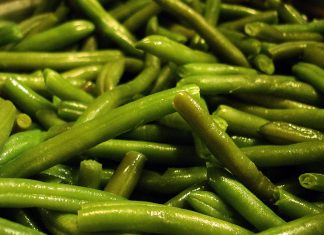
And what about those bargain-priced bins of green beans often seen at odd times in the produce markets? A complete waste of time and money if you’re looking for flavor. If flavor is missing, you can bet something else has slipped away too.
To go back to the Victory Garden idea may not be a bad thing. We can certainly have some personal victories over our choice of food supplies and we can enjoy varieties of home grown produce never seen in markets. We also know we’re getting food that is free of pesticides.
One of the first requirements for the Victory Garden was a load of “well-rotted barnyard manure” which was spread over the garden plot, dug in and allowed to rest for several weeks prior to planting. Depending on the severity of the climate, some gardeners also applied a thick coating of mulch.
The well-rotted barnyard manure may not be as available today in some areas as it was during the forties and before. However, some of the best fertilizer to be found comes from chicken houses where litter is cleaned out after every flock is sent to market. Poultry manure is twice as valuable as cow manure on the basis of nutrients contained. Gardeners need to be aware of what is available locally at a reasonable cost. County Extension agents are often a good source of information as they are in touch with their agricultural communities.
A well balanced soil should not be dependent on the usage of a lot of chemicals or soil additives. Unfortunately, since World War II we seem to have drifted toward dependency on chemicals. We use them to enhance production, kill weeds, fight off intruders, eliminate bugs, and on and on. When I walk into the chemical section of a gardening supply house, I often wonder how the employees survive their place of employment and, usually, no one is wearing a protective mask. This is a far cry from a load of well-rotted manure.

Mixed vegetablessquash, peppers, tomatoes, beans, and sprigs of sweet basilpromise real culinary treats.
Recently a lady told me she has some friends who give her cucumbers. “They’re perfect looking, but they taste bitter. Do you know what causes them to be bitter?” I told her my guess is that the growers are using a commercial fertilizer. I have never tasted an organically grown cucumber that was bitter.
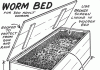
A good compost pile is one of the best friends a gardener can have, and it’s not difficult to start. Just select a convenient spot accessible to the garden and enclose a space about four-feet by four-feet with some type of fencing that will keep the compost contained and provide good air circulation. Have an easy side opening so you may occasionally stir or turn over the pile. Start putting in kitchen waste (egg shells, vegetable peelings, wilted flowers, etc., but no meat scraps), lawn trimmings, leavesanything organic. Avoid any grass or weeds that have gone to seed as you don’t want to spread a crop of gremlins every time you use the compost on your garden plot.
A shredder is a very useful machine to have to aid in pulverizing shrubbery and vine clippings, rose trimmings, and all manner of small greenery. The smaller the particles, the sooner they will decompose into that black gold known as compost. Along with the compost will come earthworms. When the latter appear, welcome them with a dance around the compost bin. Who cares what the neighbors think. This is a type of victory in itself.
Here in southwest Arkansas (Zone 8), as in many places, we gardeners are lucky enough to be able to garden almost all year long. We have cool season gardens when we grow many types of greens, onions, radishes, etc. During the summer a greater number of vegetables may be grown.
One of our most anticipated summertime treats is a salad made from our homegrown vegetablestomatoes, onions, sweet peppers, cucumbersall cut in chunks and ready for a favorite salad dressing. Personally, I prefer a bit of plain mayonnaise as it doesn’t detract from the wonderful fresh flavors of the veggies.
Exit supermarket. Victory is ours.