
 |
|
| Issue #96 • November/December, 2005 |
When almond butter replaced peanut butter in my diet (on doctor’s orders), I discovered I really liked the almond better. And it opened my eyes to the world of “other” nut butters. I also discovered they were quite expensive. I was lucky if I found a 10 ounce jar of almond butter for less than $4.00, a luxury compared to even the 100% natural peanut butter. So I did some experimenting and came up with my own recipe for almond butter that satisfied me. The same process can be used for other nuts.
To make almond butter, I use a cookie sheet or jelly roll pan to dry roast the nuts since I prefer them roasted. I also use my food processor. I have used a blender, but it took longer, required more scraping the nuts off the sides, and I had to add more oil to get a decent butter. A rubber spatula and a jar to store the butter in complete the required equipment.
Ingredients are simply a couple cups of the desired nuts and a little bit of olive oil. I buy larger bags of raw almonds, throw them in the freezer, and take them out as I need them. I prefer to start with raw nuts and do my own roasting. That way, I get freshly roasted nuts with nothing added. If I need to add oil, I prefer to use extra virgin olive oil.
|

The actual process of making the butter is not difficult. I put two cups of nuts on the baking sheet and pop them into a preheated oven to roast at 350 degrees, leave them there for several minutes, then remove the pan and stir. I return the pan to the oven and roast for a few minutes more, watching the color of the nuts, striving for a toasted, but not burnt, look. How long before the nuts burn? That depends upon the oven and the pan. My Air-bake pan requires a longer time than a thin baking sheet. The thin sheet can take 8 minutes or less. Just watch the nuts the first time to get an idea how long they need to bake in your oven with your pan. Once you make a batch of burnt almond butter, you will be motivated to watch the time.
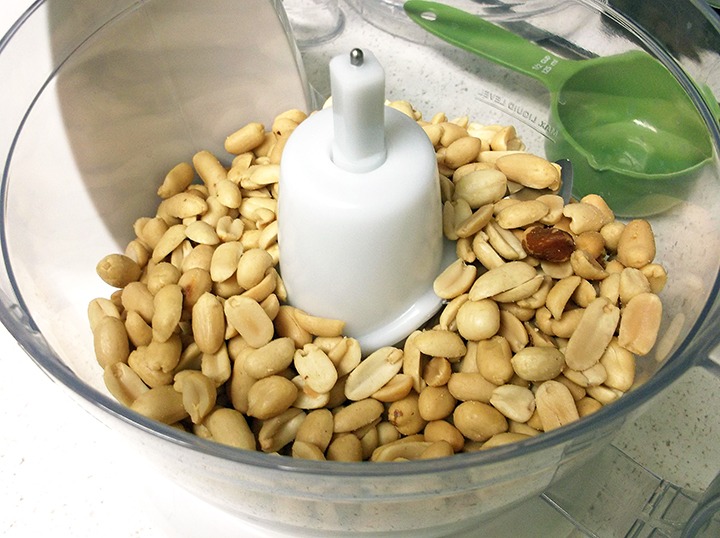
After toasting the nuts, I allow them to cool before dumping them into the processor. Since my food processor has just one speed, I flip the switch and watch the nuts bang wildly and loudly against the sides of the container. Gradually they get chopped up finer and finer. If particles build up on the sides of the container, stop and scrape them down with a rubber spatula. Continue processing until it begins to ball up. You may have to break up the ball, but it is most important to be patient. Sometimes the ball will bang around for a while before it begins to break down and look creamy. It takes several minutes.
It is during this time when it is balled up that I add some oil. I will add a teaspoon of oil and run the processor some more. If the butter is creamy enough without it, I omit the oil. I have never added more than 3 teaspoons of oil to the 2 cups of nuts. It is important to be patient and give the processor a chance to make the butter. Toward the end, more oil can be added if you like it creamier. If chunky style is desired, just roast a few extra nuts, chop, and stir into the finished butter.
While it is possible to make peanut butter in this same manner, I don’t bother, because I can buy excellent peanut butter at a reasonable price. There are so many other possibilities for nut butters. Below are some notes about different ones that I have tried.
Almond butter
Since almonds are more reasonably priced and easier to digest, I make this type of butter more frequently than any of the others. Raw almond butter can be found in the health food stores and some people prefer the raw kind. You simply process the nuts without roasting. Two cups of raw almonds, processed with a minimum of oil, will fill a 10 ounce jar. If you are roasting them, throw a few extra nuts on the baking sheet for a warm snack when you take the pan out of the oven. They are quite tasty.
|

Cashew butter
Cashews are more expensive (where I shop), so I buy the least expensive raw white pieces and roast them. They brown much faster than almonds (hardly seven minutes on the Air-bake pan), so be vigilant or they burn and taste terrible. Cashews are softer than almonds and grind up quicker too. While cashew butter can be made without oil, it is fairly dry, so add some oil for a creamy smooth butter. This butter tastes more like peanut butter than any of the others I’ve made, but yet slightly different.
Raw pecan butter
Raw pecan butter is the easiest to make. No roasting. Pecans are soft so they process quickly and make a very smooth butter.
Hazelnut butter
Hazelnut butter is available at health food stores, so I tried to make some. Unfortunately, I roasted them a tad too much and the butter had a twangy taste. Since hazelnuts are quite expensive, I haven’t tried it again.
Since I add no preservatives, these nut butters can become rancid. I always store mine in the refrigerator and try to use them up within a month or so.
Each of the nut butters tastes a bit different, so each can be used differently. I like the almond butter on a sandwich with apple butter or jam. Some are best on a cracker of one kind or another. I eat whole grain rye crackers, which always taste better with some kind of nut butter. Any of these improve the taste of a rice cake, too. One of my cookbooks uses these odd nut butters quite a lot; they seem to work well in cookies and quick breads.
If you like experimenting, check a health food store for their variety of nut butters, buy the appropriate nuts, roast (or not), and make the butter yourself. It isn’t hard.