
 |
|
| Issue #92 • March/April, 2005 |
Many of us who garden have learned the benefits of starting our own vegetable and flower plants. There are several benefits to having a spot to start your own plants:
- Getting a jump on the normal growing season.
- Not having to wait on commercial plant growers.
- Growing uncommon or unique varieties that you particularly like but are hard to find.
- Economicsonce you have everything in place, you can grow your plants for little or no cost.
|

First, I’ll describe the construction of our germination bed we use in our greenhouse. Our small greenhouse is built onto the side of our workshop. We have started thousands of plants in this homemade structure over the years. To get the seeds sprouted and growing, I built a heated germination bed on one of the benches in the greenhouse. It is at a convenient work height and really gets the plants going. The big advantageand something to keep in mind when starting your plantsis that it is heated from the bottom. Regardless of how you construct your germination bed, the secret is to provide gentle heat from beneath the starting flats or trays. There are electrically heated rubber mats available, but I have not been able to justify the high prices asked for the mats offered in the growing supply catalogs. Also, being somewhat of a do-it-yourselfer, I thought that the way to go would be to make my own to fit my needs.
On the bench
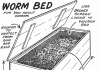
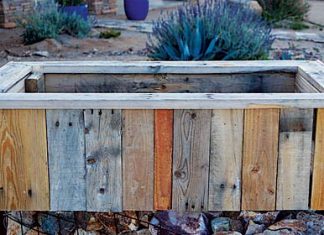
The heated germination bed that I constructed in our greenhouse is simple and works very well. I began by framing in an area of one of the greenhouse benches with some old 1 x 6 lumber. The measurements were not critical, but I did allow space for several of the black plastic seedling trays that we had recycled from a local grocery store that was selling commercial plants. The accompanying illustration pretty well describes the sizing and most of the construction details.
Once I had the frame built, I cut a piece of foil-backed insulation board to fit snuggly inside the frame. Any cracks were then sealed with a squirt of expandable foam insulation that is available at any hardware store.
|

Next, a 1/2-inch layer of clean sand was added and spread evenly over the insulation board. I then arranged a heat cable as evenly as possible on top of the sand. After it was in place, I added another layer of sand and spread it evenly over the cable.
Here’s an important note about the heat cable. The cables used in this project and those mentioned below are not the type used to keep pipes from freezing. I purchased them from a commercial grower’s supply company. They are made just for the purpose we are using them for and keep the soil at about 70° F.
Another trick I added was the covers, or lids, for the germination beds that you can see in the photograph. I simply made these from 1 x 2 stock of a convenient length. I covered them with the same woven plastic material that the greenhouse is covered with. They can be raised or lowered as temperatures dictate. Even in the greenhouse, the covers can help to get plants sprouted more quickly.
Making a “hot bed”
|
One of the old standby methods of creating a heated germination bed, or simply a “hot bed,” is to make the structure right on the ground from some concrete blocks or treated lumber. It can be built against the garden wall, against an outbuilding, or freestanding. It can have a sloped covering or can be flat. I prefer to make it higher in the back than in the front to allow for a sloped covering and runoff of rain. The covering can be in the form of some old window sashes, used storm windows, homemade frames covered with plastic or glass, or anything else you come up with to do the job. The difference in this structure and an ordinary cold frame is that for germinating seeds, we will again be providing bottom heat. This can be done most easily in two ways.
The first method for heating your hot bed is as described above, using a heat cable. Arrange it evenly in the bottom of the bed, being sure that the wire does not cross itself. Doing so can cause the cable to overheat, burn out and possibly cause a fire.
The second method is the “old-fashioned way.” As you might already know, decomposing plant material can create a good amount of heat. This is especially true if the plant material has been processed through some type of livestock first! To utilize the benefits of this decomposition, remove enough soil from your planting bed so that you can replace it with about a foot of fresh livestock manure. As the manure decomposes, it will create steady even heat for your sprouting seeds. It’s a good idea to keep the bed in the 75-85 degree range. A cheap outdoor thermometer will help you keep tabs on the temperature. Monitor the temperature in the bed, covering it at night and on cool cloudy days, and raising the cover during the day as conditions warrant. The sun will heat things up even on cool days, so keep an eye on it. It is easy to “cook” young plants if they don’t get some ventilation.