
BHM Newsletter
Volume 9 Number 2
February 22, 2007
INSIDE BHM
New Issue
The March/April issue should have arrived in your mailbox by now and should also be hitting the newsstands. In it, you'll find articles like:
plus a dozen more articles and features.
If you can't find a copy at a newsstand near you, you can order the issue online from our Back Issues page. Better yet, why not subscribe now so you'll never miss another issue!
Oops!
Did anyone notice we made two goofs in our Table of Contents? We fixed them online, but if you check the print issue, you'll notice "Build an old-fashioned hotbed and start your seeds in style" has Charles Sanders as the by-line instead of Roy Martin. Sorry about that Roy.
We also forgot to change the title of John Silveira's article from "Ancient history of modern plants" to "Where our garden crops come from." At least we got his name right!
Google Ads
You may have noticed we've started adding Google advertising to many of our web pages. Google's technology is amazing. Generally, within a few minutes of an article being converted, they've already indexed the page, figured out what it's about, and begun serving ads targeted to the content. We have noticed they're not perfect, though.
For example, in Claire Wolfe's new series, "Monkey-Fu," the main character is named Charlotte Carolina. Evidently, Google's indexing spider didn't figure out the story is about how a series of events helps a woman find her way to Hardyville because nearly all the ads that display on those pages are related to the city of Charlotte, North Carolina. I wonder if the indexer will make the same mistake on this page? Still, they're serving relevant ads on nearly every other page, so a tip of the hat to them for a job well done.
Stay warm.
--Dave
SELF-RELIANCE TIPS
Wood Stoves and Air Pollution
Clean Burning Wood Stoves Minimize Health Risks
Many households use wood as a primary heating fuel, while other households use wood stoves and fireplaces as supplementary heating sources. For many people, the sight and smell of wood smoke curling out of a chimney brings back fond memories of hearth and home. Wood is a renewable resource, unlike fossil fuels such as oil, coal and gas, which are non-renewable. In fact, if firewood is harvested in a sustainable way, woodlots can provide an abundant source of fuel for years to come.
Unfortunately, smoke from wood burning stoves and fireplaces can be a significant source of air pollution, negatively impacting public health and the environment. People can reduce the amount of smoke from their wood stoves by choosing low-emissions certified stoves, operating them properly, and using good quality firewood. This will improve combustion efficiency, reduce emissions, help protect public health and the environment, and save fuel costs.
The Problem: Smoke from Wood Stoves is a Public Health Risk
The smoke produced from woodstoves and fireplaces contains over 100 different chemical compounds, many of which are harmful and potentially carcinogenic. Wood smoke pollutants include fine particulates, nitrogen oxides, sulfur oxides, carbon monoxide, volatile organic compounds, dioxins, and furans. Breathing air containing wood smoke can cause a number of serious respiratory and cardiovascular health problems. Those at greatest health risk from wood smoke include infants, children, pregnant women, the elderly, and those suffering from allergies, asthma, bronchitis, emphysema, pneumonia, or any other heart or lung disease.
Fine particulate matter, the very small particles that make up smoke and soot, may be the most insidious component of wood smoke pollution. The most harmful particles are those ten microns or less in diameter (a human hair is approximately 70 microns in diameter). These particles can easily be inhaled deep into the lungs, collecting in the tiny air sacs (called alveoli) where oxygen enters the blood, causing breathing difficulties and sometimes permanent lung damage. The particles are also often composed of harmful substances, such as sulfate, which is acidic, and toxic trace metals like lead and cadmium. Inhalation of fine particulate matter can increase cardiovascular problems, irritate lungs and eyes, trigger headaches and allergic reactions, and worsen respiratory diseases such as asthma, emphysema, and bronchitis, resulting in premature deaths.
Pollution from wood stoves is a particular concern in the winter when cold, stagnant air and temperature inversions limit air movement. Communities located in valleys are more strongly affected. As wood burning increases on cold, clear, calm nights, smoke is unable to rise and disperse. Pollutants are trapped and concentrated near the ground, and the small size of the particles allows them to seep into houses through closed doors and windows.
In addition to its potential health impacts, wood smoke contributes to the unpleasant brown haze we often experience on winter mornings. Regional haze reduces visibility and obscures our enjoyment of scenic vistas.
The Solution: Increasing Wood Stove Efficiency to Reduce Smoke
Smoke from wood stoves is generated primarily by incomplete combustion, which can be caused by a number of different factors related to the wood stove's efficiency. Improving a wood stove's efficiency will improve the combustion process, and thus reduce the amount of smoke and harmful air pollutants released into the air. A wood stove's efficiency is affected by both the design features of the stove and how it is operated and maintained. Here are some ways to improve wood stove efficiency, resulting in less smoke and money savings on wood fuel costs.
Select a clean-burning stove and make sure it is the proper size
When buying a new wood stove, make sure you are purchasing a certified clean burning, more efficient model with design features that promote complete combustion. Wood stove design technologies that are desirable include advanced combustion stoves, catalytic stoves, and wood pellet stoves. Advanced combustion stoves are designed to create the conditions necessary to burn the combustion gases as they go up the chimney. Catalytic stoves contain a catalytic combustor that ignites smoke gases and particles at a lower temperature, resulting in a more complete burn of harmful substances. Wood pellet stoves burn small pellets of compressed wood by-products instead of cordwood. The pellets are fed into the stove through a hopper at a controlled rate, producing a clean optimum burn with low emissions.
The U.S. Environmental Protection Agency (EPA) set standards for wood stoves in 1990. Stoves cannot be sold to consumers in the U.S. unless they meet certain emission standards for particulate matter and carry the EPA Emission Certification label. Certified stoves reduce smoke emissions by as much as 90 percent, compared with conventional stoves, and are much more efficient. EPA-certified stoves often include design features that promote secondary combustion aimed at burning off dangerous chemicals and toxic substances before they leave the firebox. Be sure the wood stove you are using is EPA-certified, and if your wood stove is old, consider replacing it with a cleaner, more efficient model if at all possible.
EPA offers advice to consumers for purchasing woodstoves, ranging from considerations relating to installation, operation and maintenance, to determining the best size stove for your heating needs. A wood stove should be the proper size for the area being heated. A stove that is too large or too small will create more pollution.
Make sure your wood stove is properly installed
All wood stoves should be properly installed to ensure tightness, safety, proper draft and efficiency. Improper installation could result in more air pollution, chimney fires, or house fires. Follow the manufacturer's instructions and recommendations for flue size, clearances and connections, and consider having your wood stove installed by a certified installer. Before installation, be sure to check with your local authorities regarding building codes and permits, and notify your fire insurance company.
Choose the proper fuel
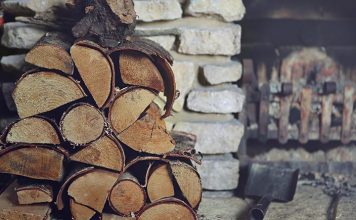
The best wood to use in wood burning stoves is air-dried hardwood (oak, beech, maple, elm, ash - not pine), seasoned for six to eight months prior to burning and stored under cover for protection from the weather. Wet or freshly cut ("green") wood is not energy efficient because the heat produced is used to evaporate water, rather than heat the home. The water content of a tree or freshly-cut firewood can be as high as 50 percent, compared with 15 - 20 percent in dry, well-seasoned wood. Burning dry wood produces a more even burn and helps prevent the formation of creosote, a highly-flammable crusty deposit that sticks to the inside walls of your chimney.
The use of properly sized wood pieces is equally important. Wood should be split to a maximum thickness of four to six inches, depending on stove size. This size increases the surface area exposed to flame, resulting in higher burn efficiency.
NEVER burn household wastes such as plastics, color newsprint, diapers, magazines, packaging materials, coated or laminated papers, or painted or treated wood in residential stoves or fireplaces. When burned, these products produce smoke, odors, and release toxic fumes, and the remaining ash may be hazardous. Only dry, untreated wood is acceptable to burn.
Use proper burning techniques
Efficient wood burning requires proper starting, an adequate supply of oxygen, and temperatures high enough to ensure that gases coming off the fire are burned. Start a wood stove fire small at first, with dry kindling or small pieces of clean paper. Once the flames from the kindling just begin to subside, add several small pieces of wood, being careful not to smother the fire. The key to maintaining a good fire is careful control of the air supply. The fire should be small enough for air to get to it, but large enough to be hot and able to be hot and able to burn for hours without opening the wood stove door. Unwanted emissions can be released in the house whenever the wood stove door is opened.
A fire that is burning brightly without visible smoke is a sign of good combustion. Excessive smoke from a chimney in the middle of a burn means the smoke is not being burned in the firebox, but is going up the chimney. Never allow the fire to smolder. Smoldering fires are the worst polluters because they burn at a temperature too low for efficient combustion. The result is more smoke - unburned wood going up the chimney, wasted. This means more air pollution and creosote deposits that could lead to a chimney fire.
In addition to checking the fire and smoke conditions, keep the wood stove properly maintained and check it frequently for leaks. Leaks in a stove reduce its efficiency and cause indoor air pollution. To enhance chimney safety and maintenance, periodically check and clean the stack pipe and chimney. See your local fire officials for more information on maintenance of wood stoves, stacks and chimneys.
Reduce the amount of firewood burned by making your house more energy-efficient
Before installing a wood stove, consider insulating and weather stripping your home to conserve heat. Also, make sure that all doors and windows are properly caulked.
Courtesy of N.H. Department of Environmental Services
RECIPES
Here's The Beef!
Beef And Dark Beer Chili
1 1/2 tablespoons ground cumin
1 tablespoon ground coriander
5 pounds ground chuck
2 tablespoons canola oil
2 1/2 pounds onions, coarsely chopped
1 1/2 pounds red bell peppers, seeded, cut into 1/2-inch pieces
1 1/2 pounds yellow bell peppers, seeded, cut into 1/2-inch pieces
2 large jalapeño chiles with seeds, chopped (about 1/3 cup)
7 tablespoons chili powder
2 teaspoons (packed) minced canned chipotle chiles in adobo sauce
2 28-ounce cans crushed tomatoes with added puree
2 15-ounce cans kidney beans, drained
1 12-ounce bottle dark beer (such as stout)
Sour cream
Chopped green onions
Coarsely grated extra-sharp cheddar cheese
Toast cumin and coriander in skillet over medium heat until darker and beginning to smoke, about 4 minutes. Cool.
Sauté beef in heavy large pot over medium-high heat until no longer pink, breaking up with spoon, about 8 minutes. Heat oil in large skillet over medium-high heat. Add onions, all bell peppers, and jalapeños. Sauté until vegetables begin to soften, about 15 minutes. Add mixture to pot with meat. Mix in toasted spices, chili powder, and chipotle chiles. Add crushed tomatoes, beans, and beer. Bring chili to boil, stirring occasionally. Reduce heat and simmer 20 minutes, stirring often. Season with salt and pepper.
Ladle chili into bowls. Serve with sour cream, green onions, and cheese.
If preparing ahead of time, cool slightly. Refrigerate uncovered until cold, then cover and keep refrigerated up to 2 days (or freeze up to 1 month). Rewarm over medium-low heat.
Makes 10 to 12 servings.
Tropical Boneless Ribs
3 pounds boneless beef shoulder ribs
1 tablespoon all purpose flour
1 cup barbecue sauce
1/2 cup mandarin oranges
1/2 cup chopped pineapple
1 peeled mango
1/2 cup honey
1/4 cup mustard
3 tablespoon ground cinnamon
1/4 cup whole cranberry sauce
Place ribs in the slow cooker pot, trimming to fit as needed.
Combine the flour with the remaining ingredients in a large bowl, whisking to incorporate and pour over the ribs.
Cook on slow for 6-8 hours until ribs are tender.
Number of Servings: 4
Hearty Slow-Cook Beef Simmer
6 slices bacon, cut into 1/2-inch pieces
2 medium (1 cup) onions, chopped
1 (3-pound) beef chuck roast, trimmed, cut into 2 1/2-inch pieces
1/2 cup chopped fresh parsley
1/2 cup apple juice
1/2 cup beef broth
1 (6-ounce) can tomato paste
2 bay leaves
1 teaspoon finley chopped fresh garlic
1/2 teaspoon salt
1/2 teaspoon pepper
1/2 teaspoon dried thyme leaves
4 medium red potatoes, halved
3 medium carrots, cut into 1-inch pieces
2 medium onions, halved
1 (8-ounce) package fresh mushrooms, halved
Place bacon, chopped onions and beef roast in 4-quart saucepan. Cook over medium-high heat, stirring occasionally, until bacon and beef are browned (8 to 10 minutes). Stir in parsley, apple juice, broth, tomato paste, bay leaves, garlic, salt, pepper and thyme.
Place potatoes, carrots, onions and mushrooms in slow cooker; add meat mixture. Cover; cook on Low heat setting for 8 to 10 hours, or High heat setting for 4 to 5 hours or until roast is fork tender. Remove bay leaves; stir mixture before serving.
Makes 8 servings
Winter Beef Soup
2 tablespoons butter
3 med. onions, coarsely chopped
1 pound stew beef, diced
1 garlic clove, minced
3 cups beef broth
1 can tomatoes (16 ounces), undrained and chopped
2 medium potatoes, pared and diced
2 large ribs celery, diced
3 medium carrots, pared and diced
1/2 - 3/4 pound fresh or frozen cut green beans
1 cup dry red wine
1/2 teaspoon dried basil
1/4 teaspoon dried thyme
Salt and pepper to taste
Melt butter in a 6-quart saucepan, then cook onion until wilted.
Over moderate heat, add beef and garlic and brown.
Stir in broth, tomatoes, potatoes, celery, carrots, beans, wine, basil and thyme. Simmer 1 hour.
Stir in salt and pepper.
Makes 6 servings.
Winter BBQ Beef Ribs
4 pounds well-trimmed beef chuck short ribs, cut into 3 x 2-inch pieces
1 (8-ounce) can tomato sauce
3/4 cup tomato juice
1/4 cup finely chopped onion
3 tablespoons cider vinegar
2 tablespoons Worcestershire sauce
1/4 teaspoon ground cinnamon
Dash ground cloves
Dash ground black pepper
Place beef short ribs on rack in broiler pan so surface of beef is 3 to 4-inches from heat. Broil about 20 minutes or until well-browned, turning as needed. Place in Dutch oven.
Heat oven to 350°F.
Add remaining ingredients; bring to a boil. Cover tightly and cook in 350°F oven 1 1/2 to 2 hours or until beef is fork-tender. Remove ribs. Skim fat from sauce. Serve sauce with ribs.
Makes 6 servings.
HUMOR
Getting Personal
We thought we would make life a bit easier for our single readers by disclosing the real meanings behind the code words and phrases found in most personal ads.
The Women:
40ish = 48
Adventurer = Has had more partners than you ever will
Athletic = Flat-chested
Average looking = Ugly
Beautiful = Pathological liar
Contagious Smile = Bring your penicillin
Educated = College dropout
Emotionally Secure = Medicated
Feminist = Fat and/or emasculating
Free spirit = Substance user
Friendship first = Trying to overcome reputation as slut
Fun = Annoying
Gentle = Comatose
Good Listener = Borderline Autistic
New-Age = All body hair, all the time
Old-fashioned = Lights out, missionary position only
Open-minded = Desperate
Outgoing = Loud in public
Passionate = Loud all the time
Poet = Depressive Schizophrenic
Professional = Bitch
Redhead = Shops the Clairol section
Reubenesque = Chubby
Romantic = Looks better by candle light
Voluptuous = See Rubenesque
Weight proportional to height = See Rubenesque and Voluptuous
Wants Soulmate = One step away from stalking
Widow = Nagged first husband to death
Young at heart = Toothless crone
The Men:
40-ish = 52 and looking for 25-yr-old
Athletic = Sits on the couch and watches ESPN
Average looking = Unusual hair growth on ears, nose, & back
Educated = Will always treat you like an idiot
Free Spirit = Willing to sleep with your best friend
Friendship first = As long as friendship involves nudity
Fun = Good with a remote and a six pack
Good looking = Arrogant bastard
Honest = Pathological Liar
Huggable = Overweight, more body hair than a bear
Likes to cuddle = Insecure, overly dependent
Mature = Until you get to know him
Open-minded = Wants to sleep with all your friends
Physically fit = Spends a lot of time in front of a mirror admiring himself
Poet = Has written on a bathroom stall
Spiritual = Once went to church with Grandma on Easter Sunday
Stable = Occasional stalker, but never arrested
Thoughtful = Says "Please" when demanding a beer
Last issue, we included photos of trucks with unusual paint jobs. Three days later, Susan D. from Tucson, AZ sent along the following. All we can say is, WOW!
Julian Beever is an English artist who's famous for his art on the pavement of England, France, Germany, USA, Australia and Belgium. Beever gives his drawings an amazing 3D illusion.
 The Coke Bottle |
| |
 Don't miss Julian kneeling on the top of the bottle |
| |
 There is no hole in this pavement. |
| |
 Water works. |
| |
 People are actually walking around the "hole" and "slab." |
| |
 Julian with his "chalk." |
| |
 Julian again. |
| |
 Politicians meeting their end. |
| |
| Watch for more of Julian's drawings next month! |
How to take care of annoying phone calls.
Me: Hello
AT&T: Hello, this is AT&T...
Me: Is this AT&T?
AT&T: Yes, this is AT&T...
Me: This is AT&T?
AT&T: Yes This is AT&T...
Me: Is this AT&T?
AT&T: YES! This is AT&T, may I speak to Mr. Byron please?
Me: May I ask who is calling?
AT&T: This is AT&T.
Me: OK, hold on.
At this point I put the phone down for a solid 5 minutes thinking that, surely, this person would have hung up the phone. Much to my surprise, when I picked up the receiver, they were still waiting.
Me: Hello?
AT&T: Is this Mr. Byron?
Me: May I ask who is calling please?
AT&T: Yes this is AT&T...
Me: Is this AT&T?
AT&T: Yes this is AT&T...
Me: This is AT&T?
AT&T: Yes, is this Mr. Byron?
Me: Yes, is this AT&T?
AT&T: Yes sir.
Me: The phone company?
AT&T: Yes sir.
Me: I thought you said this was AT&T.
AT&T: Yes sir, we are a phone company.
Me: I already have a phone.
AT&T: We aren't selling phones today Mr. Byron.
Me: Well whatever it is, I'm really not interested but thanks for calling.
When you are not interested in something, I don't think you can express yourself any plainer than by saying "I'm really not interested", but this lady was persistent.
AT&T: Mr. Byron we would like to offer you 10 cents a minute, 24 hours a day, 7 days a week, 365 days a year.
Now, I am sure she meant she was offering a "rate" of 10 cents a minute but she at no time used the word rate. I could clearly see that it was time to whip out the trusty old calculator and do a little ciphering.
Me: Now, that's 10 cents a minute 24 hours a day?
AT&T: (getting a little excited at this point by my interest) Yes sir that's right! 24 hours a day!
Me: 7 days a week?
AT&T: That's right.
Me: 365 days a year?
AT&T: Yes sir.
Me: I am definitely interested in that! Wow!!! That's amazing!
AT&T: We think so!
Me: That's quite a sum of money!
AT&T: Yes sir, it's amazing how it adds up.
Me: OK, so will you send me checks weekly, monthly or just one big one at the end of the year for the full $52,560, and if you send an annual check, can I get a cash advance?
AT&T: Excuse me?
Me: You know, the 10 cents a minute.
AT&T: What are you talking about?
Me: You said you'd give me 10 cents a minute, 24 hours a day, 7 days a week, 365 days a year. That comes to $144 per day, $1008 per week and $52,560 per year. I'm just interested in knowing how you will be making payment.
AT&T: Oh no sir I didn't mean we'd be paying you. You pay us 10 cents a minute.
Me: Wait a minute here!!! Didn't you say you'd give me 10 cents a minute. Are you sure this is AT&T?
AT&T: Well, yes this is AT&T sir but......
Me: But nothing, how do you figure that by saying that you'll give me 10 cents a minute that I'll give you 10 cents a minute? Is this some kind of subliminal telemarketing scheme? I've read about things like this in the Enquirer you know. Don't use your alien brainwashing techniques on me.
AT&T: No sir we are offering 10 cents a minute for.....
Me: THERE YOU GO AGAIN! Can I speak to a supervisor please!
AT&T: Sir I don't think that is necessary.
Me: Sure! You say that now! What happens later?
AT&T: What?
Me: I insist on speaking to a supervisor!
AT&T: Yes Mr. Byron. Please hold on.
So now AT&T has me on hold and my supper is getting cold. I begin to eat while I'm waiting for a supervisor. After a wait of a few minutes and while I have a mouth full of food:
Supervisor: Mr. Byron?
Me: Yeth?
Supervisor: I understand you are not quite understanding our 10 cents a minute program.
Me: Id thish Ath Teeth & Teeth?
Supervisor: Yes sir, it sure is.
I had to swallow before I choked on my food. It was all I could do to suppress my laughter and I had to be careful not to produce a snort.
Me: No, actually I was just waiting for someone to get back to me so that I could sign up for the plan.
Supervisor: OK, no problem, I'll transfer you back to the person who was helping you.
Me: Thank you.
I was on hold once again and was getting really hungry. I needed to end this conversation. Suddenly, there was an aggravated but polite voice at the other end of the phone.
AT&T: Hello Mr. Byron, I understand that you are interested in signing up for our plan?
Me: Do you have that friends and family thing because you can never have enough friends and I'm an only child and I'd really like to have a little brother...
AT&T: (click)
OTHER STUFF
Did a friend or relative tell you about this newsletter? The Backwoods Home Magazine newsletter is free and all you need is an email address so we can let you know when each issue is published and where it can be found. Even better, we sometimes have special offers and discounts that are available only to BHM Newsletter subscribers. Your email address will never be sold, rented, loaned, given, or otherwise provided to any third party.
Just visit the BHM web site at www.backwoodshome.com and click on "Newsletter" in the navigation menu on the left side of any web page.
Contact Info:
Editor/Letters - Dave Duffy, editor@backwoodshome.com
Web Site - Oliver Del Signore, webmaster@backwoodshome.com
Backwoods Home Magazine
P.O. Box 712
Gold Beach, OR 97444
541-247-8900