

 |
|
| Issue #44 • March/April, 1997 |
My engineer father was not fond of wasting time or energy. He was always searching for a better, more efficient way to perform chores, especially chores that reoccurred often. Two re-occurring chores he enjoyed were gardening and raising chickens, and he decided that he could make both the gardening and the raising of a chicken flock even more enjoyable by making them more efficient.
He realized that both chores were essentially feeding operations. You feed the garden to make it produce food, and you feed the chickens to make them produce eggs and, well, more chickens. So he decided that the best way to make both more efficient was to combine them and let them help feed each other.
To achieve this he built his “self-fertilizing” chicken coop/garden. The idea was so simple that he probably wasn’t the first person ever to have done it, but I’ve never seen another one like it.
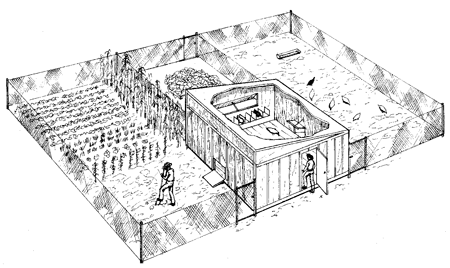
What he did was build a chicken coop with two small access doors, one on the east side, and the other on the west side. Each door was for the chickens, and they led to separate fenced-in yards.

The chicken coop/garden
On the north side of the coop was a regular sized door for us. On the south side was a wide window with a hinged wooden cover. That window looked directly out onto a compost heap. Each time the coop was cleaned, everything was shoveled out through that window.
That first year the chickens had the run of the yard on the east side of the coop. He kept the access door on the west side closed, and in that yard he planted the family’s vegetable garden.
By putting the yards on the east and west sides, he ensured both yards had maximum exposure to the sun. With the coop on the north side, he later told me, he minimized the shadow the chicken house cast over the garden.
Our access to each fenced yard was through a gate in the fence. With the fences, he not only kept the chickens where he wanted them, he kept predators away from the chickens, pests out of the garden, the neighbors’ dogs out of the compost, and they provided a lattice upon which his beans and other climbing plants could flourish.
In the fall, after that year’s garden had been harvested, he closed the door on the east side of the coop and opened the west side. The chickens now had the run of the old garden with its remnants of the harvested plants as well as the plants that had gone to seed.
My father, in the meantime, set about turning over the chicken dropping-enriched soil in what had been the chicken yard on the east side. With its year of chicken droppings and the compost he tilled in from the compost pile, he was setting the stage for a great garden the following year.
The chickens, now in the west side yard, were happily scrounging in the old garden and preparing the soil for next year’s garden. It was so efficient that he never found the need to improve upon it, and he kept that engineer efficient chicken coop/garden going for years.










Reminds me of something my dad would design. He was also an engineer. Brilliant!
I’ve turned deep red/white clay into beautiful black dirt doing this method
Susan M
Put a electric fence wire at the top and bottom outside of your chicken fence. This’ll keep them from going over and digging under
At my last home I added caged rabbits to the greenhouse. They helped keep it warmer in winter and rabbit poop is a cold fertilizer that won’t burn plants. Wonderful for green growth. Later in the season I add composted chicken and horse droppings to promote flowering and fruiting. Chickens were kept close or let into the garden when it was done. Ducks foul their water so often I pump their old fiberglass bots pond with a sump pump, fill with clean water and use the dirty water on the fruit trees and grape vines. I pump it into a 220 gallon caged tote sitting in an old truckbed trailer so its easy to haul it where I want it.
Here I will do something similar. For the time being in using a pen and buildings I have available.
We have predators that would go over a fence. Any ideas?
I’ve done gardens and chickens. This is the best setup ever. I’m ashamed I didn’t think of it. Even if it2a small part of your program, it’ll pay of for years.
I love this! Surprisingly little out there on how to use multiple runs, but having kept chickens I would never do it any other way.
This is just like an engineer to create this. We have chickens and a small garden and this may be a future plan for both.
Good stuff Thank you I have a small farm in panama City Fla not started his year March 2019 god willin