



 Remembering Sept. 11, 2001
|
|
 |
Or call us at 1-800-835-2418 |
|
|
|
|

Click here to ask Jackie a question! Jackie Clay answers questions for BHM Subscribers & Customers on any aspect of low-tech, self-reliant living.
Read the old Ask Jackie Online columns Read Ask Jackie print columns
|
Archive for the ‘Food Preservation’ Category
Jackie Clay
Wednesday, December 21st, 2011
Bread in a jar
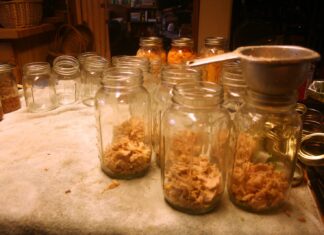
I recently watched a cooking show where the chef made an applesauce quick bread that he baked in a wide mouth pint jar. He greased the jar, filled it about half full with the batter, baked the bread at 350 degrees for about 45 minutes, then placed sterile lids and rings on them when they came out of the oven. He claims they will seal and keep up to a year. Have you ever done anything like this? Can it be done with yeast bread? My wife has become a canning fool since reading your column and would love to try this.
Bruce Schneider
Hinckley, Ohio
I used to make many different quick breads, canning them in jars as you describe. But experts now advise against this practice, citing that it is possible for botulism to grow in these jars. So I cannot recommend this practice any longer. Sorry. And no, yeast breads never worked using this method. — Jackie
Mastitis
My nubian goat just had her baby, at 1:00 on the Dec.19th. This is not her first time to have a baby but it is the first time for me to be there when she kids. I am afraid I might have done something wrong because one of her bags is hard. We read we needed to give her penicillin so we have but I want to know is there anything else we can do? How long between kiddings?
Lynne White
Lacombe, Louisiana
If your doe has mastitis (usually evidenced by abnormal milk and a hard udder), a week’s course of penicillin injections will do a lot to help. Milking her several times a day (much as you’d drain an abscess) will also help clear the bacteria out of her udder. To provide relief from the swelling, try massaging the udder and using warm compresses on it twice a day. Improvement should be seen within a few days.
I’m not sure what you meat “between kiddings.” Does usually kid once a year. The time between kids in a birth ranges from a few seconds to about half an hour. — Jackie
Posted in Animals, Food Preservation, Self-sufficiency | 1 Comment »
Jackie Clay
Tuesday, December 20th, 2011

We just had a snow storm mixed with freezing rain. Several deer came down the trail below the house, heading for the horse pasture and the round bales of hay we have out there. The horses sometimes share their hay with the deer. So far, our deer herd is fat and happy with the relatively open winter we’ve had so far. We’re several feet below normal snowfall for the year.
This fall the beaver were stockpiling tons of brush in the mud out in the beaver pond and I commented that I feared an open cold winter. And we’ve sure had an open winter so far. The cold usually comes right after Christmas. We have plenty of wood and food, so we’re not worrying.
Today I helped a friend can up a deer he’d shot with his bow and arrow. He wanted to learn to can meat, so I spent the day giving lessons. He went home with lots of meat and was real excited about the possibilities! And that’s exciting to me. — Jackie
Posted in Animals, Food Preservation, Meat, Self-sufficiency, Winter | 6 Comments »
Jackie Clay
Saturday, December 17th, 2011
Canning meat
I’m getting brave enough to want to learn to start canning. When you talk of browning meat before canning, are you fully cooking the meat? And if you pour boiling water over it (such as hamburger)won’t it get all soggy and come apart?
Mary Janson
Aurora, Colorado
Good for you, Mary! You’ll really love canning your own food, I promise. Once you find out how simple it really is, you will be off and running. No, I don’t fully cook the meat, I just brown it enough that the meat heats thoroughly and shrinks down so more fits into a jar. I don’t use water in my browned ground meat, but I make a broth, using the pan drippings. By packing the meat gently into the jar, you use little liquid and no, it doesn’t get mushy or come apart. — Jackie
Watering pigs
How do you water your pigs? I have rubber tubs for ours but they are always climbing in them, getting them full of mud and knocking them over. Not to mention having to clean the buckets out three times a day is creating a huge mud hole in the already muddy pen. We bought a “dog lick” and that worked great all summer but now that winter is here it freezes. Winter watering is a chore and I need to figure out a way to keep clean water in front of the pigs without making such a mess!
Mia Sodaro
Frazier Park, California
You don’t have to keep water in front of the pigs all the time. If you provide all the fresh water they will drink, plus a little left over to use before it freezes, twice a day, they will do great. We do this, as well as mixing water or milk with their dry grain. Our pigs are big, happy, and healthy; yours will be too. — Jackie
Posted in Animals, Food Preservation, Meat, Self-sufficiency | No Comments »
Jackie Clay
Thursday, December 15th, 2011
Meatballs in tomato sauce
We love your book Growing and Canning Your Own Food but I evidently lack the imagination to come up with a use for the meatballs in tomato sauce except for use on pasta. Surely I am missing something here. The meatballs in mushroom sauce are awesome! All the rest are really good also. I spent almost an entire month just canning your recipes and this is the only one that I can not really say I just love.
Joyce Baum
Pattonsburg, Missouri
I use the meatballs in tomato sauce as a meatloaf substitute, baking them in a casserole, sometimes topped with grated cheese. I also make an awesome meatball submarine sandwich with them, heating the meatballs in sauce, then ladling them on toasted garlic bread and topping with grated cheese. You can also make a pretty good stew with them, boiling up your veggies first, until tender, then draining and adding the meatballs and tomato sauce. Or bake a spaghetti squash, cut it in half, pick out any seeds, fluff up the “strings,” then pour on the quart of meatballs in tomato sauce. Add grated cheese and bake on a cookie sheet at 350 degrees for about 20 minutes or until the cheese is just starting to get golden on the edges. I hope this will give you a few ideas. I want you to love ALL the recipes! — Jackie
Limited garden space
Dear Lady Jackie Clay; Needing especially to maximize nutrition and quantity, this due to living in town and having very limited veg. garden space . . . along with our 4′x8′ cold frame and a 4′x8′ hot bed, please advice your thoughts as to how best to accomplish that sought goal , ASSUMING THAT IT IS ATTAINABLE/DO-ABLE. This area, about 30 miles NNE of Chattanooga, TN, is zone 9. Although we now are experiencing some freezing weather, the desire is to do now what can be done utilizing the ‘frame’ and ‘bed’. Disabled, in our mid 70s, I, taking it ‘slow’, can manage . . . but maximizing veg. quantity and quality is obviously our major need as we have only minimal income, the purchasing power of which seems to be decreasing weekly.
James and Frances Wyatt
Cleveland, Tennessee
Have you considered adding a few containers here and there in your yard? Friends have a small yard in town yet manage to grow a lot of food, using free or cheap 5-gallon buckets, available at local groceries with bakeries. By drilling a few holes in the bottom for drainage, you instantly have containers for pole beans, tomatoes, peppers, and much more. Our friends line their driveway with buckets of tomatoes, buckets of peppers on their patio, and have pole beans lining their back walk. Your best bet with your cold frame and raised bed is to raise several crops a year, starting with cold season crops such as kale, broccoli, spinach, early cabbage, onions, etc. Then follow with warm season crops, such as beans, tomatoes, okra, etc. Trellis all crops you can. They take up so much less room that way. You can even trellis cucumbers, melons, and vining tomatoes. In this way they’ll only take up inches of your bed instead of feet, enabling you to grow much more food in a bed than you would have otherwise. Think hard about where you might be able to grow extra food. Do you have a patio, porch, or walkway where you might set a container to grow food? It doesn’t take much to grow a bunch of spinach, a pot of okra, a bush squash. Everything you can manage to grow is a plus for you. I even grow patio and hanging basket tomatoes and peppers right in the house and hanging from our house eaves during the summer. You can add a few shepherd’s hooks and grow these hanging basket vegetables right in your lawn, in place of flowers. You can also add flowers to the veggie baskets to make them look even prettier! All the best luck in your endeavor to become more self-reliant in your table food! — Jackie
Posted in Cooking/Recipes, Food Preservation, Gardening, Meat, Self-sufficiency | 2 Comments »
Jackie Clay
Wednesday, December 14th, 2011
Hens not laying
My question for you is about chickens. I have Isa Brown and Barred Rock hens who are just 25 weeks old. Usually my new hens are laying already. I only have 1/4 of them laying. This is happening to 2 other people I know too. The one has Australorps the same age that are not laying at all. Is there something going on in environment that they aren’t laying? We all have different feed sources too so we don’t think it’s the feed. We are thinking that we got them too late and not enough light. I have now started to turn a dim light on about 4am. Any suggestions? It definitely baffles us as to what is going on to so many people.
You also said you will be butchering your roosters? Do you kill them outside then do the butchering and cleaning indoors? Earlier this week we butchered off the last of our old hens and it was cold!! It took my hands a few hours to thaw!
Cindy Hills
Wild Rose, Wisconsin
We’re having the same trouble with the pullets we raised late this year. As the days are so short now, we have to start providing extra light in the evening, so it tricks their time clocks into producing more eggs. For us, that means scheduling a few hours of generator running time each evening, as we are off grid. For those on grid, plugging a single CFL into a timer, and setting it to provide a few hours of extra light each evening will work. When we build our new chicken house (after the new barn is done), we plan on adding a small room to house deep cycle batteries and a charger, so we can give lights to the chickens without running the generator then. (Sometimes it’s convenient, as I’m doing wash, running water, etc. Other times it’s not and we feel it’s kind of a waste of money.)
No, we freeze our fingers, too! We pick a sunny, partly warm day and only do three at a time. We’ve found that in that time, our fingers don’t freeze too badly and the warm water from the scalding keeps the birds fairly warm for plucking and the bodies are still warm for the cleaning. Our fingers start to freeze when we rinse off the birds and table with a hose. Brrr. That’s what we get for putting it off so long! — Jackie
Canning in half-pint jars
I am a 72 year old, single person and do much of my canning in half pint jars. My questions is: When I am canning meat, like hamburger or meatloaf in half pint jars, how long should I keep the pressure up (11 lbs) on my pressure canner?
I think the safe answer is the same as pints, but I would like to know what you think about it. I did call the Ball Blue book people and their answer was “they haven’t did any testing on half pints” so they didn’t give me a answer. This would also be a good question for the magazine because many people are now canning more than ever.
Charles
Hazel Green, Alabama
Charles, you can up your half pints for the same length of time as you do your pints. I do it all the time and can’t imagine the Ball Blue Book folks not being able to tell you that! I find myself canning so many things in half pints, especially meats, as I use them as ingredients in mixed recipes and a pint is just too much. — Jackie
Posted in Animals, Food Preservation, Self-sufficiency | 5 Comments »
Jackie Clay
Tuesday, December 13th, 2011
Home-canned tuna
I love the idea of canning fresh tuna. But I want tuna for tuna salad. Would home canned tuna need to be heated to boiling for 15 minutes before eating. And wouldn’t that make a poor tuna salad?
Connie Moore
Clearlake, Washington
You do need to heat your tuna to boiling, but it doesn’t mean it’s yucky. What I do is pour the tuna in a covered baking dish, then heat it in my oven at 200 degrees for 30 minutes. (It takes a while for the tuna to heat up to the boiling point.) Then I drain and refrigerate it in a covered container. When it’s cool, I flake it and use as usual. It’s great this way. I do it with salmon and northern pike too! — Jackie
Market baskets
Please give us the history on the round basket you use so often in your garden and about the house. I love it. It speaks volumes about your thrifty ways. One of the many reasons I read your blogs and books. My way of living also! Love the life!
Katie Daffin
Evans, Louisiana
My favorite baskets of all are the Vietnamese market baskets you’ve noticed. I bought my first (which I’m still using), years and years ago when our family sponsored a Vietnamese boat family. Xuyen, the wife, quickly introduced me to these baskets when I couldn’t speak Vietnamese and she couldn’t speak English. But we both spoke gardening!! We bought these baskets at a Vietnamese market down in Minneapolis. They are so handy, as they hold a lot of produce, are very sturdy, and you can wash dirty vegetables right in the basket as it drains out so well. I love them because of my bad back; I quickly learned why many women in “third world” countries carry loads on their heads. It relieves pressure on your back. So now I usually come from the garden with my market basket balanced on my head. The bottom of the basket is fairly soft and conforms to your head so nicely and comfortably! I pick up these baskets any time I see one at a yard sale or thrift store. — Jackie
Lima beans
I am planning my 2012 garden. In previous years my green beans produced like crazy and the same with my peas. However, my lima beans are just the opposite. We are lucky if we get a hand full. Last year I used triple 16 fertilizer, the beans were small and still only a hand full. My soil is very good and I water every day in the hot summer. I am very confused about this? Any ideas? What can I do to improve my yield?
Maida Gaddis
Myrtle Creek, Oregon
Try waiting longer to plant your limas. They like warmer weather and don’t get off to a good start if you plant them the same time you plant your other beans. We have a very hard time growing limas here, as they are such a long-season bean and like warm weather. They don’t like cool, extended periods of rainy spring! You also might try mulching your rows of limas with black plastic to warm up the soil around the roots. — Jackie
Posted in Cooking/Recipes, Food Preservation, Gardening, Self-sufficiency | 7 Comments »
Jackie Clay
Thursday, December 8th, 2011
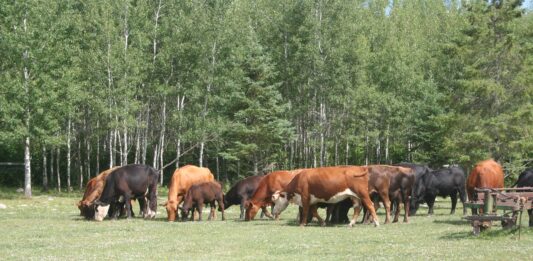
Besides arranging for our first homestead seminar in May, we’re taking care of our year’s meat. Last week, we hauled our big, 1,400-pound steer in to the processing plant. To pay for the expense of raising this steer, we sold the front two quarters and we’re giving our son, Bill, a hindquarter. So we’ll still end up with a lot of beef. But we like a variety of meat, not just beef, beef, beef — no matter how good it is! David also did some hunting this year. We didn’t need two deer; one would do. He wanted a buck, but finally, on the last day, he picked a big doe with no fawns. This last week, I’ve been canning venison and making jerky too. Only one hindquarter to go, and I’m done with that. Then we get to butcher our extra roosters from our experimental home-bred Cornish rock crosses. They’re all big and meaty, although not as big-breasted as the commercial Cornish rock broilers. But they can walk, are vigorous, and are plenty nice for us. We also have a pig to butcher in January, so that’ll round out our meat for quite a while.

Seed catalogs are already coming and we spend evenings drooling over tomatoes, peppers, and other great things we just have to try this year…as well as a lot of varieties we’ve grown for years. Planning a spring garden sure makes winter go by faster! — Jackie
Posted in Animals, Food Preservation, Meat, Self-sufficiency | 10 Comments »
Jackie Clay
Wednesday, December 7th, 2011
Sourdough starter
I have been trying to make sour dough starter for months now and every time it stays in the fridge for more than a week is gets a very dark liquid on the top. It doesn’t smell, just black liquid. Is this normal? Should I throw out the dough and start over? I have drained the liquid off and more comes on top. I even changed flour and it still does it. Could it be the water I’m using? Or the yeast? I use unchlorinated water. I hope you can give me an insight to why this is happening as I do so love making my own bread and sour dough is my all time fav.
Melissa
Annapolis, Maryland
Remember to feed and at least stir up your sourdough starter every few days to keep it alive and active. I’d suggest starting over and using/feeding your starter more often and see if that doesn’t get you going. Usually the black liquid on top of a sourdough starter indicates that it is starting to break down from disuse. — Jackie
Canning family recipe
I am submitting this family recipe for suggestion on how best to can it. It came from my Grandparents Drive-In. It was used on Foot Longs. The recipe is quite large and does freeze well but we would like to have it canned so we can give it as gifts. We have tried it in the past but it comes out over cooked. We pressure canned it for 75 minutes because of the burger in it.
How would you modify this so it does not have a burnt/over cooked flavor?
1 Gallon chopped onions
3 large cans of tomato juice
1/2 cup dried mustard
1/2 cup chili powder
1 3/4 cup corn starch
2 lbs. ground burger (browned)
1 quart ketchup
3 1/2 cups sugar
salt to taste
Cook all except corn starch until half done. Mix corn starch with water and thicken mixture.
Dan Hoopes
Chubuck, Idaho
This is one that probably won’t can up nicely. You’re right; in order to safely process it, you do need to process it for 75 minutes at 10 pounds (or more if you live at an altitude above 1,000 feet, which I think you do). and with the corn starch and gallon of chopped onions, it really can’t be processed in a water bath canner, even without the hamburger. I’d suggest giving another home-canned gift and using your frozen chili dog topping for home use. — Jackie
Canning enchilada sauce
I would like to can some green enchilada sauce but can find no recipe for such. Using tomatillos, onion, green peppers, cilantro and chicken broth, and spices; can this be water bathed, and for how long?
Nancy Morrison
Pocatello, Idaho
Sorry, but you’ll have to pressure can this, as it contains chicken broth. I would process it at 10 pounds pressure for 35 minutes (pints) and 45 minutes for quarts for safe processing. If you live at an altitude above 1,000 feet, consult your canning book for directions on increasing your pressure to suit your altitude, if necessary. — Jackie
Posted in Cooking/Recipes, Food Preservation, Self-sufficiency | 1 Comment »
|
|
Have questions regarding this Blog? Please email us. Comments may appear online in "Feedback" or in the "Letters" section of Backwoods Home Magazine. We read every email you send us, but due to the sheer volume of mail we receive, we can't respond to each one.

|
|

|
|

(PDF 3.33 MB)
(PDF 213 KB)

| |