
Backwoods Home Magazine


Remembering
Sept. 11, 2001

Subscribe to Backwoods Home Magazine

Features
   Home Page
   Current Issue
   Article Index
   Author Index
   Previous Issues
   Newsletter
   Letters
   Humor
   Free Stuff
   Feedback
   Recipes
   Tell-A-Friend
   Home Energy Info
   Ask Jackie Online

BHM Blogs
   Dave Duffy
   Massad Ayoob
   Ask Jackie Clay
   Bramblestitches
Retired Blogs
   David Lee

Quick Links
   Jackie Clay
   Ask Jeff Yago
   Dave Duffy
   Massad Ayoob
   John Silveira
   Claire Wolfe

Forum / Chat
   Forum/Chat Info
   Enter Forum
   Member Chat
   Lost Password

General Store
   Ordering Info
   Subscriptions
   Anthologies
   T-Shirts
   Books
   Back Issues
   Help Yourself
   All Specials
   Classified Ad
   Trading Post Ad

Advertising
   Print Classifieds
   Trading Post
   Web Site Ads
   Magazine Ads

More Features
   Links
   Country Moments
   Radio Show
   Meet The Staff
   Contact Us/
   Address Change
   Write For BHM
   Privacy Policy

News/Politics
   Dave Duffy
   John Silveira
   Columnists


Ask Jackie Online
By Jackie Clay

March 3, 2006
Jackie Clay
Jackie Clay answers questions on any aspect of low-tech, self-reliant living.
Click Here to learn how to Ask Jackie a question.

Drying pumpkins

I found a very, very long green with yellow stripes pumpkin and I would like to make a lamp out of it. How can I dry it out without opening it?

Thank you

Guadalupe Quintana
Mexico City, Mexico

I’m sorry to say that few pumpkins can be dried like gourds. Unfortunately, the skin is too thin and the meat is too thick for them to dry well. Almost always, they will rot instead. To make your lamp, you’ll have to grow or buy a long handled gourd. These can be dried by simply hanging them in a dark place by the stem until the seeds inside rattle when it is shaken. Gourds have a thicker, hard shell and thin meat inside, so they do dry well for all sorts of crafts. — Jackie

Storing honey

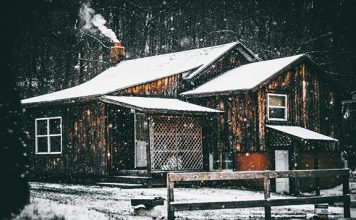
A friend gave us one gallon of wonderful honey. He keeps hives on his farm. My question is how do I keep the honey for a long period? One gallon will take us a very long time to use. I will give some to close friends but would love to be able to put most of it away. We have a cabin in the mountains and live off the grid. I try to keep as much storage as I can put up. With a small garden in summer and hunting in winter. We do all right on a fixed income. It has taken us 10 years to build our cabin of stone. Stone from the mountain. Working 6 months on the flat land in winter gave us the money to build our cabin in the summer. We are spending the first winter up here this year. Snow is a challenge. Living 6 miles from the mail box up a logging road and 30 miles to the small town. It will be work, Well worth the effort. We have Deer, Moose, Elk and a host of other animals in our yard from time to time.

If you have time please let me know how to put the honey up for storage. Thank you,

Lavada Griffin
Sandpoint, Idaho

I’m real impressed with your new homestead! It just shows what folks on a lower income can do if they work hard and have patience! Very good for you. Bob, David and I lived at 7,400 feet, which was 1,000 feet above the Continental Divide, in the Elkhorn Mountains in Montana. We, too, were way "in", being 7 miles uphill from a tiny old mining town on a Forest Service road, which was unmaintained. We snowmobiled to friends’ places in the "town" (five families), where our Suburban was parked for the winter, then drove out for mail, gas or any supplies. And we absolutely LOVED it!

To put up honey for storage, simply warm it, pour it into sterile canning jars and screw down the lid. It will keep for years and years. (I’ve got some that is 20 years old and still perfect.) If your honey gets cold it will harden and get white. Don’t let this bother you. If you heat the jar in a double boiler or in the oven, it will re-liquefy right away.

Enjoy your beautiful new home!! — Jackie

Drying venison

I am a fireman in Oklahoma. We often prepare our own meals and share garden items from home. We also have an abundance of deer meat during the fall months that folks don’t want to waste, but may not have room for at home. We participate in the local food bank and missions that are pleased to accept deer and other game if it is processed and packaged.

My question involves the drying of deer meat and other game in a commercial style (plastic round) dryer. Although I enjoy dehydrated jerky and have eaten more than my share of dried meat, is this drying process affective in eliminating the bacteria found in all uncooked foods?

Unlike smoking meats (like brisket and ribs) in a large smoker over wood heat, the dehydration process appears to use much lower temperatures, and thus creating a haven for bacteria during the process.

How should the meat be prepared (other than kept clean and cold) before the seasoning and dehydration begins?

Are we subjecting ourselves to health concerns by eating deer meat that has just been slowly dehydrated in the manner described above?

Kevin Roe
Oklahoma

Making jerky is simple and safe. We like ours so much that last year, when my youngest son, David got his first deer, he wanted me to make jerky out of the whole thing! Like that would happen!!! All you have to do is to keep your meat cold and slice it into strips about half an inch thick. I like my jerky more tender, so I slice mine across the grain. If you like it more chewy, slice it with the grain. Mix up your seasonings and meat in a bowl and cover it, keeping it cold while it marinates (I do mine overnight in the fridge or on the porch if the night is between 32 and 40 degrees.)

Then the meat should be drained so it is not gooey when it is dehydrated. It is dried at about 145 degrees until it is quite hard. Jerky made by pioneers and Indians was dried hard, hard and would last without cold storage. Today, we like our jerky more tender and "chewy", so to keep it for long periods, you need to bag it up and freeze the extra. (If you don’t, it will usually mold. If it isn’t eaten first!)

I’ve never heard of a person becoming sick from eating venison jerky. — Jackie

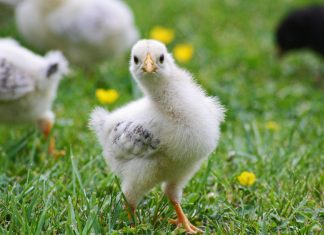
Digging chickens

I’m at my wits end....

I purchased 6 chicken’s last Spring for our house in the city :-) I loved having the girls run around the backyard, but when they started becoming adults they would tear up my terraced flower garden so I had to fence them in around their coop.

Their area included 30’ x 10’ of grass and about 15’ x 10’ of ivy, plus two compost piles and hay pile. In several months the grass was mostly gone in their area and I was careful to remove (or spray into liquid while watering) all their droppings.

The saga continues - I just built a garden fence so the girls could have the whole yard without getting into my flower garden. It is now raining a lot here in Oregon, and the girls are doing lots of damage on what is left of my lawn - yikes!

My chicken’s love to eat grass and clover over their chicken feed, which is how I like it, but in the city I don’t have enough grass area I guess. The way my chicken’s tear things up I don’t think 5 acres would last..... help!

I tried replanting seed and covering with chicken wire in their area over the summer, but I couldn’t get it to grow. Is there anyway to have green stuff and chickens too?

What can I grow this winter here In Oregon (fast) that I could use to replenish my now mud yard while rotating my girls? They seem to like anything green, but I don’t seem to have a strong green thumb for ground cover.

I also heard there is a breed of chick that doesn’t scratch or dig - do you know anything about this?

A dust bowl for a backyard is in our future if I don’t get help!

Jami Ellis
Roseburg, Oregon

You need to read the book Chicken Tractor by Andy Lee. As you’ve found out, chickens can do quite a job tearing up an area. No, there’s not a breed that will not dig; it’s their nature. Simply put, a chicken tractor is a lightweight pen with a little coop on it that lets you move your girls BEFORE they make your yard bald, effectively rotating them. The coop can be on skids or wheels with handles. I had these many years ago for my purebred chickens, allowing me to keep a rooster and several hens of the same breed together for breeding purebred chicks. I only had to move the coops a few feet, every few days on my lawn. The chickens were happy. I was happy and my lawn didn’t look like a battlefield.

Perennial rye grass, mixed with annual rye grass makes a quick, lush repair to such damage to the lawn. And, probably, when the chickens are removed from the area, the existing vegetation will re-grow to some extent anyway. Good luck and don’t get frustrated. It’ll work out well. — Jackie


Read More Ask Jackie Online

Read Articles by Jackie Clay

Read Ask Jackie


Comments regarding this article may be addressed to editor@backwoodshome.com. Comments may appear online in "Feedback" or in the "Letters" section of Backwoods Home Magazine. Although every email is read, busy schedules generally do not permit a personal response to each one.


Read more Ask Jackie in every issue of Backwoods Home Magazine. Click Here to subscribe.


www.backwoodshome.com designed and maintained by Oliver Del Signore
© Copyright 1998 - Present by Backwoods Home Magazine