
Backwoods Home Magazine


Remembering
Sept. 11, 2001

Enter A Keyword
Subscribe to Backwoods Home Magazine

Features
 Home Page
 Current Issue
 Article Index
 Author Index
 Previous Issues
 Newsletter
 Letters
 Humor
 Free Stuff
 Feedback
 Recipes
 Tell-A-Friend
 Print Classifieds
 Trading Post

Advertise
 Web Site Ads
 Magazine Ads

BHM Blogs
 Behind The Scenes
 Massad Ayoob
 Ask Jackie Clay
 Claire Wolfe
 Bramblestitches
Retired Blogs
 David Lee
 Energy Questions

Quick Links
 Home Energy Info
 Jackie Clay
 Ask Jackie Online
 Dave Duffy
 Massad Ayoob
 John Silveira
 Claire Wolfe

Forum / Chat
 Forum/Chat Info
 Enter Forum
 Lost Password

General Store
 Ordering Info
 Subscriptions
 Anthologies
 T-Shirts
 Books
 Back Issues
 Help Yourself
 All Specials
 Classified Ad

More Features
 Links
 Country Moments
 Radio Show
 Meet The Staff
 Contact Us/
 Address Change
 Write For BHM
 Privacy Policy

News/Politics
 Dave Duffy
 John Silveira
 Columnists


Coronary Artery Bypass Graft (CABG)
By Dave Duffy


A CABG, pronounced cabbage, is expensive—$50,000 and counting for mine and I’ve got 6 months of post-operative doctor’s visits and tests to go before I’ll be declared recovered. Fortunately, due to my insistence that my company’s insurance cover primarily “the big one,” rather than a bunch of little visits to the doctor’s office, all but about $6,000 of my medical expenses will be covered. That’s out of a medical bill I anticipate will reach close to $100,000.

CABG stands for Coronary Artery Bypass Graft, and it is one of the more successful remedies that can used to relieve a blocked coronary artery that is threatening to give you a heart attack. Regrettably, it is among the most invasive of the surgeries to clear blocked arteries, requiring the breast plate to be cut with a saw, the ribs pulled out of the way with a special device, then the lungs collapsed and the heart stopped so the surgeons can work on a still heart. Surgeons then have to cut various arteries and veins from other parts of your body to use as the bypass arteries to relieve your blockages.

In my case my left coronary artery was 75% blocked over a long area, and a Diagonal 1 artery forming a Y with the left coronary artery was 90% blocked over an equally long area. Had only one been blocked the doctor could probably have avoided the CABG surgery and put a stent in each of the the arteries. A stent is a wire mesh that holds the artery open; it is simply sent up an artery, usually from the groin or armpit areas, on a wire that is threaded through the aorta to the blocked artery. X-rays that can see a special die put into the artery can follow the wire and stent to precisely locate it to relieve the blockage.

But because I had the two blocks forming a “Y,” one stent would have blocked the second stent, so they had no choice but to go through my chest and install a new artery, this one a mammary artery also taken from my chest, to “bypass” both blockages. It’s an ingenious solution that works well and works for the long term. “This mammary artery,” Heart Surgeon George Wilkinson told me before surgery, “will still be there doing its job 10 to 20 years from now.” Anatomy of the human heart (external anterior view)

One end of the mammary artery is simply sewn into an artery at the top of the aorta, which is on top of the heart, and the other end is sewn into the artery below both blockages, thus guaranteeing that the heart below the two blocked arteries gets its supply of oxygenated blood.

These arteries we are talking about, by the way, cling to heart like so many strands of spaghetti wrapping their way down the side and around the heart. They are about the size of spaghetti or pencil lead. The two artist drawings for this article were taken from Backwoods Home’s Issue no. 80, from an article by Dr. Gary Arnet, titled, Keeping your heart healthy (PDF 209K). Arnet’s article, written as a result of his own bypass surgery at age 38, is the best thing I’ve read on coronary artery disease (CAD) since my operation. Leave it to my own magazine and one of our own writers to come through when I need good, accurate material.

The heart itself is about the size of your fist and is located directly in the middle of the chest, although the bottom of it does lean slightly to the left. It feeds an astonishing 60,000 miles of blood vessels, most of them of the microscopic size at the capillary level. Mammals have the most efficient hearts in the animal kingdom, and humans have the most efficient hearts of the mammals.

My third blockage was much smaller than the two on the right side of the heart, and it was located down a ways on the right coronary artery. It was a 60% blockage involving a short area, and they wouldn’t decide whether or not to repair it until they looked at it up close during surgery. They decided it need a bypass too, but this time the surgeons used a vein out of my left leg for the bypass, sewing one end of it into the right side of the aorta and the other end into the artery below the blockage.

I’ve got a fourth blockage, about 30% near the top of the circumflex artery, but for some reason they didn’t fix that. I’ll have to ask at my first post-operation appointment with the surgeon this week. I suspect it was just to small to worry about at this point, or they though a change of diet or medication could reduce it.

The success rate of this operation is 98-99%, according to my surgeon. It is actually a fairly routine operation these days, but there is still that 1 or 2% chance of a major problem that will kill you on the operating table. Can you imagine if you got a 1 or 2% chance you’d win the lottery? Hell, you’d buy all the tickets you could get your hands on. Anyway, I’m glad the surgery is all over now, and my pain is starting to give me a break. I’ve even begun reducing my main medication these last couple of days. Anatomy of the human heart (interior frontal section)

Keep in mind there are many coronary artery disease (CAD) problems different than mine, and many require different procedures. My wife’s family, for example, has several people in it that have had valve problems. Lenie’s father, in fact, died of heart disease at age 52, and she suspects it was probably the bad valve. Today they simply replace those valves. There are a host of other problems involving any one of the four chambers of the heart.

Also, I was very fortunate that I never had a heart attack. My blockages were discovered before a heart attack. Of all the post-operative patients I met walking the halls at the hospital, about half said they had had a heart attack. That typically means you have some dead heart muscle because it only takes two or three minutes for part of the heart muscle to begin dying once it is deprived of oxygen.

I was going to go over a few facts about the heart, but Gary Arnet’s article. (PDF 209K) covers it in much more detail.

How did I get my blockages? That’s a good question. I keep myself in pretty good shape and I eat fairly well--lots of fish and dark, green veggies, etc. My wife has cooked with olive oil for years, rather than the saturated stuff. And my HDL, LDL, and cholesterol numbers from my physicals during recent years have been. In a blood test just before this surgery, they were not so good, but not very high either.

I suspect I’m just a victim of my own hereditary, which is one of the big CAD risk factors over which we have no control. I can still do a lot more, however, on the exercise and eating fronts, and I intend to do all I can. Death is a great motivator when it comes to changing your lifestyle, my friend Oliver Del Signore once told me.

Heart attack is the major cause of death in America. Many people just suddenly drop dead of a heart attack without ever having a symptom that they had a heart problem. I was lucky because I got a mild chest pain while working at the office, and the pain went into my jaw, which is a classic symptom that it is coming from the heart.

But still I didn’t see a doctor until four days later. I experienced the pain on a Thursday, and the receptionist at my local doctor’s office recommended I go to the emergency room of the hospital. So I went there and the nurse on duty explained there was really nothing they could do about it except admit me, then take blood tests every four hours to determine my blood enzymes to see if I had had a heart attack. Well, by that time I was feeling fine and the initial chest pain was that bad anyway. I figures the pain must have been due to some painting I was having done at the office.

So the next day, Friday, I called my friend, John Silveira, who happened to be visiting his ex-wife, Sue, a nurse. When she heard about the jaw pain, she told me to see a doctor right away. So I called my old trusted doctor, John Dilgado, a three-hour drive away in Ashland, Oregon, on late Thursday and he scheduled an appointment for me first thing Monday morning.

On Monday, an EKG showed a slight anomaly, which led to a stress test a couple of days later, which also showed a slight anomaly, which led to an angiogram the same say which showed the big blockages. They scheduled me for surgery two days later and said I was damn lucky I had come in.

The cardiologist who first suggested I had a blockage said I had classic atherosclerosis, or plaque forming from excess cholesterol building up on my artery walls. It takes years to develop this sort of thing, but is dependent on a variety of factors: hereditary, poor eating habits, smoking, excess weight, lack of exercise.

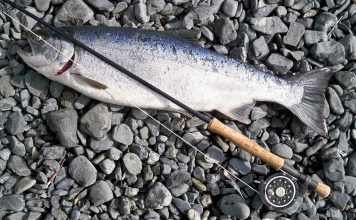
This will be a long physical recovery for me--a good six months--but once I get the okay I’ll get in real good shape. I’ve already begun to follow a Mediterranean Diet recommended by most cardiologists. My own cardiologist said that from now on I have to eat grilled salmon twice a week, plus take a fish oil supplement, both of which contain Omega 3 fatty acids. Salmon is especially rich in Omega 3s.

Luckily I live between two of the Northwest’s most productive salmon rivers. And I love to fish. Guess what I’m getting for Christmas.


Read More by Dave about his surgery and recovery


Dave Duffy Archive


Dave Duffy is the editor and publisher of Backwoods Home Magazine.

His email address is editor@backwoodshome.com

Top Of Page

 
www.backwoodshome.com designed and maintained by Oliver Del Signore
© Copyright 1998 - Present by Backwoods Home Magazine