
Page Not Found
Sorry! The page you were looking for is no longer available or the link has expired. If you were looking for a specific product, you can search our store.
While you’re here, take a look through some of our great articles!
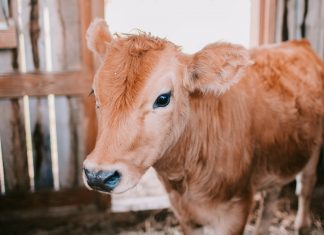
Raising cattle on your own place
By Charles Sanders
Issue #85 • January/February, 2004
Winter won't last forever. It won't be long before spring will arrive and pastures will start to green...







Slug Zapper
By Joel Winters
Issue #142 • July/August, 2013
I live in a small clearing in a big forest. This is on the rainy side of the...
Graft Your Own Designer Fruit Trees
By Jackie Clay
Issue #121 • January/February, 2010
Although I've been homesteading for more than forty years, there's always something new to learn. (I figure that...
Build a Top-Bar Bee Hive
By Jereme Zimmerman
Issue #175 • January/February/March, 2019
My journey to becoming a beekeeper has been a long one, and I’m still not quite there yet....

By John Silveira
Issue #60a • November/December, 1999
"The election's next year, right?" I asked.
Dave Duffy, the publisher of Backwoods Home Magazine, was editing a rather lengthy article on water. I don't know if he didn't hear me or just didn't realize I was talking to him. He didn't say anything,...
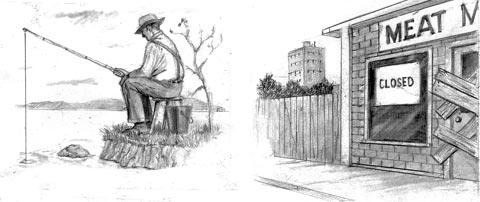
By Alice B. Yeager and James O. Yeager
Issue #115 • January/February, 2009
I was a girl of 8 when the stock market crashed in 1929. It was the Great Depression, and unless you were living during the Depression years, you can't really understand how tough they were. Our parents knew,...

By John Silveira
Issue #30 • November/December, 1994
(This is a four-part series. Click the links to navigate to parts one, two, three, and four.)
(When we left off last issue, O. E. MacDougal and John Silveira were travelling from Ojai, California, to Ashland, Oregon. Mac was talking about the First Ladies...