

 Remembering Sept. 11, 2001
|
|
 |
Or call us at 1-800-835-2418 |
|
|
|
|

Click here to ask Jackie a question! Jackie Clay answers questions for BHM Subscribers & Customers on any aspect of low-tech, self-reliant living.
Read the old Ask Jackie Online columns Read Ask Jackie print columns
|
Archive for the ‘Animals’ Category
Jackie Clay
Tuesday, November 15th, 2011
No winter, yet, so we’re keeping right at it. Yesterday, we got the rest of the pig pen and pig house finished, except for the flap on the door. To make it nice and cozy, we stuffed the pallets with straw, packing it down with a piece of scrap lumber. Soon, we’ll trailer the pigs down to their new home. I know they’ll like that!


Meanwhile, I’ve been tying screen around our fruit trees in the orchard to prevent damage to the trunks from voles. Voles tunnel under the snow and eat all the bark around the trunks, which kills the trees. You don’t know about it until spring, when the snow goes away and all your beautiful baby trees are dead, dead, dead. We sure don’t want that to happen! It also protects them from chewing rabbits. Even though our orchard and garden are totally fenced by 2×4-inch welded wire fencing, I’ve seen cottontails go right through it! Sorry bunnies, we need our trees. I’ll give you some scrap apples when the trees get big.

Will is taking a few hours a day to work on the bridge over the creek. It is now in place, and he’s hauled big boulders down there for rip-rap, to prevent the creek from washing the bridge out when spring break-up comes or we get hit with a big rain. Slowly, it’s becoming a real bridge; he’s got a few temporary planks on it now so he can run the four wheeler and wheelbarrow over it to dump rock on the other side. Big projects like this and the barn take quite awhile to finish but if you don’t give up and keep on working, it gets done. — Jackie
Posted in Animals, Building, Gardening, Self-sufficiency | 7 Comments »
Jackie Clay
Monday, November 14th, 2011
Will is still working on the floor joists of the new barn, trying to get them all done before winter closes in. (There were more than 90 of them in all! All had to be fit into the support beams to give a flat, level base for the floorboards of the hayloft to be nailed to.)

But, our pigs are getting HUGE and their pen seems smaller every day, so we screwed up a whole bunch of free wood pallets to make a much larger pen. We just have to put a pig hutch together next to the calf barn and we’ll be ready to trailer our piggies down to their new quarters. I’ll be so glad; their old pen is getting pretty yucky with mud and the weather’s getting colder. They’ll like their new, much roomier pen better. Or at least WE will!

Our old chainsaw just got back from the shop. It had been gradually losing power and Will feared for the worst, thinking it was dying. We had saved for a new saw and when we took the old saw in, we picked up a new saw. There is scarcely a day goes by that we don’t use a chainsaw and our old one saw plenty of daily use with the 40 acres of fence posts to be cut to length and pointed, the storage barn being built, four years worth of firewood being cut, the new barn’s timber framing, the calf shed, clearing fence lines, brushing out pasture, etc. It sure didn’t owe us anything! BUT the happy news is that our good old saw wasn’t dying. It only had a carbon-plugged spark arrestor on the muffler, which choked it out. The shop bill was only $27 and we now have two running, dependable saws. We should be good to go for years and years now. It doesn’t take much to make homesteaders happy! — Jackie
Posted in Animals, Building, Self-sufficiency | 6 Comments »
Jackie Clay
Wednesday, November 9th, 2011
Blossom end rot
Not a question, but a comment and suggestion for the man with a not very productive garden and blossom end rot on his tomatoes. I’ve learned that blossom end rot is worsened by a lack of calcium. Calcium can be fed easily to your plants by crushing a few egg shells and putting them in the bottom of the hole when planting the tomatoes. I have my own chickens and buy crushed oyster shell for them, so I add about a tablespoon of the oyster shell to the bottom of the hole instead of egg shell. I hope he has better luck with his garden in the future! A successful year will probably convince his wife.
Karen King
Menomonie, Wisconsin
Good comment, Karen. Indeed, a lack of calcium often contributes to blossom end rot. I’ve found that the calcium is usually a secondary contributor, however, and that steady, adequate watering nearly always takes care of the problem. Mom used to crush egg shells in her tomato holes, too. And she always had great tomatoes. I, too, sincerely hope his wife is encouraging to his endeavors. — Jackie
Old laying hens
What do you do with your old laying hens? Mine were about 3½ years old and their laying had really fallen off this summer. We butchered them last weekend. We took the breast meat and ground it up, we added about ¼ pound pork sausage to ¾ pound chicken. This made a dry, but tasty sausage. After 5 days I boiled the legs and thighs for 45 minutes. This meat is still so tough it was hard to get it off of the bone. I was planning on canning the meat but now I don’t think that its texture would improve with canning. I ground it up with the large blade that came with my Kitchen Aid meat grinder and am thinking about making chicken salad sandwiches out of it. Can you think of any other uses for this meat? What do you normally do with those old laying hens?
Shirley
Stevenson, Washington
We use our old hens for soup and stews. Boiling the meat for 45 minutes is definitely not enough to get them tender. I don’t grind the meat, except sometimes for chicken salad sandwiches, which comes from the meat I have canned. Pressure canning your old hens definitely tenderizes the meat. To stew your old hens, cut the carcass up, then put it in a large kettle with plenty of water to cover it, then add seasonings as you wish. Bring to a boil, cover, and gently simmer for several hours. I often stew a hen on our woodstove until the meat is fall-off-the-bone tender. Then remove the bones and make your gravy or soup from the broth and meat. I’ve never had a real tough hen, yet. Most of our old hens get canned up after pre-stewing so I have ready-tender meat to use at any time. Other uses for your ground meat? How about chicken enchiladas or fajitas or mixing it with an egg and cracker meal and frying chicken patties, mixing it with your ground pork, an egg, and cracker crumbs and make chicken loaf, similar to meat loaf? — Jackie
Posted in Animals, Gardening, Self-sufficiency | 4 Comments »
Jackie Clay
Tuesday, November 8th, 2011
Dry canning
Have you ever dry canned? I was given an article from another magazine about dry canning and it works great for the dry goods (pasta, flour, beans, cornmeal,etc.) that you buy in bulk. Fill clean jars with whatever product you have. Put on a baking sheet in a preheated 200 degree oven and leave for one hour. Take out one jar at a time and place on a towel covered area. Screw the band down tight. Wait for it to cool and seal. You can do as few or as many as your oven will hold at one time. Sure saves space in the refrigerator or freezer
Cindy Hertel
Hodges, South Carolina
No, I haven’t. I saw that article, too. If you only have a little dry food to store up, you could certainly give it a try; it will kill bug eggs in your food. (Canning jar manufacturers say that dry canning can break jars, that they’re not meant for dry canning. I used to oven can my nutmeats until they came out with that one. I never had breakage but switched to pressure canning them, instead.) I freeze any of my dry foods that may have moth eggs, such as home-raised corn meal, wheat flour, etc. Then I just store it in airtight, large containers. I don’t have a freezer so I do my freezing in the winter, out on the deck! Once the food has been frozen for a week, no more bug problems possible. I’d say if you want to dry can your foods, go ahead and see how it works out for you. For me, it takes too many jars to hold the amount of food I store. — Jackie
Trimming rabbits nails and canning pumpkin butter
We got some rabbits from my brother, who was running low on time to spend with them. We keep them as pets, but the “garden gold” is a major bonus! My problem is one of the males will not let me trim his nails. The others clearly do not like it, but let me do it. This filthy bugger growled and bit me! Do you have any advice?
Also I recently saw a recipe in a magazine for pumpkin butter. There was no added sugar and it said the end product could be processed in a water bath. I was under the impression that pumpkin had to be pressure canned. What would you do?
Magi Clark
Entiat, Washington
Have someone hold your buck securely by the skin on the nape of his neck. Use gloves, as even then some rabbits will struggle and kick suddenly. After a time or two, he should relax with the procedure. He probably will never become “easy,” but you can get the job done without shedding blood. Be sure you don’t clip his nails too short If you hurt him, he’ll become even worse to handle.
Like canned pumpkin and squash puree, it is now not recommended that we can ANY pumpkin butter, regardless of the method used. No matter how much sugar we add, we are not assured of killing/inhibiting pathogens. It is better to use it soon after making it or freeze the excess. — Jackie
Posted in Animals, Food Preservation, Self-sufficiency | 1 Comment »
Jackie Clay
Wednesday, October 26th, 2011
Mean rooster
You do not know how much help you have been as I try to tackle some of my dreams. But I have a question about our chickens. We have six hens and one rooster. The rooster was just hatched this past spring. He is picking on one of our hens who was hatched last year. He just goes after her to pick on her/attack her. It’s not the typical mating stuff. We’ve been able to keep them apart for the last month or so. (But we put The Boss in with all the hens at night and remove him first thing in the morning.) He used to get along with this particular hen. Could her molting have caused him to think she’s weak, and thus prompted his attacks? She’s done molting as far as I can tell, and he’s still attacking her. Is there anything I can do to help these two get along? She’s a good layer, and we were hoping to hatch a batch of our own chicks next spring.
Melissa
Allendale, Michigan
Sometimes one chicken just becomes aggressive with another. The molting may have started it, or not. His maturing hormones may have just gotten overstimulated. You can try trimming his upper beak off with a pair of dog toenail clippers, removing about 1/3. If it bleeds you’ll need to be prepared to cauterize it with a red hot screwdriver blade. This sometimes stops the picking. If not, I’d advise trading the rooster for another one or butchering him to save the hen. Or you could trade the hen to someone if the rooster is only picking on her. Good luck. — Jackie
Sick chickens
We have chickens; one is dying every week or two weeks. Bleeding out their vent. We have 3 ducks in with them and have not had any problems with the ducks. Any idea what is wrong?
Mike McIntosh
Rudy, Arkansas
Watch your chickens carefully. Are one or more of the chickens picking on the others? Often when there is bleeding from the vent it comes from having been picked by other birds. Hens can take very little of this before dying. If this is not the case, I’d advise taking a recently dead (or live bird with symptoms) to your local vet and asking his opinion. — Jackie
Poor garden area
What a wealth of info you are. Since you’ve worked with all kinds of soils, I’m hoping you can direct me a bit. For 5 years I’ve planted a 25′ x 50′ area beside my house. The soil had been covered with a mobile home for over 10 years and I had it removed. Everything I’ve planted has been hit or miss. I’ve planted tomatoes, peppers, squash, okra, cukes and melons + other stuff. I’ve got a mostly clay/sand composition and had been adding a bit of peat moss ( about one bale of it across the entire plot.
This past year I contacted an old high school friend who raises horses and went and got enough manure to sprinkle over the entire surface last Jan. Then I tilled it in twice three weeks apart. Cukes went crazy, fantastic. Peppers, tomatoes and melons set a lot of fruit, but lost 95% to blossom-end rot. Our summer was very dry so I used soaker hoses, but several times we got torrential rains of several inches at a time. String beans did really well too, but okra didn’t get as tall even though it produced well. My wife is fed up and doesn’t want me to plant a garden anymore because of my poor luck. I also specifically ordered Heirloom seeds this year and started cukes and tomatoes from seed in the house, another thing she hates. Any suggestions ? I just want a garden that works.
Larry D. Petersime
Moncks Corner, South Carolina
Sorry to hear your wife isn’t supportive of your gardening efforts. But I think when your garden begins to produce well, she’ll come around. Nobody can resist all those garden fresh vegetables! Your biggest problem is your clay soil. You just need more organic material worked into the soil to make your garden work well. Many new gardeners experience partial (or total) failures with a new garden plot and give up. So sad! Hardly any new garden is really productive; it just doesn’t happen. Gardens require a few years of care before the soil gets into good condition and you gain experience. Here on our new raw homestead in the woods, we started out with pure gravel and rocks. But slowly, as we added more rotted manure through the years and worked the soil, picking tons of rocks, our soil improved into a rich black loam. And it’s terrifically productive now! Yours will be too. It takes rotted manure, hard work, and patience. See if your friend can give you a lot more manure this fall and winter. Pile it on at least eight inches deep (or what your tiller will till under), leave it to “cook” for a few weeks, then add another layer and till that in. Go a little light on the area you will be planting tomatoes and peppers — too much manure will result in lots of plants but few tomatoes. As your soil improves, it will retain moisture and blossom end rot will gradually be a thing of the past. Hang in there!
Do be aware that in some areas of the country, farmers and ranchers are spraying their hay fields with a herbicide to improve the quality of their hay (no weeds!). Unfortunately, this has seriously affected a few homesteaders who have used this composted hay/manure on their gardens. It has residual affects on all plant life, including your garden vegetables. This practice is fairly uncommon in most areas, thank God, but I thought I’d better mention it, FYI. — Jackie
Posted in Animals, Gardening, Self-sufficiency | 1 Comment »
Jackie Clay
Friday, October 21st, 2011
Potatoes and onions sprouting
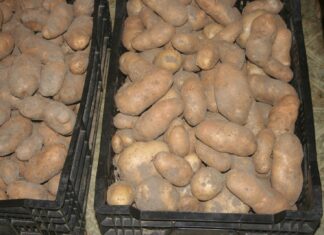
Potatoes and onions harvested in July are sprouting now, they are in total darkness, at a constant temp of 54 F, with very low humidity. They were sun cured and brushed off, not washed, what am I doing wrong?
ps, You don’t happen to have a single twin sister?
Pat Dorman
Lometa, Texas
It may be the variety of potatoes and onions you’re storing; some store very well but others do not. Potatoes do like a bit more humidity during storage, though. And a lower temp for both of them would also help, although that’s not always possible. I’ve found that storing potatoes in coolers or other covered containers helps lower storage temps, too. Are they are in total darkness or do you have a light bulb that comes on occasionally? I found that one year my onions and potatoes were sprouting way early and looked up where my basement light was burning brightly above me. Due to other basement uses such as washing clothes and retrieving canned goods, that light was on a lot. The next year, I moved my vegetables to a totally dark corner of the basement; no window, no light (only when I retrieved potatoes, carrots, onions or other veggies). They did much better. Here in Minnesota, I’ve quit planting potatoes so early. We’re so into “must get it in” during the early spring, due to our short season, that I was ending up harvesting my root crops in early August. Now we plant so we’re harvesting in early September. That month makes a huge difference in our potato sprouting in storage! They do better in the ground than in my pantry.
No, Pat, sorry. No twin and my unmarried sister doesn’t care to live like I do. But I’m sure there are a whole lot of great single women out there dying to meet a homesteader guy! — Jackie
Easter Egg chickens
A couple of years ago our neighbors bought several “Ameraucana” (probably more generic Easter Eggers) chicks from the local feed store. They came from a fairly well-known hatchery in the western US. One of their chicks turned out to be a rooster, and their hens have laid nice blue and green eggs faithfully. In April of this year I hatched three of their blue eggs in my incubator and got two pullets from the bunch. Now they have started laying–brown eggs! I’m a bit stumped. As the mothers are Easter Eggers and the father also an Easter Egger (they only have one rooster in a completely enclosed coop), I was expecting to get blue or green eggs. I don’t know the genetics behind the Easter Eggers, but I’m assuming because they’re probably not necessarily pure Araucanas or Ameraucanas, the brown eggs are a result of cross-breeding somewhere in their genealogy. Have you heard of this situation before? Shouldn’t they be producing green eggs? I’m glad the little girls are finally laying but was looking forward to the blue/green eggs both of their parents came from.
Dallen Timothy
Gilbert, Arizona
Some “Easter Egg” chickens produce pinkish, tan, and even brown eggs; all don’t produce pretty blue or green eggs. It’s too bad you got brown egg layers when you wanted ones that laid pretty eggs. Probably the genetics behind the eggs you chose to hatch resulted in the brown eggs and you’ve no way of knowing that. — Jackie
How many jars?
I am a brand new canner, my first recipe I want to try is your ham and beans recipe you posted on your Ask Jackie column, as we are getting fresh pork this weekend. Being a new canner, maybe this is a no brainer, but how do you know about how many jars you need for a recipe? I don’t have an excess of jars yet, so need to figure out how many to have on hand before I start the canning! I will be using a pressure cooker to make them and probably putting them into quart jars. Is there a good rule of thumb for knowing how many jars are needed for different recipes?
Lisa Cunningham
Mechanicsville, Maryland
Congratulations on your beginning canning adventure! You’ll find it a great hobby and money saver when you begin canning all that great-tasting food. I would recommend having two dozen pints on hand for the beans and ham. You won’t need all of them — probably about 14. There’s no rule of thumb as there are always variables in canning foods. What I do is always have a few too many jars ready and on hand. If you need only nine, it doesn’t hurt to have a dozen ready. I just kind of “eyeball” it, seeing how much food my recipe seems to have made and go from there. As you can more, you’ll also develop a pretty accurate “eyeball.”
Keep us posted on your journey and let me know if I can help along the way. — Jackie
Homemade crackers
Do you have a recipe for homemade crackers, or do you think its cheaper to purchase them? (white saltine type)
Bev Giroux
Oxford, Maine
I have several recipes for homemade crackers in my newest book, Jackie Clay’s Pantry Cookbook. They are not hard to make, but as many people are too busy, buying inexpensive crackers, on sale of course, is often a better choice. Here’s a basic cracker recipe; there are several available:
½ cup lard or shortening
7 cups flour
1 tsp. salt
1 Tbsp. baking powder
water
Mix dry ingredients well; cut in lard or shortening. Add enough water to make a stiff dough, a little at a time so you don’t get a sticky dough. Knead lightly on a floured board, then roll thin. Cut into squares and prick with a fork. Place on lightly-greased cookie sheet and bake at 350 degrees for 10-12 minutes. You may use a pasta machine or noodle maker to roll your cracker dough out thinly. You may also brush unbaked dough with butter and sprinkle on salt for baked salted crackers. — Jackie
Posted in Animals, Cooking/Recipes, Food Preservation, Self-sufficiency | 3 Comments »
Jackie Clay
Thursday, October 13th, 2011
Maybe you’ll remember that when we got our wedding cow, Lace, from our friends, Abner and Carol, they also gave me a little doeling with a leg that was contracted from birth. They hoped we could heal her, otherwise the little girl didn’t have much of a future.
Well, all summer we stretched and splinted the leg with a padded portion of a wooden paint stirrer and self-sticking horse leg wrap, cut to size as needed. At first, the leg would hardly bend at all, but slowly it got straighter and straighter. Last week we totally removed the splint and wrap and the leg is totally normal and she’s happy and bouncy. (She thinks our shorthorn calf is her brother, as they often share the same pen. And he loves her, too!) She chases that 400-pound bull calf away from the feed pan! We are so thankful, as I get way too attached to some of those animals. I feel bad when one is sick or dies. She may not grow as big as her huge mother or really big brother, but she’s fat and sassy and is large for her age. We’re very happy.

I’ve also been making plenty of cheese lately. One of our favorites is a soft white cheese I use in place of cream cheese. By accident, I forgot a pot of curd, (setting, supposedly for 8 hours). It went 24 hours! I drained it anyway, and it was very smooth and great tasting! I’ll never make it the old way again! (It’s real easy: 2 gallons of fresh milk, strained, with 1 cup of cultured buttermilk and 4 Tbsp. of diluted rennet in water…3 drops rennet in 1/3 cup cool water, added and stirred into the fresh milk.)
It is covered and let set at room temperature for 24 hours, then drained off in an old pillowcase. Refrigerated, it is good for a week and can have herbs, chopped fruit, bacon bits, or jams added. It is great in baked dishes too and cheesecakes. We really love it.

We’re finally getting a little rain. It helps with the forest fire danger, but isn’t enough to get the stressed roots of our orchard and woods going. We water the orchard but the poor woods has to do what nature has done for years. — Jackie
Posted in Animals, Food Preservation, Self-sufficiency | 10 Comments »
Jackie Clay
Wednesday, October 12th, 2011
Planting pumpkins
I just want to plant pie pumpkins but do not want them spreading all over my garden. Because of being gone most of the summer my garden is not as huge as I would like but pretty low maintenance. How am I going to put in pumpkins and squash with out covering what is left of the garden area?
Nancy Foster
Dallas City, Illinois
Plant bush varieties. The old heirloom Cheyenne bush pumpkin is a great addition to smaller gardens that really tastes great and won’t take up a lot of valuable garden space. And, likewise, there are a lot of bush squash varieties, too, including both summer and winter varieties. I grow Gold Bar summer squash because it tastes so good and I have plenty of garden room! There are also bush forms of many winter squash, including hubbard, acorn and butternut, too. See? You CAN have it all! — Jackie
Molting chickens
I love following your blog and reading your column in BHM. I have another question for you. We raised chicks from eggs this April, keeping three hens for laying; 2 Cuckoo Marans and 1 Americana. We started getting eggs from one of our C.M.s this August, nearly one everyday, and an occasional from the other C.M. Nothing from our Americana. We have had our friend that raises Americanas check her several times to be sure she is not a he and he is sure that she is not because she has no spurs, no crowing, and hen tail feathers. We are not getting any eggs at all now, for about 3 weeks. We have a large pen, with an accommodating coop having 2 nest boxes each 12×12 inches and a roost. There is plenty of food and water each day and we are using a layer feed. They get loads of kitchen scraps left from our canning and all the bad tomatoes from the garden that have split too much. Our friend thinks they might be too fat to lay, though I doubt it as they run, play, and flap as though they are fine. Have you heard of such a thing? They are also dropping a lot of feathers right now. I assume they are molting but I am concerned as night temperatures are beginning to dip down into the 30′s starting tonight. Should I worry? What in the world is going on with my girls?
Jessica
Fort Wayne, Indiana
Your chickens are just molting. That’s totally normal for this time of year and soon they’ll be re-feathered and beginning to lay again. Just feed and water as normal and relax and wait for those first eggs. The Americana probably just matured at a later date and will also begin to lay after molting. — Jackie
Posted in Animals, Gardening, Self-sufficiency | 2 Comments »
|
|
Have questions regarding this Blog? Please email us. Comments may appear online in "Feedback" or in the "Letters" section of Backwoods Home Magazine. We read every email you send us, but due to the sheer volume of mail we receive, we can't respond to each one.

|
|

|
|

(PDF 3.33 MB)
(PDF 213 KB)

| |