
BHM Newsletter
Volume 8 Number 10
October 21, 2006
INSIDE BHM
Write for BHM
Did you know that you do not have to be a professional writer to write for Backwoods Home Magazine? In fact, we prefer that you're not a professional. Professionals write about things. Self-reliant people do things, and it's the knowledge that comes from doing that our subscribers want to read about.
Don't worry if your English or sentence structure isn't perfect. That's what editors are for. The information, the knowledge, and the experience are what's most important.
If you think you'd like to give it a try, please check out our Writer's Guidelines before you begin. And remember, there is nothing quite like seeing your name and by-line in print for the first time.
Holiday Specials
This year, we have six Holiday Specials available in the General Store, including $10 anthologies, a free classified ad with a 2-year subscription or renewal, and a $5 CD anthology.
Click Here to go to the Holiday Specials page.
SELF-RELIANCE TIPS
As cold weather approaches, many of us are looking forward to vacations in warmer climates. Here are a few tips regarding some non-humans we may encounter.
Travel: Animal-Associated Hazards
Animals in general tend to avoid human beings, but they can attack if they perceive threat, are protecting their young or territory, or are injured or ill. Although attacks by wild animals are more dramatic, attacks by domestic animals are by far more common. Animals cause injury through bites, kicks, blunt trauma, or the use of horns or claws. Further damage can occur if injuries become secondarily infected, and may result in serious systemic disease.
As a general rule, travelers should never try to pet, handle, or feed unfamiliar animals, domestic or wild, particularly in areas of endemic rabies. Young children should be closely supervised while around wild or domestic animals not known to have been properly vaccinated against rabies. All bite wounds should receive prompt attention and cleansing to reduce the risk of infection. It is also recommended that travelers receive a tetanus booster before departure, if they have not had one within the last 5 to 10 years, in the event of a puncture wound or bite.
Monkeys
Macaques, a type of monkey, pose an additional threat as potential sources of herpes B virus. Herpes B virus is related to the herpes simplex viruses, which cause oral and genital ulcers. Herpes B infection is rare in humans, and all documented cases have resulted from occupational exposures. No case of herpes B infection has been documented in travelers or others exposed to monkeys in the wild. However, travelers to areas where free-ranging macaques exist should be aware of the potential risk.
An infected monkey may appear completely healthy, and herpes B infection rates may be high in some populations. Documented routes of infection include animal bites and scratches, exposure to infected tissue or body fluids, cage scratches, and human-to-human spread. Some exposures resulting in human infection were considered trivial at the time they occurred.
Disease may start as an influenza-like illness within 1 month after exposure. Neurologic symptoms develop as the virus infects the central nervous system and may lead to ascending paralysis and respiratory failure. If the disease is untreated, the death rate in humans from herpes B infection reaches 80%. Recent guidelines have been published for the prevention of herpes B infection after exposure and for the treatment of established infection. Travelers should never attempt to feed, pet, or otherwise handle any monkeys.
Snakes
Poisonous snakes are hazards in many locations, although deaths from snakebites are relatively rare. Snakebites occur in areas where dense human populations coexist with dense snake populations (e.g., Southeast Asia, sub-Saharan Africa, and Tropical America). The Australian brown snake; Russell's viper and cobras in southern Asia; carpet vipers in the Middle East; and coral snakes and rattlesnakes in the Americas are particularly dangerous. Most snakebites are the direct result of startling, handling, or harassing snakes.
Because snakes tend to be active at night and in warm weather, as a precaution, travelers should wear boots and long pants when walking outdoors at night in areas possibly inhabited by venomous snakes.
Attempts to kill snakes are dangerous. The venom of a small or immature snake can be even more concentrated than that of larger ones; therefore, all snakes should be left alone.
Fewer than half of all snakebite wounds actually contain venom, but travelers should be advised to seek immediate medical attention any time a bite wound breaks the skin. Immobilization of the affected limb and application of a pressure bandage that does not restrict blood flow are recommended first-aid measures while the victim is moved as quickly as possible to a medical facility. Incision of the bite site and tourniquets that impair blood flow to the affected limb are not recommended. Specific therapy for snakebites is controversial and should be left to the judgment of local emergency medical personnel.
Bugs and such
The bites and stings of some arthropods (insects, arachnids, crustaceans, and others) may cause unpleasant reactions. Travelers should seek medical attention if an insect bite or sting causes redness, swelling, bruising, or persistent pain. Those who have a history of severe allergic reactions to insect bites or stings should also consider carrying an epinephrine autoinjector (EpiPen) in case of recurrence.
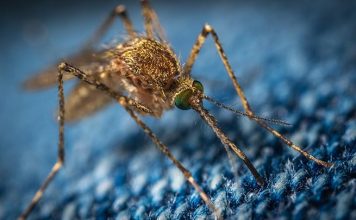
Many insects can transmit communicable diseases, even without the traveler's being aware of the bite. This is particularly true when camping or staying in rustic accommodations. Travelers to many parts of the world should be advised to use insect repellents containing DEET, protective clothing, and mosquito netting. (See Protection Against Mosquitoes and Other Arthropods, below.) Stings from scorpions can be painful but, with a few exceptions, are seldom dangerous. Stings in infants and children have the highest morbidity and mortality.
In general, exposure to scorpion envenomations can be avoided by sleeping under mosquito nets and by shaking clothing and shoes before putting them on.
Protection against Mosquitoes and Other Arthropods
Although vaccines or disease-preventing drugs are available against important vector-borne diseases1 such as yellow fever and malaria, travelers still should be advised to use repellents and other general protective measures against biting arthropods.
The effectiveness of malaria drugs is variable, depending on patterns of resistance and compliance with medication, and no similar preventive measures exist for other mosquito-borne diseases such as dengue. For many vector-borne diseases, no specific preventives are available.
General Preventive Measures
The principal approach to prevention of vector-borne diseases is avoidance. Tick- and mite-borne infections characteristically are diseases of "place;" whenever possible, known foci of disease transmission should be avoided. Although many vector-borne infections can be prevented by avoiding rural locations, certain mosquito- and midge-borne arboviral and parasitic infections are transmitted seasonally, and simple changes in itinerary can greatly reduce risk for acquiring them.
Travelers should be advised that exposure to arthropod bites can be minimized by modifying patterns of activity or behavior. Some vector mosquitoes are most active in twilight periods, at dawn and dusk or in the evening. Avoidance of outdoor activity during these periods can reduce risk of exposure. Wearing long-sleeved shirts, long pants, and hats minimizes areas of exposed skin. Shirts should be tucked in. Repellents applied to clothing, shoes, tents, mosquito nets, and other gear will enhance protection.
When exposure to ticks or biting insects is a possibility, travelers should be advised to tuck their pants into their socks and to wear boots, not sandals. Permethrin-based repellents applied as directed will enhance protection. Travelers should be advised to inspect themselves and their clothing for ticks, both during outdoor activity and at the end of the day. Ticks are detected more easily on light-colored or white clothing. Prompt removal of attached ticks can prevent some infections.
When accommodations are not adequately screened or air conditioned, bed nets are essential to provide protection and comfort. Bed nets should be tucked under mattresses and can be sprayed with a repellent such as permethrin. The permethrin will be effective for several months if the bed net is not washed. Aerosol insecticides can help to clear rooms of mosquitoes.
Repellents
Travelers should be advised that permethrin-containing repellents (e.g., Permanone) are recommended for use on clothing, shoes, bed nets, and camping gear, and are registered by the U.S. Environmental Protection Agency for this use. Permethrin is highly effective both as an insecticide and as a repellent. Permethrin-treated clothing repels and kills ticks, mosquitoes, and other arthropods and retains this effect after repeated laundering. There appears to be little potential for toxicity from permethrin-treated clothing. The insecticide should be reapplied after every five washings.
The U.S. Environmental Protection Agency has registered several active ingredients for use in personal repellents applied to skin. EPA registration of repellent active ingredients indicates the materials have been reviewed and approved for efficacy and human safety if applied according to the instructions on the label. These active ingredients are DEET (N,N-diethylmetatoluamide), Picaridin (KBR 3023), MGK-326, MGK-264, IR 3535, oil of citronella, and p-Menthane 3,8-diole (Oil of Lemon Eucalyptus).
All the EPA-registered active ingredients have some repellent activity, but most authorities recommend repellents containing DEET (N,N-diethylmetatoluamide) as the most reliable and long-lasting. DEET repels mosquitoes, ticks, and other arthropods when applied to the skin or clothing. In general, the more DEET a repellent contains, the longer time it can protect against mosquito bites. However, there appears to be no added benefit of concentrations greater than 50%. A microencapsulated, sustained-release formulation can have a longer period of activity than liquid formulations at the same concentrations. Length of protection also varies with ambient temperature, amount of perspiration, any water exposure, abrasive removal, and other factors. DEET-based repellents applied according to label instructions may be used with sunscreen with no reduction in repellent activity.
No definitive studies have been published about what concentration of DEET is safe for children. No serious illness has been reported from use of DEET according the manufacturer's recommendations. DEET formulations as high as 50% are recommended for both adults and children older than 2 months of age. Lower concentrations are not as long lasting, offering short-term protection only and necessitating more frequent reapplication. Repellent products that do not contain DEET are not likely to offer the same degree of protection from mosquito bites as products containing DEET. Other types of repellents have not necessarily been as thoroughly studied as DEET and may not be safer for use on children. Parents should choose the type and concentration of repellent to be used by taking into account the amount of time that a child will be outdoors, exposure to mosquitoes, and the risk of mosquito-transmitted disease in the area. The recommendations for DEET use in pregnant women do not differ from those for nonpregnant adults.
DEET is toxic when ingested and may cause skin irritation in sensitive persons. High concentrations applied to the skin can cause blistering. However, because DEET is so widely used, a great deal of testing has been done, and over the long history of DEET use, very few confirmed incidents of toxic reactions to DEET have occurred when the product is used properly.
Travelers should be advised that the possibility of adverse reactions to DEET will be minimized if they take the following precautions:
- Use enough repellent to cover exposed skin or clothing. Do not apply repellent to skin that is under clothing. Heavy application is not necessary to achieve protection.
- Do not apply repellent to cuts, wounds, or irritated skin.
- After returning indoors, wash treated skin with soap and water.
- Do not spray aerosol or pump products in enclosed areas; do not inhale the aerosol.
- Do not apply aerosol or pump products directly to the face. Spray your hands and then rub them carefully over the face, avoiding eyes and mouth.
- When using repellent on a child, apply it to your own hands and then rub them on the child. Avoid the child's eyes and mouth and apply sparingly around the ears.
- Do not apply repellent to children's hands. (Children tend to put their hands in their mouths.)
- Do not allow children less than 10 years old to apply insect repellent to themselves; have an adult do it for them. Keep repellents out of reach of children.
- Protect infants less than or equal to 2 months of age by using a carrier draped with mosquito netting with an elastic edge for a tight fit.
- Bed nets, repellents containing DEET, and permethrin should be purchased before traveling and can be found in hardware, camping, sporting goods, and military surplus stores. Overseas, permethrin or a similar insecticide, deltamethrin, may be purchased to treat bed nets and clothes.
1 "Vector-borne diseases" are defined as the diseases which are commonly transmitted through vectors. "Vector" is a term used broadly to refer to any animal that transmits human disease or plays an essential role in the parasite’s life cycle.
RECIPES
Recipes From Thailand
Prawn & Pumpkin Soup
10-12 medium tiger prawns (for vegetarian version, substitue 1 cup cooked chickpeas)
1/4 to 1/2 small pie pumpkin (or 1/2 butternut squash), deseeded, cut into cubes, and peeled
1 red bell pepper, sliced
2 or more heads of baby bok choy, larger leaves cut in half
handful of fresh coriander
4 cups chicken or vegetable broth
1/2 to 1 can thick coconut cream or milk
1-2 kaffir lime leaves, left whole
Yellow Curry Paste:
1-2 yellow chillies depending on desired spice level (or substitute 1-2 green or red chillies)
1/2 stalk lemon grass, sliced finely and minced (removing bulb and tough outer leaves), OR 2 Tbsp. prepared lemongrass
2 shallots. sliced, OR 1 small onion, sliced
3 cloves garlic
1 tsp. ground coriander
1 thumb-sized piece of galangal or ginger, sliced
3 Tbsp. fish sauce (If vegetarian, use vegetarian fish sauce or soy sauce)
1 tsp. regular mustard
1/4 tsp. nutmeg (or 1/2 tsp. cinnamon)
1 kaffir lime leaf
1/2 tsp. turmeric
1 can thick coconut milk
To make curry paste, place all paste ingredients in a food processor (or blender). Process well. Set aside.
In a large soup pot, heat stock.
Add curry paste, stirring to combine.
Add pumpkin or squash and extra kaffir lime leaves. Bring to a boil, then lower heat to medium-high, simmering for 5-8 minutes, or until pumpkin softens.
Add prawns (or beans), bell pepper, and bok choy. Cover and cook for an additional 5-7 minutes, or until prawns are bright pink.
Reduce heat to low. Add 1/2 can coconut milk and stir. Taste test for salt, adding up to 2 more Tbsp. fish sauce as needed (if too salty, add up to 2 Tbsp. lime). If too spicy, add the rest of the can of coconut milk. If not spicy enough, add another chilli, finely diced.
Ladle into bowls and serve hot with fresh coriander sprinkled over. This soup may be served with rice (or rice noodles) on the side, allowing guests to take as much or little as they want. Enjoy!
Cucumber Salad
2 green cucumbers
1 small onion
2 tablespoons dried prawn powder
1 or 2 fresh red chilies, seeded and chopped
2 tablespoons fish sauce
Lemon juice to taste
Peel, seed and coarsely grate the cucumbers. Peel and grate the onion. Mix all ingredients together and serve.
Chicken with Ginger Shreds
1 large chicken breast
1/2-1 cup dried wood ear
2 tablespoons finely shredded fresh ginger
1 small onion, thinly sliced
1 tablespoon lard or oil
3 cloves garlic, finely chopped
1 tablespoon light soy sauce
1 tablespoon fish sauce
1 tablespoon vinegar
1-2 teaspoons sugar
3 spring onions, finely chopped
2 tablespoons chopped, fresh, coriander leaves
To shred ginger, thinly peel off brown skin, cut into very thin slices, then cut slices into long, thread-like strips.
Remove skin and bones from chicken breast and cut the meat into small dice. Soak wood ear in hot water for 10 minutes, wash well, remove any gritty portions and cut into bite-size pieces. Soak ginger in lightly salted water for 10 minutes, then squeeze out moisture. This makes the ginger less pungent.
Heat lard or oil and on medium low heat fry the onion until soft and translucent, add garlic and stir until garlic starts to turn golden. Add chicken and ginger and stir fry until chicken changes color, then add the sauces, vinegar and sugar. When liquid boils reduce heat, cover and simmer 3 minutes. Do not overcook. Stir in spring onions and coriander leaves and serve immediately.
Thai Stir Fried Vegetables
2 tablespoons vegetable oil
1 tablespoon chile oil
1 tablespoon coarsely chopped garlic
1 cup broccoli florets
1/2 cup cauliflower florets
1/4 cup shallots, sliced
3 tablespoons water
1/2 cup carrots, sliced
1/2 bell pepper, sliced
1/4 cup snow peas
1/4 cup mushrooms, sliced
2 tablespoons soy sauce
1 tablespoon lime juice
1 tablespoon palm sugar
1 cup spinach leaves
1/2 teaspoon Thai pepper powder
Heat vegetable oil and chile oil together in a wok or skillet over medium heat, add garlic and stir until golden brown. Add broccoli, cauliflower, shallots and water. Saute until tender, about 2 minutes.
Stir in all other ingredients except spinach and pepper powder. Stir fry until just cooked but still crispy. Quickly stir in spinach and remove from heat.
Transfer to serving plate, sprinkle with Thai pepper powder. Serve with steamed Thai jasmine rice
Bananas in Coconut Sauce
3/4 cup coconut milk
2 teaspoons sugar
pinch of salt
3 large moderately ripe bananas, peeled and cut into 1/2-inch diagonal slices
Heat the coconut milk, sugar, and salt in a saucepan. Bring to a boil and simmer two minutes, stirring constantly. Remove from heat.
Stir in the sliced bananas and return to a boil for 10 seconds.
Serve alone or as a topping for ice cream or sweetened rice. Best to serve immediately so that bananas do not get discolored.
HUMOR
An old man lived alone in the country. He wanted to dig his tomato garden, but it was very hard work as the ground was hard. His only son, Vincent, who used to help him, was in prison. The old man wrote a letter to his son and described his predicament.
Dear Vincent,
I am feeling pretty badly because it looks like I won't be able to plant my tomato garden this year. I'm just getting too old to be digging up a garden plot. I know if you were here my troubles would be over. I know you would be happy to dig the plot for me.
Love, Dad
A few days later he received a letter from his son.
Dear Dad,
Don't dig up that garden. That's where I buried the bodies.
Love, Vinny
At 4 a.m. the next morning, FBI agents and local police arrived and dug up the entire area without finding any bodies. They apologized to the old man and left.
That same day the old man received another letter from his son.
Dear Dad,
Go ahead and plant the tomatoes now. That's the best I could do under the circumstances.
Love you, Vinny
Many of us are familiar with OnStar, the General Motors service that lets drivers in trouble contact company monitors who can summon help, unlock doors, etc. It's been so successful, they've started reaching out to targeted demographics. Here is a link to a commercial for their latest offering.
http://video.google.com/videoplay?docid=7780916420567729697
Sitting together on a train, traveling through the Swiss Alps, are a French guy, an American guy, an old Greek lady, and a young blonde Swiss girl.
The train goes into a dark tunnel and a few seconds later there is the sound of a loud slap.
When the train emerges from the tunnel, the Frenchman has a bright red hand print on his cheek. No one speaks.
The old lady thinks: The Frenchman must have groped the blonde in the dark, and she slapped his cheek.
The blonde thinks: That Frenchman must have tried to grope me in the dark, but missed and fondled the old lady and she slapped his cheek.
The Frenchman thinks: The American must have groped the blonde in the dark. She tried to slap him but missed and got me instead.
The American thinks: I can't wait for another tunnel, so I can smack that Frenchman again.
Everyone knows it's a man's world, right?
But...what if it was a women's world?
OTHER STUFF
Did a friend or relative tell you about this newsletter? The Backwoods Home Magazine newsletter is free and all you need is an email address so we can let you know when each issue is published and where it can be found. Even better, we sometimes have special offers and discounts that are available only to BHM Newsletter subscribers. Your email address will never be sold, rented, loaned, given, or otherwise provided to any third party.
Just visit the BHM web site at www.backwoodshome.com and click on "Newsletter" in the navigation menu on the left side of any web page.
Contact Info:
Editor/Letters - Dave Duffy, editor@backwoodshome.com
Advertising Manager/Customer Service Contact - Evelyn Leach, evelyn@backwoodshome.com
Web Site - Oliver Del Signore, webmaster@backwoodshome.com
Backwoods Home Magazine
P.O. Box 712
Gold Beach, OR 97444
541-247-8900