
Backwoods Home Magazine BHM Home

Archive

BHM Newsletter
Volume 10      Number 2

February 27, 2008
 

INSIDE BHM

New Issue

Selections from the March/April issue were posted last Friday.

Click Here for the Table of Contents so you can read those articles online.

Click Here to subscribe, so you can read the rest of the issue.

Bigger issue coming up

For only the second time in our 18-year history, we’ll increase the size of the magazine from 100 to 116 pages next issue. Why? We can't share all the details yet, but this will be a very special issue. We’ve lined up many good articles, and BHM’s longtime artist, Don Childers, is creating a lot of drawings and paintings to accompany some of the articles. I’ll tell you more about the content in the next newsletter.

EPSG

We just received a new shipment of our Emergency Preparedness and Survival Guide. We experienced a recent surge in requests for this excellent book, no doubt because a lot of people are concerned about the state of the American economy. It’s a fairly thorough primer for taking care of yourself and family in the event of a prolonged emergency.

Chicken book

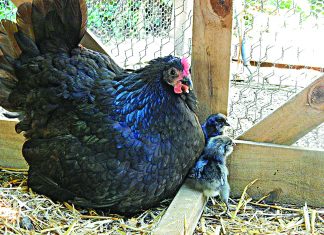
Our new beginner's guide to chickens is also available, though not yet "for sale." In the print issue and on the website, we offer it free with a 2-year subscription. Some people have asked if they can substitute the chicken book for the Stupid People book or EPSG if they order a 3, 4, or 5-year subscription and that is fine with us. If you order online, just use the Comments box to let us know you want it and which book to swap out for it.

Desktop wallpaper

Our webmaster forgot to upload the desktop wallpaper he created for the new issue that went online last week. The oversight has been corrected and Don Childers' cover art of a horse pulling a rockboat sled is available for capture or download.

Prayer Request

BHM contributor and long-time Forum member Suzy Lowry Geno's husband, Roy, recently suffered a severe heart attack. While he is now home, he is still in tough shape and faces risky open-heart surgery as soon as he is able. Please keep both Roy and Suzy in your prayers and periodically check the Forum for updates on his condition.

SELF-RELIANCE TIPS

February and March in the Garden

Though the snows may still blow, it's time to start thinking about this year's crops, lawns, and ornamentals. The following tips are from the Yellowstone County, Montana, extension office and are customized to their climate. But adjust the timeline a bit for your location and their recommended steps serve as good starters for your gardening "to-do" list.

FEBRUARY CHECK LIST

Vegetables

  • It's never too late to add nutrients to the garden. Add straw, hay, green manure crops, sawdust, kitchen scraps or whatever is on hand.
  • Where snow still covers the ground, add your amendments, letting the spring thaw help break down the additives. Till or spade in added materials during any weather breaks.
  • Start cabbage and onion seeds for early transplants.
  • February is ideal cold frame weather. The sunny days sprout seeds quickly, forcing rapid growth. A dark manure tea watered in every other week, gives ample nutrients.
  • Pre sprout asparagus seed. Mix seed with 20 parts sand to one part seed, washing the mix with warm water 3-4 times a day, then use folds of damp paper towels or cloth as a sprouting bin. Sprouting occurs in a week to 10 days. Transplant sprouts into temporary pots until the weather breaks.
  • Work aged manure into the garden pea patch. Plant peas as soon as soil thaws and is workable. Mulch rows well and water weekly during dry periods.
  • Start Eggplant and Pepper.
  • Check stored vegetables for rot.

Orchard and Fruits

  • Continue pruning when wood is not frozen. Save a few of the apple clippings for bloom-forcing indoors.
  • Prune grapes.

Trees and Shrubs

  • Check and repair winter storm damage the first chance you can.
  • As soon as the wood thaws, tree and shrub pruning can be started.

Lawns

  • De thatch old lawns if needed, before feeding high nitrogen fertilizers.

Flower Gardens

  • Check perennial beds for heaving from severe frosts. Repair damage if possible, or mulch with straw or evergreen boughs until soil can be worked.
  • For a good supply of chrysanthemums for late-fall bloom, divide old plants, setting out new shoots. Give new plants a mulch layer for frost protection.
  • Start petunia and begonia.

Houseplants

  • Force some spring bulbs for early indoor blooms.
  • Extending life of Valentine roses by asking if they were conditioned. If they were, recut stems on a slant and place in cold water. If they haven't been conditioned, recut stems and place in hot water. The hot water opens up conducting tissue which allows better water absorption. Once water cools, then add floral preservative provided by florist, and follow advice on the packet.
  • To continue poinsettia culture, water when soil becomes dry, but also begin to fertilize with every third watering with a balanced fertilizer. Continue this culture through March.

MARCH CHECK LIST

  • Remember when moving plants (trees, shrubs and perennials), that excess irrigation can be as harmful as too little irrigation. Moisture meters can help determine the right time to irrigate.

Vegetables

  • Start transplants of tomatoes, peppers and eggplant where mid-May is planting time. In northern areas, use short-season varieties.
  • Put seedlings of broccoli, cabbage and Brussels sprouts into cold frame.
  • Continue planting early peas when weather permits.
  • Plant early potatoes on Good Friday, if soil is workable. Potatoes can be planted through April where growing seasons last through August. Light frost will not kill new growth. Don't plant spuds on newly tilled grassland, as wireworms abound the first summer. You can plant sprouted potatoes 6 inches deep. Break off longest sprouts.
  • Clean up horseradish and rhubarb patches and mulch with aged manure or compost.
  • Fertilize perennial garden plants with organic or commercial fertilizer.
  • Harvest parsnips before they sprout, as they will turn bitter afterwards.
  • Make up manure teas and compost teas using 2-3 shovelfuls of solids to fill a 5 gal. bucket with water. Cover to prevent insects. This tea prevents transplant shock and is a real boost to growth.
  • Cold frames can be started now. Use fresh manures only as bottom heat, manure teas for nutrients.
  • Plant all hardy crops as soon as the weather breaks, from severe to milder temperatures.

Orchards and Fruits

  • When temperatures get above 40 degrees, and freezing temperatures are not expected for 24 to 48 hours, apply dormant oil. Apply before buds open.
  • Plant new trees as soon as the soil can be worked.
  • Prune out old wood on gooseberries and currants.
  • Feed strawberries and apply a light straw mulch to keep berries off the soil. A light crop with heavy foliage indicates a lack of phosphorus.
  • Plant new raspberries.
  • Feed all berries with aged manure and mulch well.
  • If you are going to do some fruit tree grafting, this is the month to attempt it.

Trees and Shrubs

  • Prune shrubs that have suffered winter damage. When purchasing new shrubs, consider proper placement and varieties to avoid annual pruning. Harden-off newly-purchased perennials and shrubs grown in the south, before planting them out.
  • When day temperatures get above 40 degrees, and freezing temperatures are not expected for 24 to 48 hours, apply dormant oil. Wait till early April to apply dormant oil to evergreens. They need warmer temperatures than deciduous trees.
  • Apply fertilizer, so it reaches roots before bud break.
  • Plant trees and shrubs. Take advantage of bare root stalk available this time of year.
  • Continue pruning.

Lawns

  • Power rake lawn if needed, if not done last month.Soil should be thawed and grass not greened up too much.
  • A good month to seed lawn.

Flower Garden

  • Divide and replant perennial flowers.
  • Spread well-rotted manure or compost around big feeders such as peonies, bleeding hearts, delphiniums, chrysanthemums and perennial geraniums. Don't smother or damage their delicate crowns.
  • Powder soil around spring blooming bulbs with bone meal, letting rain wash down the nutrients. Don't remove mulch until after blooming.
  • Fertilize perennial plants.

Houseplants

  • Start geraniums if you didn't start them earlier.
  • Extend the life of Easter lilies by carefully removing the orange pollen sacks as soon as the flower opens. This prevents pollination and extends the blooming period of flowers. Don't get pollen sacks on clothing or other materials. It is next to impossible to get pollen out.
  • Start tuberous begonias. Those overwintered in pots, replace the top 2 in. of soil with fresh mix.

Free Original Clipart courtesy of Designed to a T.

RECIPES

Haul Out Those Storage Foods

Historically, this is the time of year when agricultural people would be looking at their winter stores of wheat, apples, root vegetables, and dried meats and asking if there's enough to last until nature and hard work provide more.

Few modern people face that yearly ritual any more. But we Backwoods Homians do tend to be as aware as our ancestors of the need to "put things by." So this is good time to take a look at our bulk-stored foods (whether they be potatoes from our own gardens or humongous bags of beans and rice from Costco) and make use of them.

All our recipes this month, though from a variety of sources, feature a traditional storage food as their main ingredient. Some of the recipes are themselves traditional, while others make untraditional use of those old storage standbys.

Honey Whole-Wheat Bread

This recipe makes use of most of the famous "Mormon Four" storage essentials.

3 cups freshly ground whole wheat flour
1/3 cup honey
1/4 cup vegetable oil
1 tablespoon of salt
2 packages of regular or quick-acting active dry yeast
2-1/4 cup very warm water (120 to 130 degrees)
3 to 4 cups of freshly ground oat flour
Butter or margarine, softened

Mix whole wheat flour, honey, oil, salt, and yeast in large bowl. Add warm water. Beat on low speed 1 minute, scraping the bowl frequently. Beat on medium speed 1 minute, continuing to scrape the bowl. Stir in enough of the oat flour, 1 cup at a time, to make dough easy to handle.

Turn dough onto a lightly floured surface; knead about 10 minutes or until smooth and elastic. Place in bowl that's coated with non-stick cooking spray; spray the top of dough with non-stick cooking spray. Cover and let rise in a warm place 40 to 60 minutes or until double. (Dough is ready when an indentation remains when touched.)

Spray two loaf pans with nonstick cooking spray. Punch down dough; divide in half. Flatten each half with hands or rolling pin into 18 x 9 inch rectangle. Fold crosswise into thirds, overlapping the two sides. Roll dough up tightly toward you, beginning at short end. Press with thumbs to seal after each turn. Press each end with side of hand to seal; fold ends under. Place loaves, seam side down, in pans. Brush lightly with butter or margarine; sprinkle with whole wheat flour or crushed rolled oats, if desired. Let rise 35 to 50 minutes or until double.

Move oven rack to lowest position. Heat oven to 375 degrees F. Place loaves on lowest oven rack. Bake 40 to 45 minutes or until loaves are deep golden brown and sound hollow when tapped. Remove from pans; cool on wire rack.

Orange Julius

This recipe came directly from a website of the Church of Jesus Christ of Latter-Day Saints and uses yet another of the "Mormon Four."

2 cups orange juice
2 tablespoons sugar
1/2 cup powdered milk
1/2 teaspoons vanilla
1/2 cup crushed ice

Put all ingredients in a blender and blend until ice is totally crushed.

Makes three 6-ounce servings

Claire's Beefless Stroganoff

1 cup dry beef TVP (textured vegetable protein)
1 medium onion, chopped (substitute rehydrated dried onion flakes if need be)
3 cups mushroom slices
3 tablespoons butter
1/2 teaspoon basil
Salt, to taste
Pepper, to taste
A grating of nutmeg, to taste
1/4 cup dry white wine
1 cup sour cream

Hydrate the TVP according to the directions on the can. Set aside. Saute onions and mushrooms in the butter. Sprinkle with salt, pepper, and nutmeg. Add the TVP to the onion/mushroom mixture. Add the wine and sour cream and heat briefly.

Serve over green noodles, egg noodles or rice.

Serves 4

Hot Potato Salad

6 potatoes
8 slices bacon
3/4 cup onion, chopped
2 tablespoons flour
2 tablespoons sugar
1-1/2 teaspoons salt
1/2 teaspoon celery salt
Dash pepper
3/4 cup water
1/3 cup white vinegar

Boil potatoes in their skins until tender. Peel and slice thinly. Fry bacon until crisp; dry on paper and crumble. Saute onion in the bacon fat. Blend in flour, sugar, salt, celery salt, and pepper. Cook over low heat, stirring until smooth and bubbly. Remove from heat. Stir in water and vinegar. Bring to a boil, stirring constantly, for one minute. Mix in potatoes and bacon. Remove from heat. Cover until ready to serve.

Makes 8-10 servings.

New Orleans Red Beans and Rice

2 cups red kidney beans
5 strips bacon, cut up
1/2 cup uncooked rice
2 1/2 quarts water
1 clove garlic
Salt and pepper to taste

Soak beans overnight in 1 qt of water in a heavy pot. Drain. Add another 1 1/2 quarts of water, bacon, garlic and a little salt. Simmer slowly for 3 - 4 hours until beans are very soft, and water has cooked down to a thick red sauce. Add salt and pepper to taste and serve over cooked hot, fluffy rice

Serves 6

Carrots and Cheese

This simple recipe almost turns an ordinary vegetable into a comfort food.

1 pound carrots, sliced
1 quart of water
7 slices of Velveeta or American cheese
Pepper to taste

Boil carrots in water until just barely tender. Drain. Melt cheese over carrots. Sprinkle or grate pepper on top and serve.

Serves 4-5

Honey-Apricot Oatmeal

3-1/2 cups water
1/2 cup chopped dried apricots
1/3 cup honey
2 cups oats (quick or old fashioned, uncooked)
1/2 teaspoon ground cinnamon
1/4 teaspoon salt

In 3-quart saucepan, bring water, apricots, honey, cinnamon and salt to a boil. Stir in oats; return to a boil. Reduce heat to medium; cook about 1 minute for quick oats or 5 minutes for old fashioned oats or until most of liquid is absorbed, stirring occasionally. Let stand two minutes or until desired consistency is reached.

Serves 4

Spanish Elk or Deer Pot Roast

Just in case you still have an excess of last fall's game meat in your freezer, the next two recipes are from International Hunters Association, an organization dedicated to "xtreme" forms of hunting.

3 pounds pot roast of Elk or Deer
11 sliced stuffed olives
1/4 pounds salt pork
1 medium onion, sliced
3 tablespoons margarine or butter
2 cups canned tomatoes
1 teaspoon salt
1/4 teaspoon pepper
1 teaspoon sugar

Cut small pockets along sides of the roast with a sharp knife. Fill these pockets with sliced olives and salt pork which has been cut into small strips. Brown onions slices in margarine or butter. Remove onions and blown roast in hot fat. Add canned tomatoes, salt, pepper, sugar and browned onion. Cover and simmer until meat is tender - about 3 to 4 hours. Thicken liquid for gravy.

Venison Hamburger-Rice Pie

1 pound ground venison, browned and drained
1/2 cup bread crumbs
1/4 cup green pepper, chopped
1/4 cup onion, chopped
1-1/2 can tomato sauce
2-1/2 cups cooked rice
1/2 cup grated cheese
Salt and pepper to taste

Combine venison, bread crumbs, green pepper, onion and 1/2 can tomato sauce in large pie shell. Mix rice, cheese, salt and pepper and 1 can tomato sauce; place mixture on top of first mixture and spread other half can of tomato sauce over top. Bake in pie pan at 375F for about 35 minutes.

Apple Popover with Blackberries

Adapted from a recipe at The Joy of Baking

2 large tart apples (about 1 lb. total), peeled, cored, and cut into 1/4 inch slices
1/2 cup blackberries or other soft fruit
4 tablespoons unsalted butter
2 - 3 tablespoons granulated white sugar
1/4 teaspoon ground cinnamon
3 large eggs
1/2 cup milk
1 teaspoon pure vanilla extract
1/2 cup all-purpose flour
1/4 teaspoon salt
2 tablespoons granulated white sugar
Confectioners sugar
Softly whipped cream

Preheat the oven to 425 degrees F (220 degrees C) and place the rack in the center of the oven.

In a large nonstick, ovenproof skillet melt 2 tablespoons of the butter. Add the sliced apples, sugar, and cinnamon and saute the apples until tender. Add blackberries about half-way through.

Place the remaining 2 tablespoons of butter, eggs, milk, vanilla, flour, salt and granulated sugar in a food processor or blender one minute, scraping down the sides of the bowl as needed. Once the batter is completely smooth, pour it over the apples/blackberry mixture.

Bake for about 20 minutes or until the popover is puffed and golden brown. Do not open the oven door until the end of the baking time or it may collapse. Serve immediately with a dusting of confectioner's sugar and softly whipped cream.

Serves 4

Rice Pudding

3 eggs
2 tablespoons honey
6 tablespoons sugar
1/2 tablespoons nutmeg
1 teaspoon cinnamon
1/2 teaspoon vanilla
1 cup milk (1/3 cup nonfat dry milk and 1 cup water)
3/4 cup evaporated milk (2/3 cup nonfat dry milk and 3/4 cup water)
1 1/2 cups cooked rice
1/2 cup raisins

Beat eggs. Add honey, sugar, nutmeg, and cinnamon, and mix well. Stir in vanilla, milk, rice, and raisins. Place in a 2-quart casserole dish. Bake at 325° for 45 minutes. Stir after 25 minutes.

Serves 8

Pinto Bean Pie

Finally, here's a very unusual dessert recipe, also courtesy of the LDS church.

1/2 cup granulated sugar
1 cup brown sugar, packed
2 eggs, beaten
1 stick (1/2 cup) butter, softened
1 heaping cup pinto beans, cooked, mashed
1 unbaked 9-inch pie shell
whipped cream, whipped topping, or ice cream

Beat granulated sugar, brown sugar, eggs, and butter until creamy. Add pinto beans and blend well. Pour into unbaked pie shell and bake at 375° for 20 minutes. Reduce heat to 350° and bake an additional 25 minutes or until a knife inserted in center comes out clean. Serve with whipped cream, whipped topping, or ice cream.

HUMOR

Speed Trooper

In most of the United States, there is a policy of checking on any stalled vehicle on the highway when the temperatures drop down to single digits or below.

About 3:00 one very cold morning, Trooper Allan Nixon responded to a call, there was a car off the shoulder of the road outside Shattuck, Okla. He located the car, stuck in deep snow, and with the engine still running. Pulling in behind the car with his emergency lights on, the Trooper walked to the driver's door to find an older man passed out behind the wheel with a nearly empty vodka bottle on the seat beside him.

The driver woke up when the Trooper tapped on the window. Seeing the rotating lights in his rear view mirror, and the State Trooper standing next to his car, the man panicked, jerked the gearshift into 'drive' and hit the gas.

The car's speedometer was showing 20-30-40 and then 50 mph, but it was still stuck in the snow, wheels spinning. Trooper Nixon decided to have some fun and began running in place next to the speeding, but still stationary car. The driver was totally freaked, thinking the Trooper was actually keeping up with him. This went on for about 30 seconds, then the Trooper yelled at the man to 'Pull over!'

The man obeyed, turned his wheel and stopped the engine. Needless to say, the man from Dumas, Texas was arrested, and is probably still shaking his head over the State Trooper in Oklahoma who could run 50 miles per hour.

Who says Troopers don't have a sense of humor?


The Bottle of Wine

Sally was driving home from one of her business trips in Northern Arizona when she saw an elderly Navajo woman walking on the side of the road.

She stopped the car and asked the woman if she would like a ride.

With a silent nod of thanks, the woman got into the car

Resuming the journey, Sally tried in vain to make a bit of small talk with the Navajo woman.

The old woman just sat silently, until she noticed a brown bag on the seat next to Sally.

"What in bag?" asked the old woman.

Sally looked down at the brown bag and said, "It's a bottle of wine. I got it for my husband."

The Navajo woman was silent for another moment or two.

Then speaking with the quiet wisdom of an elder, she said: "Good trade."


Air Traffic Controllers

The following are accounts of actual exchanges between airliners and control towers from around the world:

  • The controller, working a busy pattern told the 727 on downwind to make a three-sixty (do a complete circle, usually to provide spacing between aircraft). The pilot of the 727 complained, "Do you know it costs us two thousand dollars to make a three-sixty in this airplane? Without missing a beat the controller replied, "Roger, give me four thousand dollars worth!"
  • A DC-10 had an exceedingly long roll out after landing with his approach speed just a little too high. San Jose Tower: "American 751 heavy, turn right at the end if able. If not able, take the Guadeloupe exit off of Highway 101 and make a right at the light to return to the airport.
  • Unknown Aircraft: "I'm f***ing bored!".
    Air Traffic Control (sternly): "Last aircraft transmitting, identify yourself immediately!!"
    Unknown Aircraft: "I said I was f***ing bored, not f***ing stupid!"
  • Tower: "Eastern 702, cleared for takeoff, contact Departure on 124.7." (124.7 would be the radio frequency for Departure Control).
    Eastern 702: "Tower, Eastern 702 switching to departure ... by the way, after we lifted off, we saw some kind of dead animal on the far end of the runway."
    Tower: "Continental 635, cleared for takeoff, contact Departure on 124.7; did you copy the report from Eastern?"
    Continental 635: "Continental 635, cleared for takeoff Roger; and yes, we copied Eastern and we've already notified our caterers."
  • O'Hare Approach Control: "United 329 Heavy, your traffic is a Fokker, one o'clock, 3 miles, eastbound."
    United 329: "Approach, I've always wanted to say this...I've got that Fokker in my sights.
  • The German air controllers at Frankfurt Airport are a short-tempered lot. They not only expect one to know one's gate parking location but how to get there without any assistance from them. So it was with some amusement that we listened some years ago to the following exchange between Frankfurt ground control and a British Airways 747 (call sign "Speedbird 206") after landing:
    Speedbird 206: "Top of the morning Frankfurt, Speedbird 206 clear of the active runway."
    Ground: "Guten morgen! You vill taxi to your gate!"
    The big British Airways 747 pulled onto the main taxiway and slowed to a stop.
    Ground: "Speedbird, do you not know vare you are going?"
    Speedbird 206: "Stand by a moment Ground, I'm looking up our gate location now."
    Ground (with some impatience): "Speedbird 206, haff you never flown to Frankfurt before?!?"
    Speedbird 206 (cooly): "Yes I have, Ground - in 1944. In another type of Boeing. I didn't stop."


The Devolution of Federal Security Bureaucracy

Almost 150 years ago, President Lincoln found it necessary to hire a private investigator, Mr. Alan Pinkerton. Although Lincoln hired and paid him out of his own pocket, Pinkerton was the beginning of the Secret Service (SS).

Since that time federal police authority has grown to a large number of agencies - FBI, CIA, INS, IRS, DEA, BATF, SS, ATF, TSA, DHS, etc. Now Congress is considering a proposal for another agency: The "Federal Air Transportation Airport Security Service."

Can't you see it now, the new service in their black outfits with their initials in large white letters across their backs? "F A T A S S"
 

OTHER STUFF

Did a friend or relative tell you about this newsletter? The Backwoods Home Magazine newsletter is free and all you need is an email address so we can let you know when each issue is published and where it can be found. Even better, we sometimes have special offers and discounts that are available only to BHM Newsletter subscribers. Your email address will never be sold, rented, loaned, given, or otherwise provided to any third party.

Just visit the BHM web site at www.backwoodshome.com and click on "Newsletter" in the navigation menu on the left side of any web page.

Contact Info:

Editor/Letters - Dave Duffy, editor@backwoodshome.com
Web Site - Oliver Del Signore, webmaster@backwoodshome.com

Backwoods Home Magazine
P.O. Box 712
Gold Beach, OR 97444
541-247-8900


www.backwoodshome.com designed and maintained by Oliver Del Signore
© Copyright 1998 - Present by Backwoods Home Magazine