

Bugging out in place
By Jackie Clay-Atkinson
Issue #163 • January/February, 2017
Some emergency situations require quick evacuation. You barely have time to grab your bug-out bag, gather the family, and run out the door. Most of us are ready...
Building and stocking your pantry
By Jackie Clay
Issue #125 • September/October, 2010
At the turn of the 19th century, most country homes had a walk-in pantry, as well as a root cellar for keeping vegetables and fruits. This pantry contained...

A survival key ring — Your everyday tool for emergency preparedness
By Jeffrey Yago, P.E., CEM
Issue #117 • May/June, 2009
If you saw the movie, "Castaway" starring Tom Hanks, you might remember that his character always carried a small pen knife with him. Early in the...
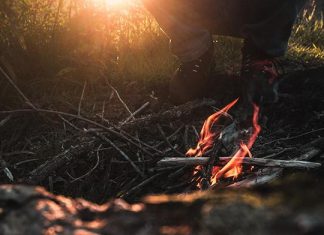
Survival firebuilding skills
By Corcceigh Green
Issue #97 • January/February, 2006
Firebuilding skills are essential for those who may find themselves in survival situations. As a testimony to this idea, Americans in the Gulf Coast States experienced a string...

Frostbite — Don’t flirt with this sneaky danger
By Tom and Joanne O’Toole
Issue #96 • November/December, 2005
Frostbite can be defined, in its most severe stage, as when your fingers and toes freeze and have to be cut off because of gangrene. Wow,...
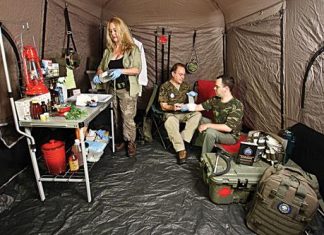
Survival infection control
By Joseph Alton, M.D.
Issue #151 • January/February, 2015
For several months now, news regarding the devastation that the Ebola virus is causing in West Africa has been in the headlines. A disease once found only...
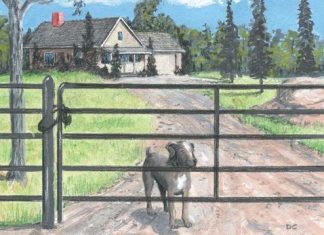
Homestead security for women
By Donna Insco
Issue #143 • September/October, 2013
In these tough economic times, many women are finding themselves alone for long hours on the homestead. As local jobs disappear, the major breadwinner may take a job...
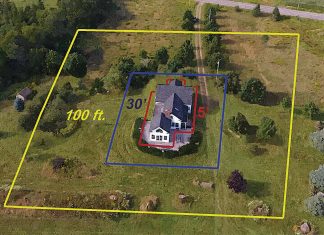
Changing the odds in home fire protection
By Don Lewis
From Jan. 1 to Nov. 15, 2018, there were 51,898 wildfires across the United States, burning over 8.5 million acres. Despite the commonly held belief that wildfires are predominately a western concern,...

Keep the Ice On
By Jeffrey R. Yago, P.E., C.E.M.
Self-Reliance, Fall 2019
When I ask most people why they own or are looking to buy a generator, most will say it is to keep a refrigerator or freezer operating....
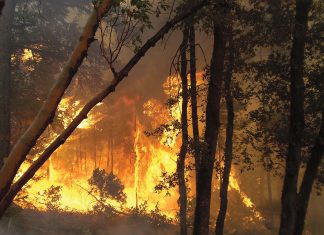
Wildfires: Before, During, After
By Charles Sanders
There are many things rural homeowners can do to mitigate the danger of wildfires. The first is to create a defensive zone around your homesite which will become a buffer area around...

Preparedness for travelers
By Brad Rohdenburg
Issue #81 • May/June, 2003
When the subject of preparedness comes up, do you think of having a stock of supplies in your kitchen pantry in case of a storm? Maybe a backpack...

Caring for wounds in the field
By Bill Glade, M.D.
Issue #75 • May/June, 2002
The beautiful remote Canadian lake has provided a bountiful supply of fresh fish. You are cleaning the catch when a moment's inattention allows the knife to slip...

Gee-Whiz: From Paper to Canning
By John Silveira (aka O.E. MacDougal)
May/June 2017 Backwoods Home
The greatest inventions in history are the ones we now take for granted. Fire and the wheel-axle combination are among them. If we weren’t taught in...
7 Mistakes of food storage
By Vicki Tate
Issue #55 • January/February, 1999
If you are going to store food, make sure that the food you store is adequate for the need you and your family anticipate. This may not be...
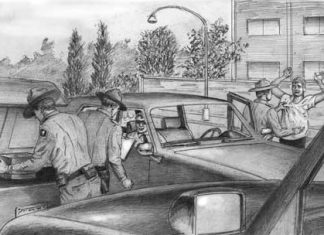
Preparing for civil unrest
By Claire Wolfe
Issue #118 • July/August, 2009
The most remarkable thing about civil unrest is that there hasn't been more of it.
Politicians are making a hash of this country and much of the rest of...
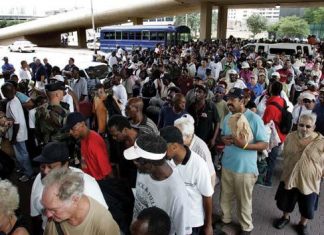
Prepper power! Part 1
By Jeffrey Yago, P.E., CEM
Issue #136 • July/August, 2012
The interesting thing about being a "prepper" is most preppers don't want anybody to know they are one! No doubt many fear they will be ostracized...